Virginia moves toward regulating self-driving vehicles amid safety and liability concerns
Aug 05, 2026 | 5:28 am ET
Description
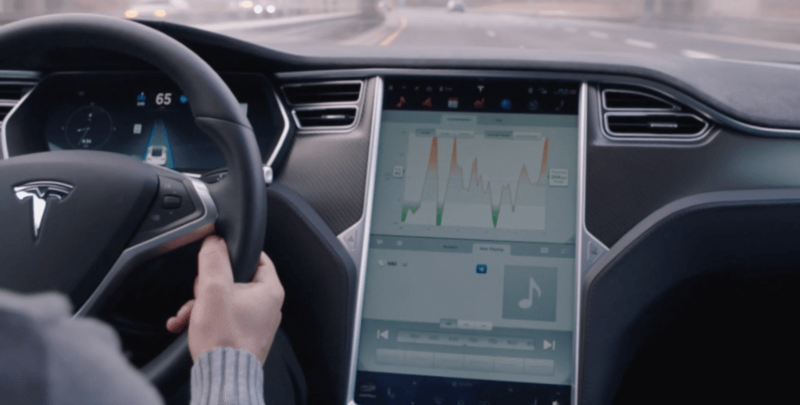
Tesla vehicles can operate in a semi-autonomous mode but a safety feature requires drivers to periodically apply pressure to the wheel with their hands. (Photo courtesy of Tesla)
Virginia is closer to regulating self-driving vehicles, which have steadily increased nationwide despite continued concerns over safety.
Despite crashes that have led to restrictions in some areas, other states, such as Arizona and Texas, have continued to permit testing and deployment. With interest in the technology growing in Virginia, lawmakers are trying to get ahead of some of the issues that have arisen.
Last year, Virginia leaders signed off on a plan to bring transportation officials, law enforcement, state lawmakers, and various experts together in a work group to consider rules around the use of autonomous vehicles, such as safety, liability, privacy and cybersecurity, and operational rules.
Much of the time at the group’s July 24 meeting focused on maintaining a consistent, statewide approach to permitting and operations, warning against a fragmented regulatory environment, often referred to as “balkanization,” where individual localities might create conflicting rules for AV companies.
“I think we pride ourselves in having a very uniform Department of Transportation across the entire commonwealth and so, therefore, with the exception of maybe Dulles and DCA, I don’t think that we want to go down the path of allowing localities to determine where, when, or how autonomous vehicles are going to be used,” Del. David Reid, D-Loudoun, said at the meeting.
He added, “We need to kind of adhere to what we have proven already works and not try to have 133 different thoughts and jurisdictions about how we are going to implement autonomous vehicles.”
Virginia’s participation in the AV market is of interest to the public because some advocates have said the technology can make transportation more affordable and provide more access. Experts are still studying the safety, traffic, and labor implications of AVs.
Safety
Work group staff and consultants recommended a multi-stage regulatory framework and permitting process to evaluate the safety of autonomous vehicles before and during their operation on Virginia’s public roads.
Staff recommended that legislation should focus on two levels of automation: conditional and high automation. Conditional automation is when a human driver is required to take over driving if the system can no longer operate, and high automation is when a human driver is not needed since the system is fully responsible for driving.
The work group also recommended limiting permits to commercial AVs, giving time for further testing and deployment of commercial vehicles before personal vehicles are authorized for permitting.
Liability
Right behind safety is liability, especially during crashes. Staff said the Virginia Department of Motor Vehicles should have the authority to deny, suspend or revoke permits for violations or if operations pose a public danger.
Two options the work group will consider are proof of coverage with options for standard or higher pilot-phase insurance limits. The standard limit is $50,000 per person, $100,000 per incident for all bodily injuries and $25,000 property damage. If the self-driving vehicle is being used as a for-hire vehicle, it may need up to $5 million in insurance coverage.
Privacy and cybersecurity
Virginia will also have to consider measures to protect privacy and cybersecurity, because AVs depend on large amounts of data and digital systems to operate and make safety-critical decisions.
Staff said Virginia could enact new privacy provisions in addition to its Virginia Consumer Data Protection Act, which gives consumers more privacy and control over their digital information like location, driving and passenger information.
Staff said the law seems to apply, but is limited to companies that collect personal information from 100,000 or more Virginia residents in a year, or 25,000 or more Virginia residents in a year and make more than half of their revenue from selling personal data.
Operational rules
Virginia lawmakers will also decide when and where the commonwealth will allow self-driving vehicles to operate as part of the regulation development process.
Staff recommended lawmakers avoid introducing new types of permits and certificates. Instead, they said establish general rules for all businesses that use AVs so the regulatory framework stays workable.
This keeps the process simple, avoiding unnecessary steps and saving time and paperwork for both the AV industry and the Department of Motor Vehicles.
Currently, the DMV issues permits and certificates to different types of businesses that transport passengers or property for hire, like household moving companies. The DMV does not regulate food and personal delivery transportation.
Bradley Calhoun, founder of disability service provider Ember Initiatives, was the only speaker at the July work session. He urged the working group to incorporate accessibility planning at the beginning of the design process, saying existing transportation often creates barriers for adults with intellectual and developmental disabilities, such as restricted destinations and unreliable pickup windows.
“I respectfully ask the work group to include people with intellectual disabilities, developmental disabilities, sensory communication, physical disabilities, and the providers who support them in Virginia’s pilot permitting accessibility and data reporting discussions,” Calhoun said last month. “This technology should expand independence while creating and strengthening human support roles, not simply eliminating them.”
The workgroup is expected to issue a final report to the General Assembly no later than Nov. 1.
Richmond, VA