Judge orders state GOP to certify Danny Ford II for US Senate primary
Aug 04, 2026 | 11:54 am ET
Description
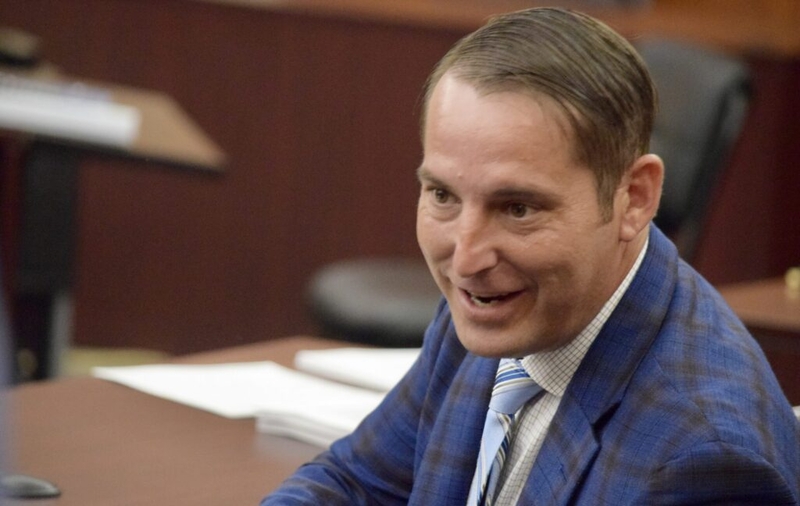
U.S. Senate candidate Danny Ford II speaks with his lawyers ahead of a Richland County court hearing Monday, Aug. 3, 2026, in which he asked the judge to put him on the ballot for the special Republican primary. The judge ruled Tuesday in his favor. (Photo by Jessica Holdman/SC Daily Gazette)
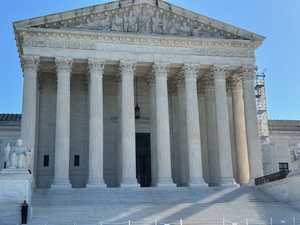
COLUMBIA — Whether Danny Ford II will be on the Aug. 11 ballot for U.S. Senate may be decided by the state Supreme Court.
The state GOP appealed a judge’s ruling Tuesday requiring the party to certify his candidacy in time for early voting.
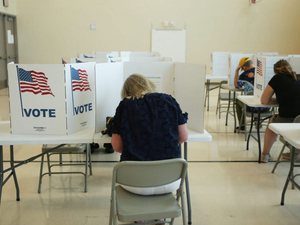
Judge Daniel Coble gave the state Republican Party 24 hours to officially qualify Ford and ordered the state Election Commission to include his name on “all ballots feasible” for voting that starts Wednesday. Coble rejected the party’s and election officials’ arguments that such late changes aren’t feasible for an election already underway.
Ford wasn’t asking for changes to the nearly 1,900 ballots that had already gone out to absentee voters and military members overseas.
“This means that the Court’s Order can be tailored to impose minimal impact on the election,” wrote Coble, a judge in South Carolina’s 5th Judicial Circuit.
But within hours, the Republican Party took its case to South Carolina’s high court, asking justices to block the order.
“This drastic remedy is necessary to preserve the status quo, prevent voter confusion, and avoid further burdening election administration,” attorneys for the state GOP wrote in its motion.
The high court gave Ford’s lawyers until 5 p.m. Wednesday to respond. That corresponds to the close of the first day of early voting.
Meanwhile, the state Election Commission went ahead and complied to Coble’s order and added Ford’s name to the list.
If it remains, Ford’s addition would mean there will be 10 people competing in the special GOP primary to replace the late Lindsey Graham as the nominee on November general election ballots.
Ford was among three candidates decertified shortly after the filing deadline ended July 28. The Upstate farmer and Darius Mitchell of Columbia were deemed ineligible for failing to meet a new rule the party passed at its June convention requiring all candidates vote in two of the last three statewide GOP primaries.
Acknowledging that such a ruling requires extraordinary circumstances, Coble wrote, “Is this case not one of an extraordinary measure?”
The unexpected death of South Carolina’s senior senator, a recently passed GOP rule, a lack of clarity on its specifics, a fast-moving election, exceptions to federal law to accommodate state law’s truncated timeline, and a candidate who was just on GOP primary ballots in June all combine to make the court’s mandatory intervention appropriate, he wrote a day after hearing both sides’ arguments.
“Our constitution says everyone who’s qualified should have a chance to vote and to run,” said Senate Minority Leader Brad Hutto, one of Ford’s attorneys. “This upholds Danny Ford’s right as a Republican to be on the ballot.”
SC GOP will likely lose case, judge says in keeping US Senate candidate in the race, for now
A party spokesperson did not immediate return a request for comment.
The order is officially a preliminary injunction applying only to Ford, son of Clemson’s first football national championship coach.
But even if he remains on the ballot, the case will be moot in a week if Ford doesn’t advance to the Aug. 25 runoff, which is expected to be necessary. If no candidate gets more than 50% in the Aug. 11 primary, the top two vote-getters face off two weeks later.
Coble’s order does not settle questions about the constitutionality of the GOP rule that disqualified Ford and Mitchell.
Both competed on GOP ballots in June. Mitchell placed fifth June 9 among Republicans challenging Graham’s re-election.
Ford lost his bid to become South Carolina’s next agriculture commissioner in a June 23 runoff. He contended his participation in the June 9 and June 23 GOP contests satisfied the two-out-of-three rule anyway. The state GOP said those elections were part of the same cycle, so it counted as only one of the necessary two, and the previous time he voted in a primary was 2004.
But if the lawsuit plays out, Ford’s arguments would likely succeed, Coble wrote. He agreed with the GOP that political parties have a First Amendment right to “associate with like-minded people they want to be associated with.
“The government cannot force political parties to open its door to anyone that it does not desire, nor can the government force political parties to abolish rules that limit those that may join,” he wrote. However, he added, there are limits when it comes to certifying someone for the ballot.
And the state GOP’s own lack of consistency in interpreting its rule makes it “capricious and arbitrary.” The rule refers to “statewide Republican primaries” without defining what that meant.
Though Ford hasn’t voted often before running for office this year, “I don’t think anybody doubts Danny’s a real Republican,” Hutto said.
Coble’s order mentions that all sides agree part of the rule passed in June isn’t possible under state law. It requires candidates to be a registered Republican for at least 90 days — in a state where voters don’t register by party.
In a footnote, Coble wrote he’s pointing that out to “bolster the argument that the Party Rule is floundering in arbitrariness.”
The rule, effective July 1, was passed ahead of the party suing in federal court for the ability to close primaries to registered Republicans. The party is hoping to accomplish through the federal courts what it hasn’t been able to do through the GOP-dominated Legislature.
At the time, no one expected a special statewide primary to test the new rule so soon.
Columbia