Alabama Power reports year-to-year increase in second-quarter profits
Aug 04, 2026 | 5:59 am ET
Description
The logo for Alabama Power, as seen on January 24, 2023. The company reported higher profits in second quarter versus last year. (Brian Lyman/Alabama Reflector)
Alabama Power reported an increase in its comprehensive income this spring compared to last year, according to a quarterly report filed by Southern Company, its parent company, last week.
The company reported a comprehensive profit of about $435 million for the second quarter of this year, an increase of 15% from the $381 million profit that it earned in the second quarter of 2025. For the first six months of the year, the utility’s comprehensive income was $860 million, up from $756 million in 2025, an increase of nearly 14%.
“Ultimately, I think it shows that Alabama Power is more profitable than ever,” said Daniel Tait, executive director of Energy Alabama, an organization that advocates for more renewable energy use in the state and has been critical of the utility. “We have seen years and years of record profits, and now we have another quarter.”
A message was sent to Alabama Power on Monday seeking comment.
Alabama Power’s earnings contributed to the overall profitability of Southern Company. The parent company’s profits totaled about $242 million in the second quarter, about a 10% increase over the same period last year.
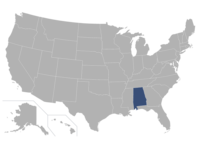
The increased profits came amid ongoing questioning of Alabama’s high residential power rates. According to the U.S. Energy Information Agency (EIA), Alabama residential customers in May paid an average of 16.77 cents per kilowatt-hour, a 4% increase over May 2025 and one of the highest rates in the South. Mississippi residents paid 16.16 cents per kilowatt-hour that month; Georgia customers paid 15.84 cents; Florida residents paid 15.17 cents and Tennessee residents paid 14.47.
Concern over high electricity rates led to an attempt in the Legislature this spring to force the Alabama Public Service Commission, the state’s utility regulator, to hold regular rate hearings, in which utilities must justify rate increases. But senators altered the legislation to expand the PSC from three members to seven and place it under the authority of a secretary of energy beginning next year, moves that critics said would weaken the utility’s authority.
The law also prevents the PSC from holding a rate case hearing unless the newly created Secretary of Energy authorizes it or it is approved by five of the seven members who serve on the PSC.
Messages seeking comment were left with PSC candidates on Monday. James Gordon, a former state representative and the Democratic nominee for Place 1 on the Alabama Public Service Commission, said if elected, he wants to work with other PSC members to reduce Alabama Power’s kilowatt-hour charges by 25%.
Should he be elected, Gordon said he wants to work with his colleagues on the PSC to negotiate that reduction.
“They stripped it of its power. So, now it is more of a request to get to that point. If you don’t get five commissioners to be on the same page, then you won’t get to that level,” Gordon said of the rate case. “So, my goal is to try and negotiate 4 cents per kilowatt-hour for our price reduction for the citizens of Alabama.”
Based on the unaudited financial statements, Alabama Power’s profits came from significant expense reductions from its business operations.
“The (profit) increase was primarily due to a decrease in other operations and maintenance expenses and an increase in other income (expense), net, partially offset by an increase in depreciation and amortization,” the company said in its financial statement.
The company reported a decline in its retail revenues of about $8 million versus this time last year, going from $1.718 billion to $1.710 billion. The company also took in less wholesale revenues from its non-affiliate customers, going from about $98 million in the second quarter of 2025 to roughly $85 million in the most recent quarter of this year.
However, the company took in more money from wholesale electricity it provided to its affiliate customers, or Georgia Power and Mississippi Power, also part of Southern Company. That revenue line increased from $36 million in the second quarter of 2025 to $55 million in the quarter that just concluded.
Alabama Power also increased its profits by decreasing its expenses. The largest decrease in expenses came from the “other operation and maintenance” line item. That number went from $472 million in the second quarter of 2025 to $415 million in the second quarter of 2026, a decrease of about 12%.
The company also offset some of its expenses by using a reserve account to pay for costs related to transmission, distribution and power generation. The company also saved about $15 million in expenses for the sale of “unregulated products and services,” $8 million in savings from the purchase of the Lindsay Hill power plant and deferred costs of about $12 million.
Montgomery