After years of neighbor opposition, a private airstrip for Beta’s CEO nears approval
Aug 03, 2026 | 11:21 am ET
Description
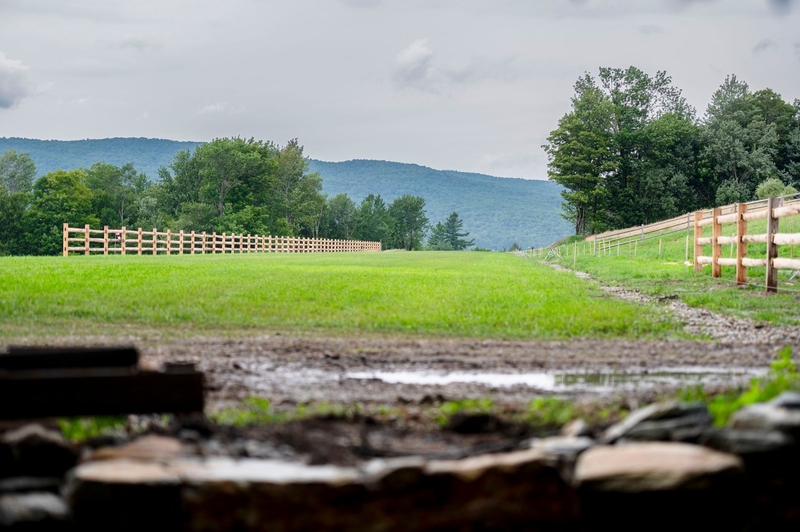
A 900-foot airstrip at the home of BETA founder Kyle Clark in Lincoln seen on Wednesday, July 29, 2026. Photo by Glenn Russell/VTDigger
LINCOLN — Four years ago, local residents believed Beta Technologies’ CEO Kyle Clark would not be able to fly his planes over their homes after the town denied his application for a private airstrip.
But Clark’s efforts have since shifted to federal and state channels. Recently, the project has quietly inched closer to final approval.
“It runs counter to how people in Vermont prefer to operate — with a lot of power in town government rather than state government coming in and telling you what to do,” said Sarah Laird, a Lincoln resident and petitioner against the airstrip, describing the approval process.
The Federal Aviation Administration last Tuesday denied an appeal, filed by Laird and fellow Lincoln resident Marilyn Ganahl, to a conditional determination it granted Clark for the airstrip last summer. Now, after years of opposition, the application lies in the hands of the Vermont Transportation Board, the final step in the approval process.
But recent steps have unfolded without public comments or hearings, according to FAA documents obtained by VTDigger and Evan Robinson, aviation program manager at the Vermont Agency of Transportation. A representative for Clark maintained that the electric aviation CEO has gone through the appropriate channels who have approved the airstrip for safety, but some neighbors say their safety concerns still haven’t been fully weighed.
“We just want the courts, the transportation board and the FAA to understand that there are two sides of the coin,” said Mike O’Conner, a retired marine naval flight officer and Lincoln resident who has for years opposed the airstrip.
Since Clark initially proposed the private airstrip in 2022, it has been at the heart of a fierce debate over safety and the rural quality of Lincoln, even causing some supporters of Clark to lose friends. The town’s zoning administrator issued Clark a permit early that year, but Ganahl appealed it. After several public hearings, the town’s zoning board of adjustment denied the application.
The following year, the town’s development review board also voted against the proposal. But in 2025, a challenge brought by Clark to state environmental court reversed that decision, greenlighting the land-use portion of the application while referring questions of noise, safety and public interest to the FAA and the Vermont Transportation Board.
Opposing neighbors say that without public hearings in the recent federal and state processes, those questions haven’t been adequately addressed.
“We were all told that we couldn’t talk about safety and noise, but we would get a chance to do that when the FAA got involved in it, and Vermont Transportation Board got involved in it, and then we got to that stage, and it totally got blown out of the door,” said Dan Guy, a Lincoln resident who opposed the airstrip in environmental court.
After the FAA granted Clark the determination in June 2025, the next agency to weigh the application, the state transportation board, reached out to the state Agency of Transportation for recommendations on whether public hearings were needed, according to Robinson. Because of the town’s public hearings and the court proceedings on the issue, the agency did not find public hearings necessary, Robinson wrote in a statement to VTDigger.
While that decision is in line with an exception in the board’s rules and regulations, opposing neighbors say it goes against what the board previously told them. In an email to Laird last summer obtained by VTDigger, a member of the board wrote, “We will hold at least one public hearing.”
The town’s selectboard asked the state board to hold a hearing for the application in a letter to the board last fall, which also detailed “Lincoln’s continuing concerns about the hazards and operation” of the airstrip.
Laird, Ganahl and other opposing neighbors sent letters to several state representatives on Sunday asking the state to hold public hearings during its approval process of the airstrip.
The FAA did not take public comments on the permit — despite earlier saying it would consult “interested persons” — because public consultation is only required for “controversial proposals and those that have a potential adverse effect on the users of the airspace,” an FAA director wrote in the letter denying the petition brought by Laird and Ganahl. The FAA found that Clark’s proposed airstrip did not fit that bill.
But Roy Goldberg, an aviation attorney and lawyer for Laird and Ganahl, described that reasoning as circular. Because the FAA did not conduct public hearings, it did not know about the controversiality and potential adverse effects of the airstrip.
A safety report, prepared by national aviation consultant Lee Moak and commissioned by the petitioning neighbors, raised concerns that the runway’s short length, around 900 feet, would impact nearby homes, schools, forests and farm animals and require a dangerously low flight path.
The FAA found that these concerns were addressed when it granted Clark the conditional determination last summer, it wrote in the Tuesday letter. The petitioning neighbors, however, don’t agree.
“Our expert has shown that it’s not safe, and nobody cares,” Goldberg said.
The FAA, whose determinations for airport proposals are advisory, does not consider “environmental or land use compatibility impacts,” the FAA director wrote in the letter.
A Vermont Agency of Transportation airstrip inspection conducted this summer was submitted to the board and found that it was suitable for operations, and that obstacles for departure and approach were mitigated.
A spokesperson for the Clarks emphasized that there is no safety issue with the airstrip, pointing to state transportation agency and FAA inspections.The federal and state inspections found that the airstrip was safe to operate through an aeronautical study and site visits, recommending restricted daytime and private use to further ensure safety. The FAA’s determination acknowledged that operations at the airport are “highly challenging due to the terrain and runway length,” encouraging safe operations by “experienced pilots with proper equipment.”
The Clarks’ spokesperson said the family has continued to seek approval of the airstrip despite the local town board’s opposition because air travel is the family’s “heart and passion.”
“They love the town of Lincoln,” the spokesperson said.
But the town has grown incredibly divided over the issue since the initial proposal four years ago.
“I’ve lost some friends because of it,” said Louella Bryant, a Lincoln resident who supports the airstrip. She described the airstrip opposition as being fueled by people not liking change and believes Clark is “doing good things.”
The opposing neighbors, however, have framed the dispute as a challenge to uphold the town’s decisions.
“The town did not have the money to defend itself, so I stepped forward to defend the town boards’ decision,” Ganahl said.
Clark heads a multibillion-dollar publicly traded company, which earned him $15 million when it debuted on the stock exchange. The electric aviation company has since been lauded by state officials for the economic growth it is contributing to Vermont, and was selected for an FAA electric aircraft developer program earlier this year.
Now that the FAA denied the neighbors’ petition to reconsider its determination, the state transportation board, a quasi-judicial board, will ultimately rule on the airstrip. The board declined to comment on when this written decision would be released. Even though the FAA’s determination is a recommendation and not binding, it encourages state boards with land use authority to consider the agency’s findings in making zoning and permitting decisions.
While the current state transportation board declined to comment on the ongoing case, former executive secretary of the board John Zicconi addressed the issue of private airstrips in a 2021 letter to municipalities.
“These private facilities can dramatically change the character of an area and can have negative impacts while providing a private benefit to few,” Zicconi wrote.
Read the story on VTDigger here: After years of neighbor opposition, a private airstrip for Beta’s CEO nears approval .
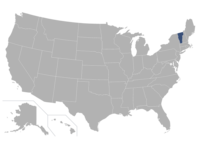
Montpelier, VT