Alaska North Slope crude oil records fifth-highest monthly average price in history
Nov 03, 2026 | 9:00 am ET
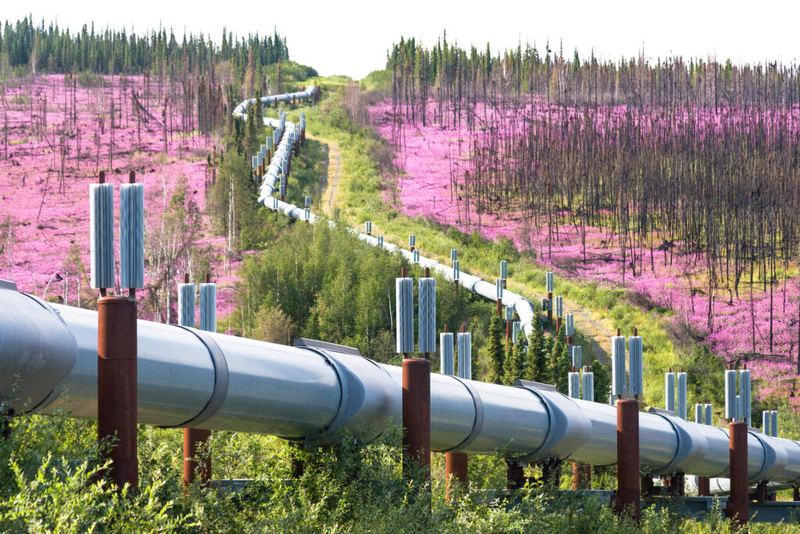
Description
Fireweed blooms on either side of the trans-Alaska pipeline near mile post 86, Dalton Highway in 2006, two years after the 2004 Dall City fire. (Photo by Craig McCaa/BLM Alaska)
The average price of a barrel of Alaska North Slope crude oil in October was $122.21, according to figures published Monday by the Alaska Department of Revenue.
That figure is the fifth-highest nominal average on record, according to the department’s regular tracking, and foretells millions of dollars in extra revenue for the state in the current fiscal year.
Only three months in 2008 and March 2012 had higher average values. Adjusted for inflation, the October average ranks significantly lower.
Oil revenue typically pays for about one-third of Alaska’s annual general-purpose spending, and higher prices likely mean more money for services and the Permanent Fund dividend when state legislators reconvene in January.
Higher prices also mean individual Alaskans pay more for heating fuel, gasoline and diesel.
This spring, the department forecast that ANS crude would average $75 per barrel in Fiscal Year 2027, which runs from July 1 of this year through June 30, 2027.
Instead, prices since July 1 have averaged $98.13 — almost 25% higher than expected. Oil production in FY27 has been almost 7% below the forecast, but that also appears to be changing. In October, the North Slope averaged 524,446 barrels of oil per day, the highest monthly average so far in FY27.
While the Iran war has driven oil prices upward through most of 2026, shipments through the Strait of Hormuz have risen and were only about 25% below prewar levels in October.
Prices have stayed persistently high, the Economist reported on Oct. 29, because Chinese oil demand has rebounded and because market traders fear a new escalation of violence in the Middle East.
The Economist’s analysis was based on Brent crude, a global standard based on oil from the North Sea.
Alaska North Slope crude is selling for even more than Brent, thanks to refiners who are currently willing to pay a premium.
In October, oil buyers were willing to pay an average of $13.91 more for a barrel of North Slope oil than a barrel of Brent, the largest premium since May and one of the largest in history.
“The premium reflects tightness in the Pacific basin, where ANS trades,” said Aimee Bushnell of the Department of Revenue on Oct. 22. “Shipping disruptions tied to the Iran war have limited Middle East crude deliveries to major importers such as China, Japan, India, and South Korea. Uncertainty over shipping and delivery has led refiners to place a premium on crude that avoids high-risk routes, and grades from the Americas are among the safest options.”

Juneau