‘Don’t Flock me’: California, U.S. lawmakers debate license plate reader technology
Aug 03, 2026 | 8:00 am ET
Description
In summary
They’re all over our roads and really good at helping police solve crimes, but do California’s automated license plate readers need limits?
In the past year alone, they’ve helped catch suspected murderers, bank robbers and hit-and-run drivers. They’ve located dozens of stolen cars and helped send a wildland arsonist to prison.
They’re also distrusted and despised by privacy rights activists on the left and on the right. Just last month, police accused a suspect in Monterey County of yanking down three of them with his pickup.
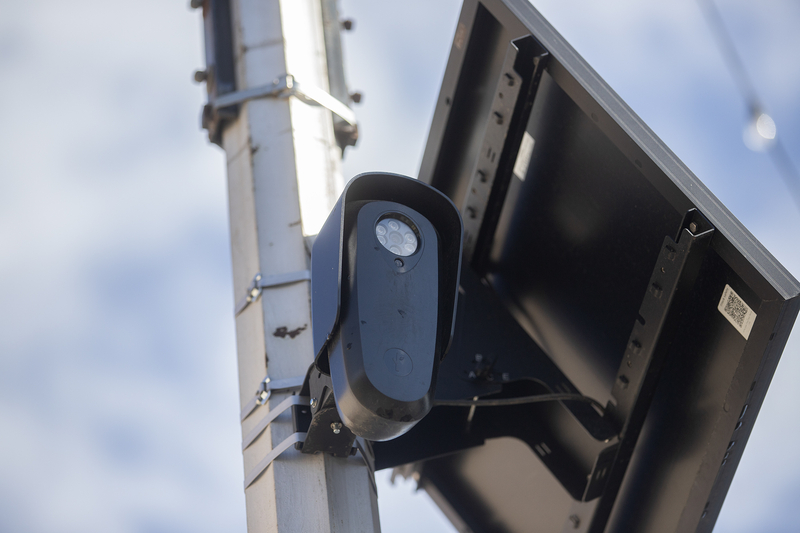
They’re called automated license plate readers. Every day, untold numbers of Californians drive past the thousands of cameras that at least 230 police and sheriffs’ departments have posted along roadways or installed on their patrol cars. The cameras in real time capture and read plate numbers, then cross-reference them with law enforcement databases of vehicles police want to locate, such as stolen cars, getaway vehicles or those that may be carrying a missing or wanted person.
Since 2019, California Democratic lawmakers have unsuccessfully sought to further restrict how police use the technology. They’re trying again this year with a bill that would add limits on how long police may retain license plate data, how they access it and with whom they share it.
Police agencies and officers’ unions across the state oppose the latest measure, which is similar to a bill Gov. Gavin Newsom vetoed last year.
“This bill is about one simple principle: Protecting the privacy and safety of Californians while ensuring law enforcement tools are used responsibly before it’s too late,” the author of this year’s legislation, Riverside Democratic Sen. Sabrina Cervantes, told the Assembly privacy committee last month. She did not respond to a request for an interview from CalMatters.
Learn more about legislators mentioned in this story.
Critics of the technology cite high-profile examples of California police using license plate data inappropriately, including to stalk or harass innocent people. As CalMatters reported last year, California officers have repeatedly violated an 11-year-old state law that prohibits sharing the data with federal authorities and others outside the state.
404 Media also reported last year that a Texas cop searched a national license plate database to try to locate a woman who had an abortion, leading to fears that conservative states that criminalize abortion are accessing California’s plate data to hunt down patients or providers.
Cervantes’ bill would generally limit to 30 days the amount of time agencies could keep license plate data, unless it pertains to an active investigation or is part of a search for missing people. It also sets limits around who can access the data and adds training and search-tracking requirements.
Police and sheriffs’ departments would be prohibited from entering into contracts with camera companies that provide default access to plate databases that federal and out-of-state police can search.
That provision is in response to Flock Safety, a prominent license plate reader company that allowed federal authorities to search local license plate data as part of a pilot program, said Tracy Rosenberg of Oakland Privacy, one of the bill’s supporters.
“(Police departments) learned after the fact, like our advocates did,” Rosenberg said. “And we all said, ‘What the …’ You know, pick your four-letter word.”
Flock Safety did not respond to CalMatters’ request for an interview, but the company says on its website that it doesn’t work with immigration agencies and it stopped its federal pilot programs. Local agencies have total control over the data Flock readers collect, the company said.
“By default, sharing with federal agencies is disabled,” the company wrote. “ICE does not have direct access to Flock cameras, systems or data.”
Why police are opposed
At least 39 police agencies and officers’ unions oppose Senate Bill 1013. Combined, they have spent at least $5.6 million on legislative campaigns since 2000, according to the CalMatters Digital Democracy database.
Police say the technology has proven invaluable at helping them solve crimes.
Tustin Police Chief Sean Thuilliez, president of the California Police Chiefs Association, said the technology helped clear an innocent man. It also identified a suspected killer when a woman was shot and killed on a street in the Orange County city in May.
The woman had just testified against her ex-husband in a restraining order case, making him a prime suspect, Thuilliez said.
But Thuilliez said that thanks to the city’s 102 license plate readers, eight of which are from Flock, detectives quickly ruled out her ex-husband and were able to apprehend her former boyfriend at the Mexico border. He’s now charged with first-degree murder.
“It’s technology mixed with good investigative work,” he said in an interview. “But within one weekend, we were able to arrest the suspect for this person’s murder.”
The Berkeley Police Department noted similar successes after 52 Flock cameras were installed last year. In a report to the Berkeley City Council, the department noted license plate readers had been used in 121 cases, contributed to 58 arrests and led to the recovery of 37 stolen vehicles.
The department noted its rate for solving robbery cases climbed from 34% in 2024 to 49% the following year, thanks in part to the license plate data.
“The technology has fundamentally improved how officers patrol and how detectives investigate crimes spanning a range of serious offenses including robbery, kidnapping, carjacking, burglary, weapons violations, organized retail theft, stolen property and DUI,” the report said.
Why Newsom vetoed last year’s bill
Such investigative success stories may have helped persuade Newsom to veto last year’s bill, which would have required police to dump their license plate data within 60 days.
In his veto message, he said the restrictions on sharing data and forcing departments to purge it could hinder officers’ ability to solve cold cases and find missing people.

Newsom also said there was no money in the budget to pay for the mandatory California Department of Justice audits last year’s bill would have required.
To address Newsom’s concerns, this year’s proposal allows police to retain data to locate missing people and it makes a state audit program contingent on future funding.
Newsom’s press office declined to say whether he has a position on the latest bill, which has advanced through the Legislature with only Republicans voting against it. The measure is now pending before the Assembly Appropriations Committee.
Meanwhile, at least one Republican lawmaker is taking the issue to Congress. U.S. Rep. Thomas Massie of Kentucky recently shared a meme of a “Don’t Tread on Me” snake wrapped around a camera. The riff on the yellow Gadsden flag says, “Don’t Flock me.”
“I’ll soon be sponsoring a bill to withhold federal money from municipalities and police departments that deploy Flock (and other style) cameras to surveil law-abiding citizens,” Massie wrote on Facebook.
Rosenberg of Oakland Privacy said she understands the cameras’ usefulness to California police, but she thinks they’ve become ubiquitous. Police, she said, also shouldn’t have a permanent pass to keep “mountains” of data for as long as they want.
“There is kind of a balancing act. We as human beings also need some camera-free space,” she said. “We don’t want to be on camera every minute of every single day.”
Sacramento