Why elections mean faster state budgets in Pennsylvania
Aug 03, 2026 | 3:15 am ET
Description
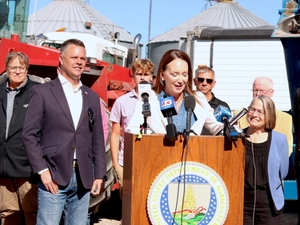
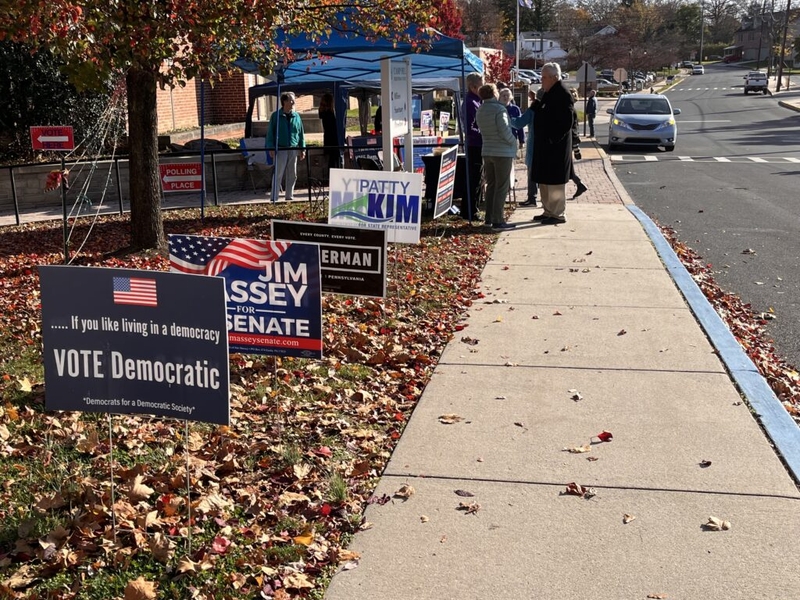
Most state budgets have been late during the past 20 years in Pennsylvania. But in non-election years, negotiations go three times longer. (Photo by John L. Micek/Pennsylvania Capital-Star)
The vast majority of state budgets have been late during the past two decades in Pennsylvania – but in non-election years, negotiations drag on three times as long, according to an analysis by the Capital-Star.
This year, for example, with an election coming up for half the state Senate, the entire state House and the governor’s office, lawmakers approved a budget within two weeks of the June 30 deadline. That’s a dramatic departure from much of the recent past, including negotiations that went 135 days last year when none of those seats were up aside from a couple special elections.
Several factors play into the election-year budget effect known to careful observers and many people who work in Harrisburg. The Capital-Star talked to several of them.
Here are the main takeaways:
It wasn’t always like this
During non-election years, it’s taken lawmakers about three times as long to negotiate state budgets, according to an analysis of the past two decades.
Prior to that, late budgets were rare in the commonwealth. Republicans held a trifecta for most of the decade leading up to the election of Gov. Ed Rendell in 2003. Since then, it’s been divided for all but four years under former Republican Gov. Tom Corbett.
But lawmakers and analysts say disagreements between a divided government is just one factor.
“Under (GOP Gov. Tom) Ridge, they would resolve the budget by May,” said Sen. Anthony Williams (D-Philadelphia).
In fact, three budgets under Ridge were resolved in May. Two came together in June – and one in April.
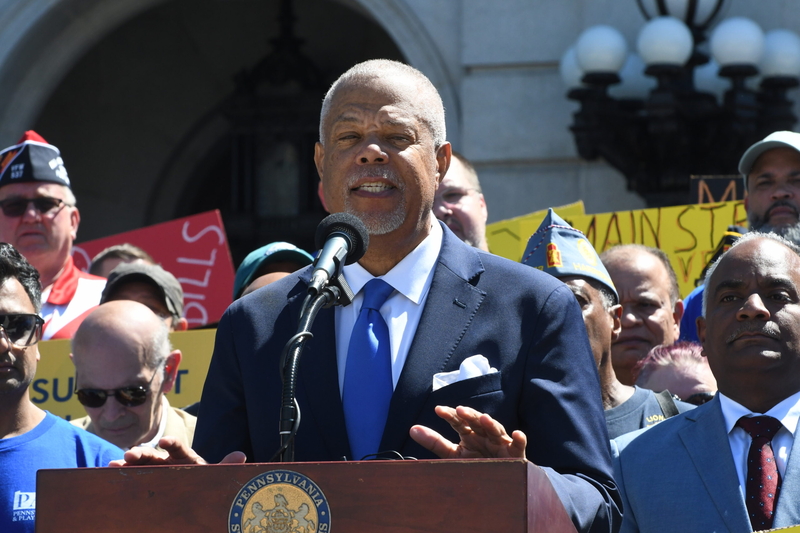
Williams assumed office in 1998, during Ridge’s first term. He succeeded his father the late Hardy Williams – who’d been in the legislature since his election to the state House in 1971 and went through a few budget impasses during the divided governments of Democratic Govs. Bob Casey Sr. and Milton Shapp.
Williams noted late budgets became more frequent and dramatic at the beginning of Rendell’s term and escalated during Gov. Tom Wolf’s administration, coinciding with accelerated political polarization.
“When I first arrived, … it wasn’t parties, it was about the institution,” he said. “The structure hasn’t changed dramatically. So, what’s the hold up other than partisan politics? It’s about power and party, not about substance. No one wants to risk putting their brand in a negative light.”
And that’s exacerbated while candidates are seeking re-election. They want to avoid extended budget negotiations and any votes and debates that could be spun as controversial and provide fodder for opponents, experts say.
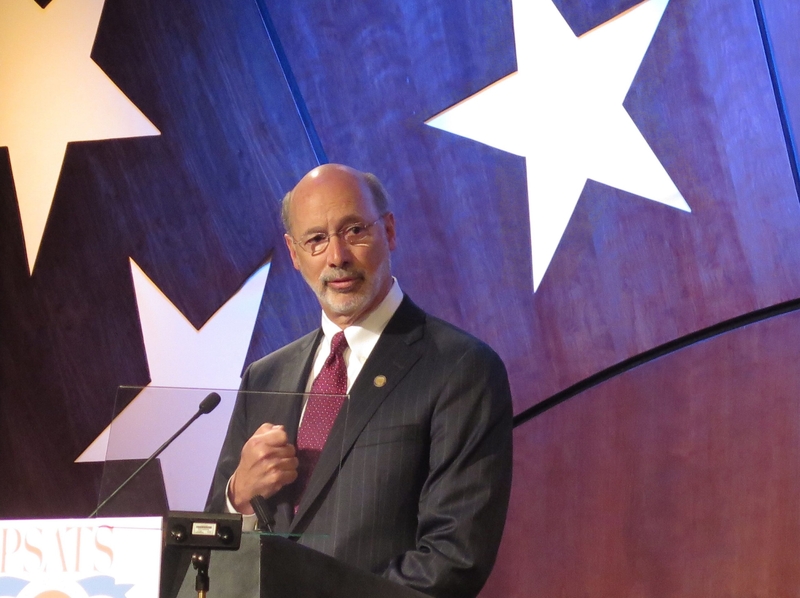
Where compromise once might’ve been seen as an accomplishment, there’s a fear or belief that it could amount to a betrayal among voters in today’s political landscape.
“Elected officials and elected leaders, the things they prioritize are different,” said Berwood Yost, director of the Center for Opinion Research at Franklin & Marshall College in Lancaster. “And I think there are legitimate differences in [policies], spending priorities and the belief in the role of government, state government particularly. … But it comes back to polarization and priorities” – both between and within parties.
Another factor in Pennsylvania: a late budget used to mean a government shutdown. But a 2009 state Supreme Court decision removed that from the equation with its ruling that state workers must be paid regardless of whether a current budget is in place.
“Before you had this big lever, you had this big cudgel. ‘If we don’t pass this budget, all the state workers won’t get paid.’ And that was a pretty big deal,” said Republican strategist Christopher Nicholas. “It was a big hit to the Harrisburg economy because so many state employees are based here.”
So big, Nicholas recalled, that local banks created loan programs specifically for state workers during those earlier impasses.
“Once they changed the law, it was like, ‘Yeah, whatever. You guys fight it out. I’m still getting my paycheck every two weeks,’” he said.
Voters care (kind of)
And now, more than 15 years later?
Budget season still matters to people in the capital region, Nicholas said, but not so much beyond that – for the most part.
“There’s a whole set of people here – legislators, lobbyists, maybe some members of the press – that make their vacation schedules based around what they think the state budget’s gonna be,” he said. “If you go 50 miles from here and talk to a regular person, June 30th is not some super big date on their calendar.”
Whether it’s a major issue or not, polls suggest most voters have an opinion about who’s to blame when state budgets run late.
F&M’s Center for Opinion Research has polled representative samples of Pennsylvania voters during multiple impasses.
Yost shared six sets of responses from 2007 through 2016.
In each case, respondents could choose whether the governor or legislature was more at fault – or they could say they weren’t sure. Every time, more than half picked the legislature, about one-third chose the governor and the remainder indicated they did not know.
In 2023, the choices were the governor, House Democrats and Senate Republicans. Nearly a third blamed the Senate GOP most, 20 percent each pointed at the governor and House Dems – and 28 percent responded they did not know.
“The bottom line about the polling data is that there’s enough blame to go around,” Yost said. “And that governors typically aren’t the ones that are perceived as being the major problem.”
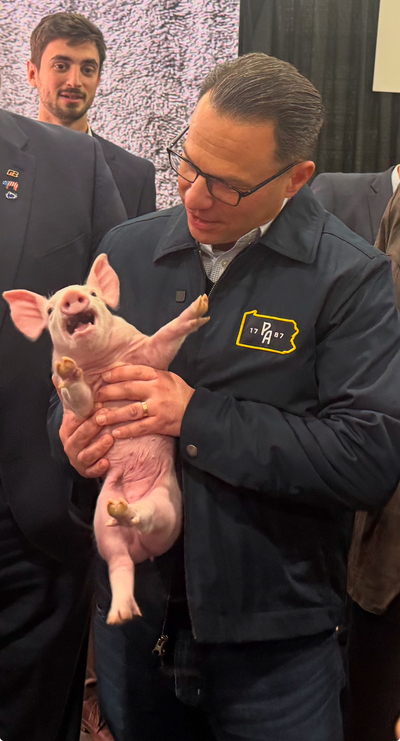
Despite that, Williams believes Shapiro’s presidential ambitions provide motivation for the GOP to ensure the budget is late – even if only by a hair.
“Josh Shapiro is viewed as a viable presidential candidate,” Williams said. “So even if it’s a day, a week or two late, they can say it’s late two, three years in a row – whatever it is.”
Budget impasses rarely yield big benefits
Asked to identify a significant change, people interviewed for this story breakthrough or compromise coming out of drawn out budget negotiations over the years.
They overwhelmingly pointed to the commonwealth legalizing casino gaming in 2004 as the biggest example.
State Sen. Nikil Saval (D, Philadelphia) cited one that came up during the 2025 impasse. He opposed it, but nonetheless recognizes its significance.
“I didn’t support this, but the Republicans – and, indeed, some Democrats supported it as well – had a major breakthrough when they were able to get Pennsylvania to withdraw from the Regional Greenhouse Gas Initiative,” Saval said. “That was one of the things that unlocked the rest of the budget [in 2025]. You could argue that that was a breakthrough.”
Pennsylvanians are more immediately familiar with the costs of a late budget, having witnessed them last year.
If budget negotiations drag on long enough, counties and schools might need to borrow money, siphon savings or pause programs. Some nonprofits, community service providers and other contractors similarly cut staff, services or even fold completely.
In a survey of nearly 200 community service organizations, the majority reported running through their contingency funds during the 2025 impasse. Close to half cut staff, workers’ hours and/or client services. And more than one quarter were grappling with losing federal funding simultaneously.
These impacts, however, take months to materialize, Nicholas noted, versus the immediate and relatively geographically concentrated effect of a state government shutdown at risk years ago but no longer.
Other issues, meanwhile, languish while the budget takes up much of the bandwidth at the Capitol – unless they’re tied into the horse-trading of budget talks.
That was avoided this year, with campaign commitments looming on lawmakers’ summer calendars.
Is election-year efficiency rooted in self-interest?
Expediency during election-year budgeting is an “unspoken understanding,” said Saval, who’s midway through his second term.
“Outside the building, it gets voiced more clearly: controversial issues, subjects that are the subject of deeply partisan negotiations, major budgetary items – a lot of those things tend to be avoided,” he said. “Expectations tend to get lowered early on – maybe even as early as the (governor’s) budget address in February – in terms of what we expect to address in a given cycle. People tend to be risk-averse. There is a strong desire on the part of those who face competitive elections in the fall to go home and campaign.”
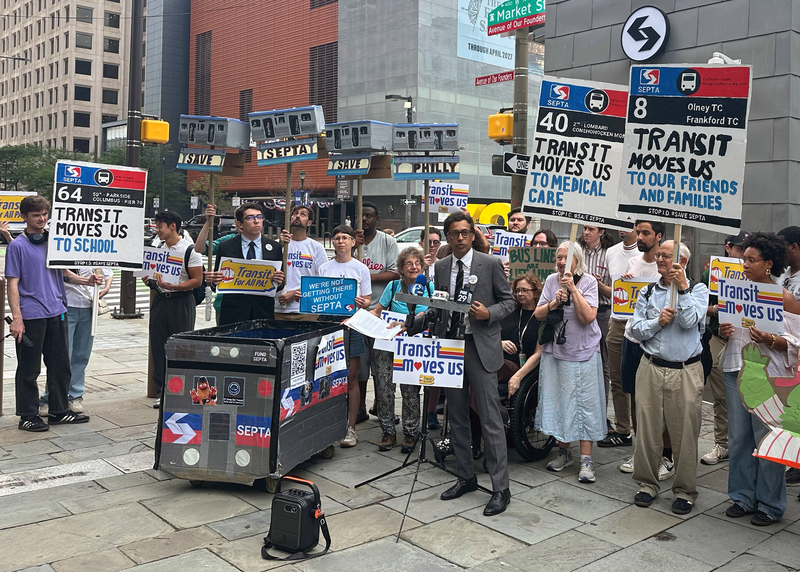
Aside from scheduling, campaigns might consider the potential for longer negotiations to provide fodder for opponents, Nicholas said.
Truncated talks come with a cost, too.
“It ends up leading to deferred action on a number of key issues that might otherwise be addressed or at least broached,” Saval said.
Saval and Sen. Katie Muth of Montgomery County were the only Democrats who voted against the budget, citing many of the same reasons.
The Capital-Star reached out to nearly a dozen Republicans who voted against it. Some didn’t respond; representatives for others indicated they were unavailable.
At the moment, there’s an opportunity to raise revenue in ways that aren’t controversial with most voters – and yet it didn’t happen, Saval noted, pointing to “missed opportunities” with digital ad taxes and data center regulation.
Similarly, lawmakers did not address skill games regulations, despite being under a court order to do so by Oct. 13 and the need for the billion-dollar tax revenue stream it would provide. Instead, they balanced the budget on paper by deferring Medicaid expenses.
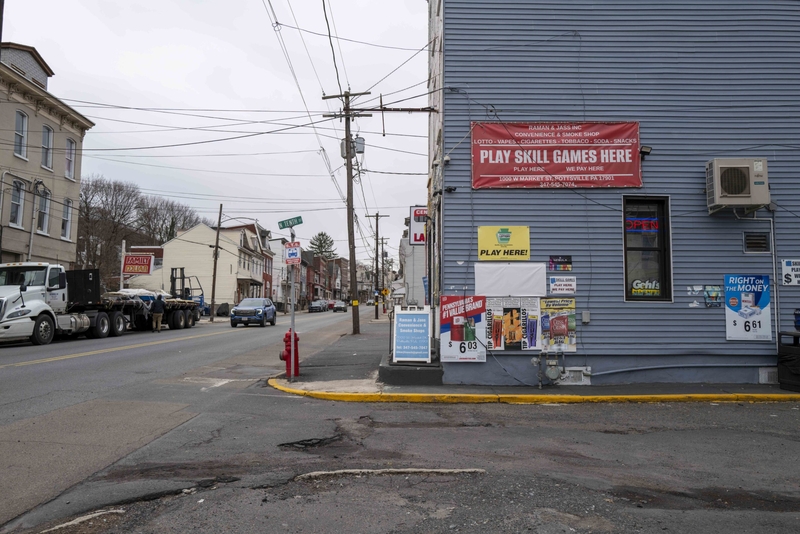
“The (Pennsylvania) Supreme Court decision would give them cover to do that, and they didn’t take it – which surprised me,” said Yost, referring to the lobbying pressure in opposition.
Apart from this year’s budget gap, new revenue is needed to fill in the corporate net income taxes that the commonwealth’s been phasing out, Yost said, adding to the state’s structural deficit.
Not to mention tightening financial margins stemming from persistently high inflation, cumulative borrowing costs at all levels of government and other pressures in communities across the commonwealth – which, as is often the case, fall on constituents.
“It kind of slides by,” Yost said, “and no one’s held responsible.”
Harrisburg, PA