Health advocates raise alarms about Nebraska’s ‘rushed’ implementation of Medicaid work requirements
Jul 31, 2026 | 1:20 pm ET
Description
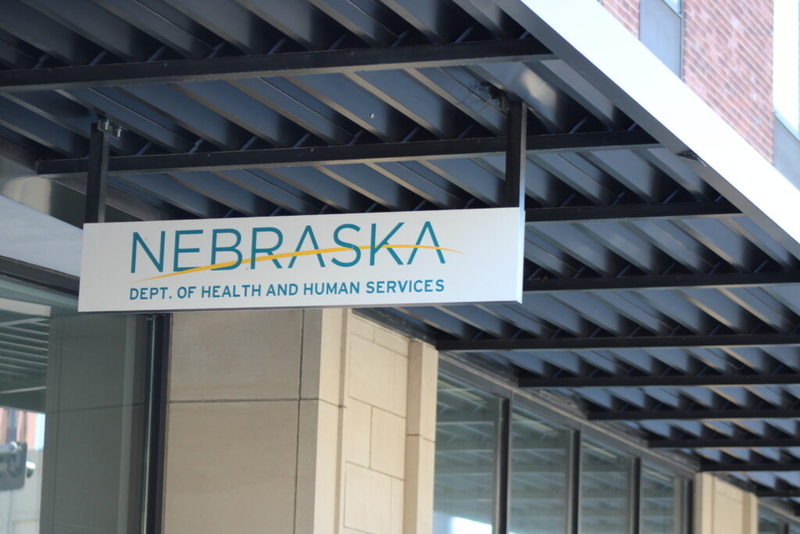
A sign in front of the Nebraska Department of Health and Human Services' Lincoln Public Assistance Office on Oct. 30, 2025. (Juan Salinas II/Nebraska Examiner)
LINCOLN — After Nebraska implemented new Medicaid work rules eight months ahead of a federal deadline, Angela Lindstrom with the Health Center Association of Nebraska said some residents have waited up to 90 minutes on the state’s phone line to get their questions answered.
“As you can imagine, our certified application counselors are sitting with a patient — they don’t have 90 minutes to sit there and wait,” Lindstrom said. “A lot of times these people have a lot of barriers just to be able to get to the appointment.”
Lindstrom was one of several health advocates that shared concerns about what they called a “rushed” implementation of new federal work requirements for Medicaid participants in Nebraska. The Friday discussion was hosted by watchdog group Nebraska Appleseed. Several speakers said the added complications are deterring overall participation in Medicaid, and noted there remains a list of questions state officials have yet to answer.
Nebraska was the first state in the U.S. to comply with new work requirements for Medicaid participants added under the “One Big Beautiful Bill” Congress passed last year. Under the new rules, most able-bodied Medicaid participants between 19 and 64 must show they’ve worked a minimum of 80 hours per month, or show they have earned at least $580 each month.
Sarah Maresh, Appleseed’s program director for health care access, estimated the new rules will apply to roughly 70,000 Medicaid enrollees in Nebraska.
Nebraska becomes first state to add new Medicaid federal work requirements
States are required to implement the changes by Jan. 1, 2027, but Nebraska began requiring new enrollees to comply on May 1. Starting Aug. 1, the rules will apply to existing enrollees, meaning that some current participants could lose coverage.
The one exception in Nebraska is Dawson County, which was approved for a temporary exemption as the county struggles with a high unemployment rate following the closure of the Tyson Foods plant.
In an interview with nonprofit news organization Tradeoffs, Nebraska’s Director of Medicaid and Long-Term Care Drew Gonshorowski estimated that about 200 Nebraskans will lose Medicaid coverage starting Aug. 1, under the new rules. While Maresh said this was lower than she was expecting, she noted that the new rules will be applied to existing enrollees at their monthly renewals, so she wasn’t anticipating an immediate steep drop-off in participation.
Maresh added that remaining unanswered questions include:
- How many applicants have been denied Medicaid coverage since May 1?
- How are some of the temporary exemptions being defined, such as work that requires employees to travel?
- When will the state be publicly sharing data related to the Medicaid changes?
Officials with Nebraska’s Department of Health and Human Services did not immediately respond to a request for comment.
Maresh said it was contradictory for Gov. Jim Pillen to expect Nebraskans to comply with the new work requirements when he recently called for a hiring freeze within state agencies in a memo he released earlier this month.
Lindstrom said the changes have not only confused Medicaid enrollees and applicants, but also some state workers charged with implementing the changes. She shared an instance of one pregnant applicant who was denied coverage despite being eligible, simply because the state missed that she was pregnant on her application.
In addition to long wait times on the state’s standard phone line, Lindstrom said there have been bigger issues for the state’s hotline for Spanish speakers. She said the Spanish line was out of commission for more than six weeks between May 15-July 1.
Megan Word, Nebraska government relations director for the American Cancer Society Cancer Action Network, said the changes will likely increase the chance of Nebraskans delaying healthcare treatments, which in turn will increase their likelihood of needing more costly emergency care.
Cheri Stollar, a Lincoln-based therapist and single mother of five, backed up Word’s point. She said she went uninsured for most of her life, and as a result she held off seeking treatment for a collection of medical issues until some of them became life-threatening.
Stollar qualified and enrolled in Medicaid last year, and said she’s offended by the stigma that enrollees are “lazy.” As a therapist, Stollar said she’s encountered people with mental health issues so severe that they aren’t capable of working on a daily basis.
Stollar said she feels like the Medicaid changes are “kicking people when they’re down,” as many Medicaid participants are low-income or struggling with severe and ongoing health issues.
State Sen. John Fredrickson of Omaha, a mental health professional who sits on the Nebraska Legislature’s Health and Human Services Committee, said the disruption the Medicaid changes can cause to patients could amount to more than “just a paperwork delay.” In some cases, he said it could cause medical crises that otherwise would have been preventable.
Fredrickson highlighted that implementing these changes ahead of schedule was a choice from the governor, and not a requirement, which he found troubling.
“It’s really not the badge of honor that the governor and his allies in the Legislature seem to really think that it is,” Fredrickson said.
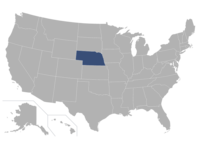
Lincoln, NE