Where do the candidates for governor stand on data centers?
Jul 31, 2026 | 8:45 am ET
Description
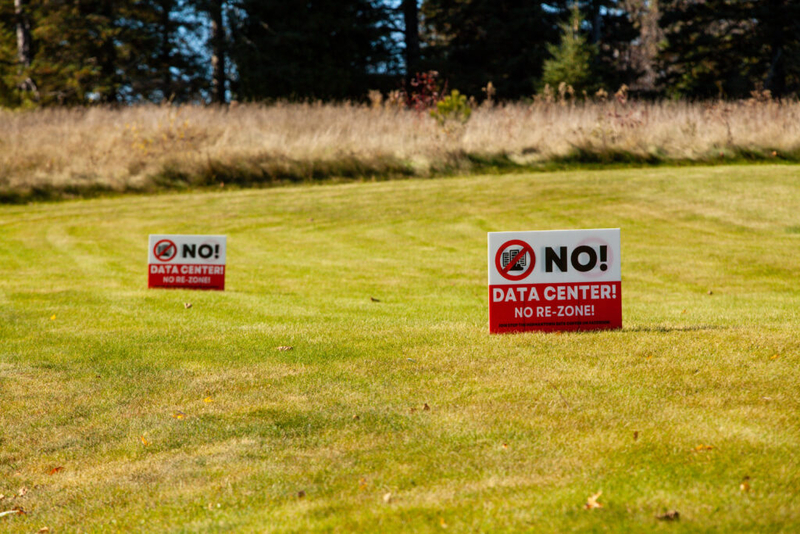
Protest signs stand in a front yard near the land earmarked for a large data center campus in Hermantown, Minnesota, just outside of Duluth, is shown Friday, Oct. 24, 2025. (Photo by Nicole Neri/Minnesota Reformer)
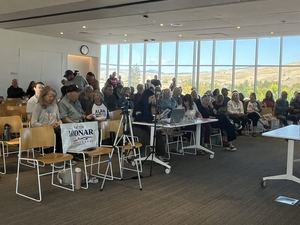
Nearly 100 Monticello residents, decked out in red shirts, crowded into City Council chambers in February — nearly doubling the average attendance — holding signs protesting future data center development.
The meeting stretched for nearly three hours, as residents interrupted debate between council members, calling for a moratorium on data centers.
It’s a familiar scene across Minnesota, in small communities and big cities, ruby red and indigo blue alike.
A recent Star Tribune/Kare 11/Hubbard School of Journalism poll found that 63% of Minnesotans oppose data center construction in their communities.
Among their concerns: air, noise and light pollution; the risk of increased electricity bills; and water consumption needed to cool down servers.
Data centers have multiplied in Minnesota since 2010, storing your banking and medical records and cat videos, but so-called hyperscale data centers — housing the massive computing power necessary for AI — are attracting new and withering scrutiny.
Minneapolis, Eagan, Elk River, Inver Grove Heights, Apple Valley and Rosemount have enacted moratoriums in last-minute attempts to delay data center construction amid residential outcry. But the tech giants are pressing on, saying Minnesota’s relatively cool climate, available land, electricity and water make it the ideal environment for development.
A data center owner recently sued Eagan over its one-year data center moratorium.
Amid that passionate and widespread opposition, Minnesota’s next governor will confront a significant policy and political challenge.
Data center construction has delivered high-paying jobs for skilled tradespeople like electricians and plumbers. The data centers can also be a significant source of property tax revenue amid a volatile fiscal environment that’s forced metro cities in particular to enact big property tax hikes in recent years, which also anger residents.
Thus far, data center development has played little role in the campaign to determine Minnesota’s next governor.
The Reformer sent a questionnaire to the four major gubernatorial candidates ahead of the August 11 primary. We asked if they would approve additional tax incentives, as well as water and environmental permits. And, if they would allow local governments to pass temporary moratoriums, and to sign non-disclosure agreements with tech companies.
GOP-endorsed candidate Kendall Qualls and Republican House Speaker Lisa Demuth did not respond to multiple requests for comment.
MyPillow CEO Mike Lindell
Lindell, the Trump-backed gubernatorial candidate, said he approves of data center construction that does not cater to “corporate welfare or secrecy deals that loot Minnesota’s resources for Big Tech cronies.”
At least eight Minnesota cities and two counties signed non-disclosure agreements with tech companies over prospective data center proposals, shrouding the negotiation process in secrecy through code names and confidential documents.
Hermantown listed planning documents under the code name “Project Loon.” Rosemount, where Meta recently completed a data center project, hid Facebook’s parent company’s involvement under “Project Bigfoot.”
There was a bipartisan effort to ban local officials from signing NDAs with tech companies, but the bill stalled in the Legislature this year.
Asked if he would support a similar ban, Lindell said yes.
Want an AI data center in your city? Sure, but first sign this non-disclosure agreement.
Lindell said he would only approve additional water and environmental permits for data centers with protections in place for farmland.
“Strict scrutiny only — with full cost recovery, recycling mandates, and real protections for aquifers and farmland first,” Lindell said.
Minnesota currently offers data centers sales tax exemptions if they exceed 25,000 square feet. New data centers must invest at least $30 million within four years, whereas refurbished data centers must invest at least $50 million in two years.
“Repeal the exemptions,” Lindell said. “Taxpayers and ratepayers shouldn’t subsidize these grid- and water-straining operations.”
Lindell supports local governments enacting moratoriums on hyperscale data center projects, which house over 5,000 servers and span over 10,000 square feet, pending independent reviews that address “cumulative energy, water, land use and taxpayer costs.”
“Minnesota’s future belongs to families, farmers, and producers — not server farms for out-of-state billionaires,” Lindell said. “We prioritize transparency, accountability and ending the two-tiered grift.”
U.S. Sen. Amy Klobuchar
Klobuchar, the presumptive Democratic nominee, did not respond directly to the Reformer‘s specific questions about local moratoriums or the use of NDAs in data center negotiations.
“The Senator supports robust environmental standards for any proposed data centers as well as greater transparency and local control over decisions to build,” said Darwin Forsyth, Klobuchar’s spokesman.
The Legislature passed a bill in 2025 requiring data centers to pay for the full cost of their energy usage, including equipment upgrades, to keep energy costs down for consumers.
“That legislation was a good start, and the senator will work with legislators if additional changes are necessary to protect Minnesota consumers,” Forsyth said. “Her number one focus will be on protecting Minnesotans’ energy bills and our state’s water throughout the process.”

Saint Paul, MN