Morrisey: 52K kids applied for school clothing assistance before program ran out of money
Jul 29, 2026 | 1:05 pm ET
Description
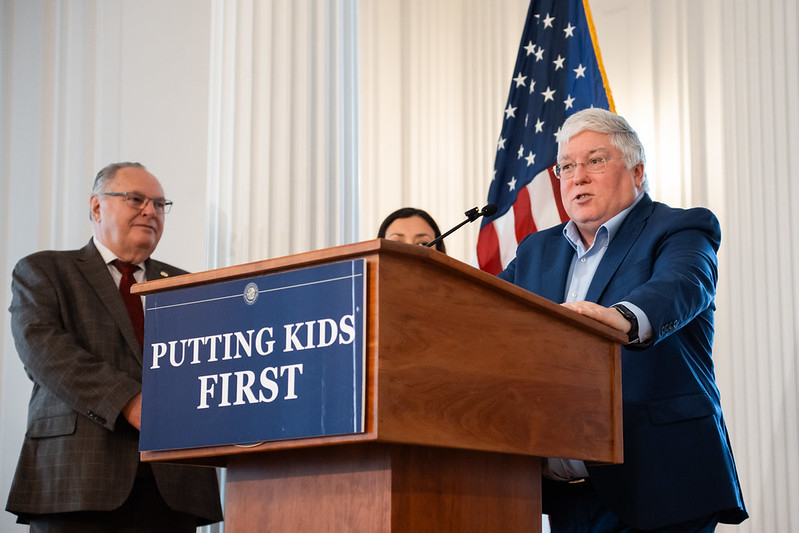
Gov. Patrick Morrisey holds a press conference about the state’s foster care system on Tuesday, Jan. 6, 2026 in Charleston, West Virginia. (Photo courtesy of the West Virginia Office of Gov. Patrick Morrisey)
Gov. Patrick Morrisey’s office says 52,000 children in West Virginia applied for the school clothing assistance program before funds ran out by Monday night.
Applications were open for seven days after the program launched July 20, which was later than expected.
“Applications were to be accepted through August 15 or until available funding was fully allocated. This year, demand for the benefit was extraordinarily high, and the available funding was exhausted before the application period ended. As a result, approximately 52,000 eligible children applied for school clothing allowance vouchers,” said Lars Dalseide, the governor’s communications director.
Last year, the state’s school clothing assistance program has typically served more than 57,000 children, according to the governor’s office. Eligible families can use the vouchers to shop for shirts, pants, shoes, coats and more at retail stores before school starts.
West Virginia pays for the program through the federal Temporary Assistance for Needy Family, or TANF, program.
Earlier this year, lawmakers authorized $177 million in TANF funding for the state Department of Human Services to spend this current fiscal year on programs that help low-income children and families.
“While the Legislature appropriated spending authority for the voucher program (and other programs supported by the state’s TANF allotment), spending authority is not the same as funding,” Dalseide said. “West Virginia has been spending significantly more on TANF programs each year than it receives in recurring federal TANF dollars, with the difference covered by reserve funds accumulated over time. At the current spending rate, those reserves were projected to be exhausted in approximately 13 months.”
Due to the projected $43 million TANF deficit, Morrisey has been reviewing the state’s use of TANF dollars. The review caused a delay in launching the school clothing assistance program.. In the past, the program typically began accepting applications July 1.
“This year’s School Clothing Allowance program was administered with a defined funding allocation as part of the administration’s broader review of TANF spending. The goal is to ensure these critical services remain available not only this year, but for years to come, while placing the program on a more sustainable financial footing by not spending more TANF dollars than we receive,” Dalseide said.
“West Virginia cannot continue relying on one-time reserve funds to support ongoing programs,” he continued. “The administration is committed to being responsible stewards of taxpayer dollars and federal assistance while continuing to work with the Legislature to evaluate every available option to support West Virginia families and preserve essential TANF-funded services for the future.”
West Virginia uses TANF funds to also pay for foster care services, the child care assistance program, family support centers and to support nonprofits focused on helping needy families.
The Morrisey administration has not yet publicly shared budget documents that could provide additional details about the deficit.
During the budget approval process earlier this year, lawmakers based their TANF authorization amount on Morrisey’s request. DoHS officials never alerted lawmakers that the state could face a deficit in TANF funds, some lawmakers noted.
Members of the House of Delegates Finance Committee plan to ask the Morrisey administration for details about their TANF spending during legislative interim meetings in August.
- 3:16 pmThis story was updated to say that 57,000 children received the school clothing assistance program in 2025.
Charleston, WV