Mississippi landowners prepare as FERC pipeline decision nears
Jul 29, 2026 | 12:32 pm ET

Description
Photo courtesy of Mississippi Today
Audio recording is automated for accessibility. Humans wrote and edited the story.
A federal government commission is set to release by Friday its decision on a proposed natural gas pipeline that would cross the full width of Mississippi.
Tennessee Gas Pipeline Co. and Southern Natural Gas Co., both a part of the giant Kinder Morgan network, are looking to build the new infrastructure to increase gas capacity in the southeastern United States.
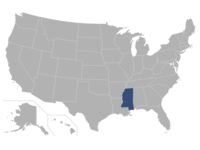
The project would connect to already existing pipelines and transport gas from Greenville across 10 Mississippi counties — Washington, Humphreys, Holmes, Attala, Leake, Neshoba, Newton, Lauderdale and Clarke — to Butler, Alabama. The company would also build new compressor stations in Humphreys, Attala and Lauderdale counties.
The 206 miles of new pipeline would provide up to 1.5 billion cubic feet a day of added transportation capacity, according to the Federal Energy Regulatory Commission. The $1.7-billion project would create 750 temporary jobs and 15 permanent positions, according to Kinder Morgan.
FERC, which is in charge of approving interstate transmission projects such as this, released a final environmental study of the project in June. The agency wrote that while the project would have “some limited adverse environmental impacts,” mitigation measures would render those effects “less than significant.”
In a March letter, environmental groups, including Mississippi Rising Coalition, questioned the project’s impact on the over 2,000 water bodies it would cross and said it would “irreparably harm wildlife habitat.”
“(The proposal) will lock the Southeast into decades more of reliance on a dirty, volatile, and expensive form of energy that comes at a particularly high price for those on or near the Projects,” the groups wrote.

The Mississippi Band of Choctaw Indians, whose reservation in Neshoba County is adjacent to the planned route, also expressed concerns. Melanie Carson, the tribal historic preservation officer, said the pipeline companies have offered little communication despite the route’s proximity to tribal land. One of her biggest concerns is that the infrastructure would cross the Pearl River, a valued natural resource for the tribe.
“At the end of the day, we feel like we were not properly consulted,” Carson said. “Just sending me an email to read stuff is not proper consultation. I’ve had no meetings with these people for the Mississippi Crossing (project).”
In March, the U.S. Bureau of Indian Affairs criticized the companies for not engaging with MBCI, and wrote that the proposed route overlaps with tribal land in Leake County. But both Tennessee Pipeline Gas Co. and FERC disagreed — the latter suggested in its June study that the pipeline wouldn’t impact historic property.
Carson argued the agency lacks the institutional knowledge to make such a determination.
“We’re looking for not just how it’s going to affect us modern day, but how it potentially affects parts of our history that we want to keep intact and things that we use today for cultural reasons,” she said.
‘Let’s make the best of it‘

For the last 30 years, Tony Kinton has owned land in Leake County where he hunts and grows timber. A nature writer and photographer, the 77-year-old described the 200-acre property as a sanctuary.
“I mostly just go up there to kind of remember who I am,” Kinton said.
A couple years ago, he said, he received a letter saying that a proposed pipeline would go across his property. While Kinton said he would have preferred to keep his land undisturbed, he soon recognized he had little choice in the matter.
In the 1940s, Congress gave gas companies the ability to acquire land for pipelines through eminent domain, a process landowners can challenge in court.
Kinton said the companies were “professional and gracious,” working with him to adjust the route through his property to avoid any spring heads or hardwood forest. He also said he negotiated a price but couldn’t disclose the amount. While the pipeline would ultimately go through a patch of pine trees on Kinton’s land, he figured that was the best outcome he could manage.
“It’s going to happen, so let’s make the best of it,” he told Mississippi Today. “Like I say, I’d rather have the trees than the check. But that’s sentiment, that’s not necessarily a financial thing.”
Jackson, MS