Despite Landmark Settlement, Residents of Notorious Nursing Home Chain Continued to Suffer
Jul 29, 2026 | 5:00 am ET
Description
The photos were shocking: Four Buffalo nursing home residents, partially undressed, in heavily soiled clothing. They were “covered in black feces and soaked in urine,” with “fire red” skin, an inspection report later found. Some of the photos showed the residents’ buttocks and genitalia.
A nurse aide who worked at the facility and was concerned about the care residents were receiving texted the photos to their supervisor and posted them on social media. The inspector’s report expressed deep concern about the treatment of the residents, noting that graphic photos of them had been shared online, and that the home didn’t report the incident for three days.
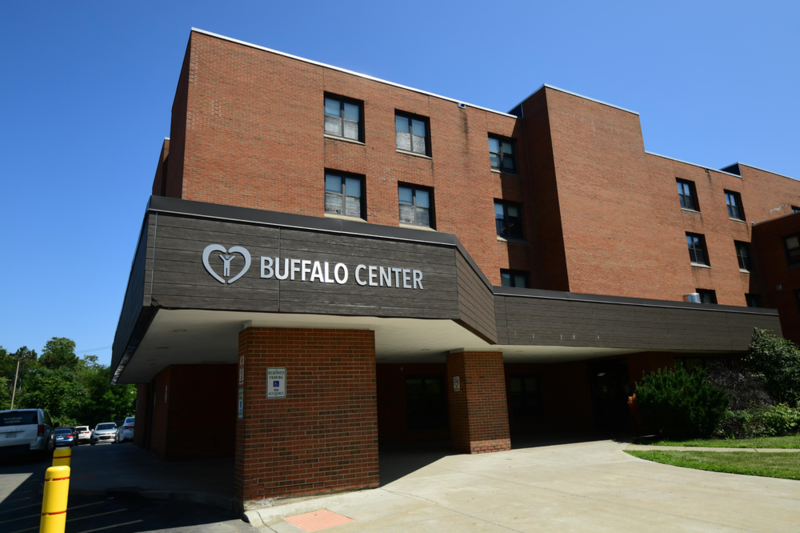
Conditions like this aren’t supposed to happen anywhere, but they especially aren’t supposed to happen at this home, the Buffalo Center for Rehabilitation and Nursing.
In November 2024, Centers Health Care — the 37-facility nursing home chain that owns Buffalo Center — settled a lawsuit brought by New York Attorney General Letitia James that accused the chain of chronic neglect, understaffing, and running a years-long scheme in which its owners pocketed over $80 million in Medicaid funds meant for patient care. The settlement required the chain and its owners — healthcare moguls Daryl Hagler and Kenneth Rozenberg — to pay a $45 million fine, increase staffing to safe levels, and hire independent monitors to protect residents and prevent fraud. It did not seek to remove Hagler or Rozenberg from the company, and neither admitted wrongdoing under the settlement.
At the time, James said that the settlement would lead to “major reforms” that would “ensure residents receive the care they deserve.”
Under the agreement, Buffalo Center and three other nursing homes with especially egregious records are required to provide at least 3.5 hours of nursing care per resident per day. That amount is still well below the roughly four hours that a landmark 2001 study sponsored by the federal government found was necessary for safe, top quality care.
But Buffalo Center has missed the target on 82 separate occasions from November 2024 to December 2025, the most recent month for which data is available. During that time span, at least three instances of abuse and unsanitary conditions have been reported at the facility.
“Folks living under 3.5 hours of care are living in deadly places,” said Sam Brooks, who studies nursing home policy at the National Consumer Voice for Quality Long-Term Care, an advocacy group for residents’ rights. “You’ll see people unable to eat, people that don’t get out of bed, pressure ulcers that are gaping wounds.”
(The other three homes targeted in the lawsuit have complied with the 3.5-hour requirement, with only very occasional misses.)
“Folks living under 3.5 hours of care are living in deadly places.”
—Sam Brooks, National Consumer Voice for Quality Long Term Care
The settlement also barred Centers Health Care from reducing the “staffing level or quality of care” at its other nursing homes in order to boost care at the four targeted facilities.
But in the 20 months since the settlement, multiple homes across the chain that weren’t part of the settlement reduced the amount of nursing care they provide. The lack of staff has coincided with at least six serious incidents including falls, injuries, and in one case, death of a resident. In three instances, staff initially failed to report the harms to state authorities, in apparent violation of state law.
New York Focus reached out to Centers Health Care, the individual homes, Hagler, Rozenberg, and their lawyers. None responded to multiple requests for comment.
Abuse allegations and unlivable conditions aren’t unique to the Centers Health Care chain. In 2025 alone, dozens of New York nursing homes were cited for conditions that placed residents in “immediate jeopardy” of injury or death, the most serious category of violation.
Still, Centers Health Care stands out. Despite its apparent violations of the settlement with the attorney general, it has not faced any punishment.
In response to questions, attorney general spokesperson Grant Fox said that the office is “actively reviewing Centers’ compliance with our settlement.”
“We will continue to investigate facilities to protect vulnerable New Yorkers,” Fox said.
The 2024 settlement specified that if Centers failed to improve, the attorney general could impose fines, reopen the lawsuit, or “take any other action authorized by law.” None of those things have happened. Instead, Centers nursing homes have continued to receive taxpayer money and accept new patients, while the same patterns of neglect that prompted the lawsuit continue.
These findings come from dozens of inspection reports and spreadsheets of employment data analyzed by New York Focus. The records do not contain worker or patient names or identifying details, but do provide daily staffing data and detailed accounts of failures in care.
Since its founding in 1996, Centers Health Care has grown into one of the largest nursing home chains in New York, with facilities in every region of the state. It is a massive recipient of public money: From 2014 to 2021, the four nursing homes targeted in the attorney general’s lawsuit received hundreds of millions of dollars from Medicare and Medicaid, the government insurance programs for elderly and low-income Americans.
Those millions continue to flow into Centers’s nursing homes. And for residents whose stays are not covered by the government, Centers charges up to $725 per day, far above the roughly $500 average New York rate. The chain frequently sues patients who don’t pay up.
State regulators have the authority to bar dangerous nursing home operators from receiving Medicaid money, the largest source of funding for nursing homes. But this runs the risk of leaving patients without other options, and it’s only happened five times in New York since 2005, according to data from the state Medicaid office.
New York isn’t the only state where Centers and its owners stand accused of fraudulently pocketing public funds and leaving patients to suffer. In January, New Jersey’s state comptroller sued Hagler and Rozenberg, after accusing them and numerous codefendants of diverting $124 million in Medicaid payments to themselves at two facilities where residents endured neglect, sexual assault, and death. The case remains pending.
At Buffalo Center, the same month that the photographs of exposed residents were taken, inspectors documented dozens of flies in patients’ rooms, crawling on residents’ bodies. A nurse said she believed flies were attracted to one particular unit because of a resident urinating on their mattress and floor. In an interview, the facility’s maintenance director told the state inspector that the facility had been working with an exterminator to address the issue.
New York law guarantees “individual dignity” to nursing home residents, but an administrator told an inspector that the flies were “not a dignity concern,” the inspector recorded. The administrator admitted that the environment was “not homelike,” a standard required by federal regulation.
The low staffing levels appear to have contributed to physical injuries as well.
In August, a resident suffered a deep gash to their face after a nurse aide rolled them out of their bed and onto the floor. When the accident occurred, a nurse aide was attempting to change the resident, who was incontinent, despite documentation that the task required two staff to be performed safely. The resident was “severely cognitively impaired” and could only rarely communicate with others. Their care plan noted that they were at risk of falls.
They were taken to the hospital, where they received surgery for the wound, which stretched from their mouth to their eye.
In September, Buffalo Center failed to report alleged abuse. In an email to an administrator, a resident’s guardian said that a nurse aide threatened to give the resident a cold shower and withhold food, and stepped on their foot, all as punishment for vomiting.
The email claimed that the aide’s behavior was “a form of abuse,” but Buffalo Center did not investigate the incident or report it to authorities. When questioned by inspectors, the administrator who received the emails said they “inadvertently missed the allegation of abuse,” and admitted that they “should have read the e-mails more closely.”
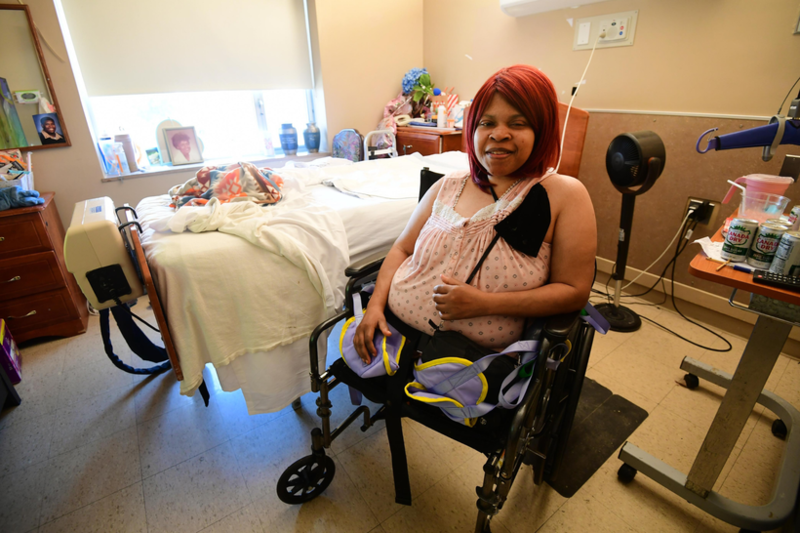
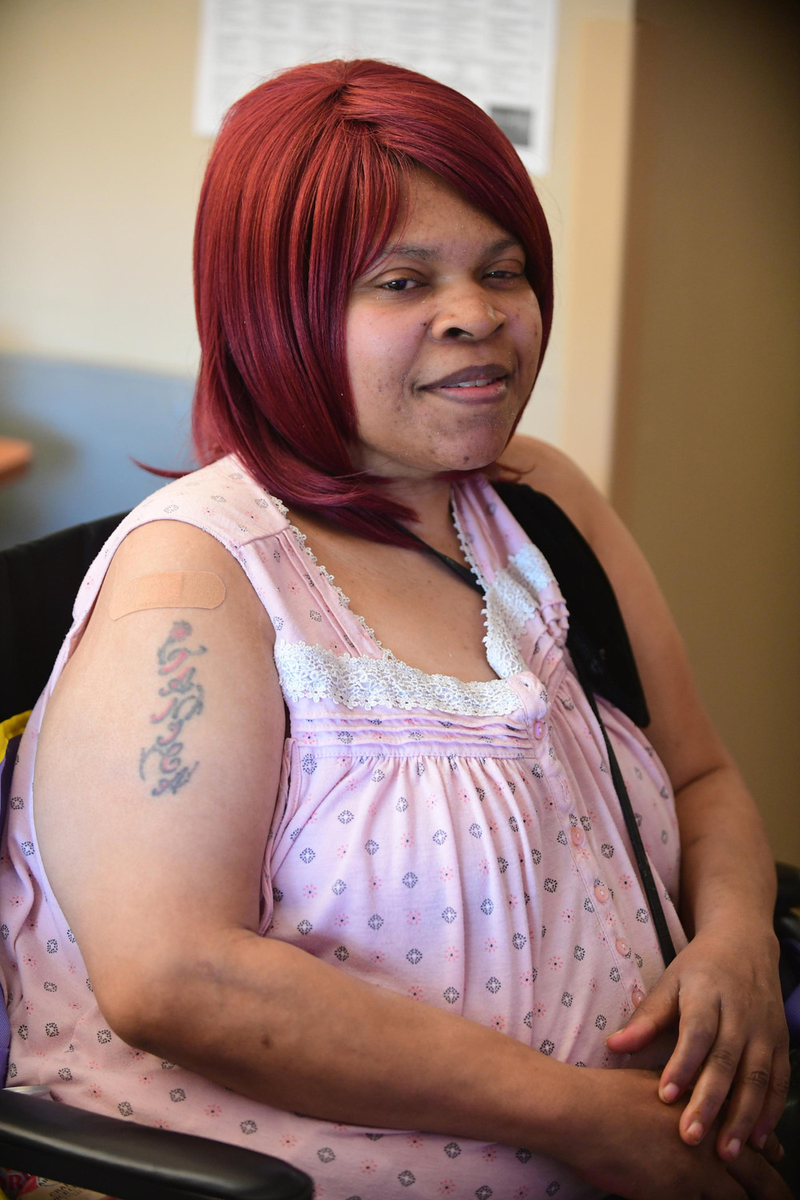
“When I think about that place it brings tears to my eyes because of the way they treated me,” Buffalo resident Tanica Johnson, 39, told New York Focus. She didn’t receive wound care or rehab for weeks on end, she said, despite having been sent to Buffalo Center to recover from an amputation of part of her leg due to complications from diabetes. She thinks her stay there lasted a year, but as one identical day after another slipped by, she lost track of time. “I don’t know how long I was in the place,” she said. “I just know it traumatized me.”
A spokesperson for the attorney general’s office said that in July 2025, Buffalo Center submitted plans to address the nonconsensual photography, fly infestation, and failures to report abuse, and that the facility was in compliance with the state Department of Health by September 2025. The attorney general was not aware of the fall or verbal abuse incidents, the spokesperson said.
Buffalo Center did not respond to multiple requests for comment. In an article about recent incidents and fines, the facility told The Buffalo News that it “takes resident care, safety, and dignity very seriously,” and that it “continues to work closely with regulatory agencies and internal compliance leadership to ensure ongoing adherence to all standards of care and resident rights.”
The independent monitors that Centers was required to hire are set to cease operation on July 31, according to the terms of the settlement. But that can be extended if any of the nursing homes fail to comply with the monitors’ recommendations.
The attorney general’s spokesperson did not say whether the office plans to seek an extension of the monitor’s term.
Federal and state regulators issued multiple fines against Buffalo Center in response to the incidents. The state Department of Health fined the facility $8,000 over the nonconsensual photography of exposed and soiled residents — $2,000 for each resident — and the federal Centers for Medicare and Medicaid services issued fines totaling $139,471 over the inspections that revealed the fly infestations and the ignored abuse allegations.
In 2023, the most recent year for which data is available, the facility made nearly $5 million in net income. The 2025 fines are less than four percent of that sum.
“These companies are making so much money that the fines just don’t mean anything to them,” said Charlene Harrington, an emeritus professor of sociology and nursing at the University of California, San Francisco. “They’re saving a lot of money by their understaffing.”
The legal actions that New York has taken against Centers and other nursing homes are some of the most aggressive efforts in the country, experts told New York Focus.
James’s office “has really been the leader in terms of holding nursing homes accountable,” said Richard Mollot, director of the Long Term Care Community Coalition, which advocates for nursing home residents.

But the persistence of poor conditions and patient neglect at Centers facilities, even after the settlement, is “beyond depressing,” he said, and shows that lawsuits “can’t be our only strategy as a society to hold nursing homes accountable.”
New York’s health department can require nursing homes to hire independent monitors to protect patients, but this tool has only been used twice since the law took effect in 2020.
The state Department of Health did not respond to detailed questions for this article. “The Department is committed to holding nursing homes and their operators accountable for the quality of care they provide, and we remain aggressive in assessing the maximum fines permissible by law in every instance,” spokesperson John Emery said in a statement.
There are other tools available to states to try to hold chains like Centers accountable, but each has drawbacks, experts say.
The state could try to rescind Centers’s license to operate nursing homes or bar the company from receiving Medicaid and Medicare funding, which is the main source of cash for most nursing homes. But there’s a reason states are often reluctant to pursue this path: It’s not easy to find better options.
In fact, when faced with aggressive enforcement, a common response by nursing homes is to threaten to close, and leave their patients with nowhere to go, multiple experts told New York Focus.
“The operators have a bit of a stranglehold on states,” Brooks said. “There aren’t a bunch of really good actors out there waiting to swoop in and buy these homes.”
In extreme cases, federal and state prosecutors have brought criminal charges against nursing home operators.
Unfortunately, that route can also endanger vulnerable nursing home patients. When a health care operator is criminally convicted of health care fraud, they are automatically barred from receiving money from the federal Medicaid and Medicare programs. Since losing Medicaid money can force a nursing home to close and effectively evict its patients, regulators may be reluctant to pursue criminal charges against operators without a plan in place to protect the residents.
“What’s frustrating to me is that the regulatory system and legal system is very slow, and these are life and death issues,” Harrington said.
As Centers’s business has boomed, so have the personal fortunes of Hagler and Rozenberg. In 2021, Rozenberg took control of Israel national airline El Al, allegedly using money that he and Hagler siphoned out of the nursing homes, according to the attorney general’s lawsuit. Both men currently serve on the airline’s board.

Buffalo wasn’t the only Centers facility where residents continued to suffer. Federal data analyzed by New York Focus shows that the amount of nursing care at some other Centers Health Care facilities has dropped significantly in the year-and-a-half following the agreement.
For one resident of the Onondaga Center for Rehabilitation and Nursing, that lack of care may have proved fatal.
On July 21, 2025, the resident fell in the bathroom and told staff they felt dizzy. While there was a licensed practical nurse on duty, there wasn’t a more highly trained registered nurse, who might have been able to assess that the falls were a symptom of something more serious.
That night, a care aide noted that the resident’s breathing was “wet sounding,” and later said that it “sounded like the resident was having trouble breathing.” A nurse said they would “let the right staff know.” If that happened, there is no indication in the incident report that anyone followed up with the resident.
At around 5:30 am, a different nurse found the resident in bed, nonresponsive, with no pulse or breath. The patient’s records showed that they wanted to be resuscitated in the event of an emergency, but the nurse did not have documented CPR certification and did not perform CPR, a violation of state and federal regulations.
Instead, they called 911. Emergency medical workers arrived about 15 minutes later, and soon after, they pronounced the patient dead.
The morning before the death, the resident’s lab results had shown that they were at serious risk for seizures and coma, according to a physician who later assessed the records. But no one reviewed the results until two days later — after the resident had died.
After failing to catch the warning signs, Onondaga Center also neglected to notify the authorities about what had happened. State regulations required the nursing home to report the failure to provide CPR to state regulators. But an unsigned investigation by the facility concluded there was “no evidence” of any “neglect, exploitation, or mistreatment” of the dead patient, so it did not need to be reported.
Calls and emails from New York Focus to Onondaga Center and Centers Health Care about this incident went unreturned.
In a phone call two months later, the director of nursing who was on staff at the time of the death told state investigators that the facility’s staff knew that they were required to report it, but chose not to act after “conversations with corporate staff who did not want it reported.”
After the inspection that revealed this failure, the federal government fined Onondaga Center $177,790, and the state issued a $10,000 fine for the failure to provide CPR. The attorney general’s spokesperson said that the office was not aware of the incident.
When asked about the drop in nursing hours at other Centers facilities after the settlement, the attorney general’s spokesperson said, “Centers is not required by the settlement agreement to implement recommendations from the [Independent Health Monitor] in facilities other than the four subject homes.”
The month of the death, residents at Onondaga Center received less than ten minutes of skilled nurse care per day, on average, and less than three hours of total care — both sharp decreases from the average in the months before the settlement.
Onondaga isn’t the only Centers facility to see a drop in nursing care, or to see that drop coincide with serious harm to residents.
At Washington Center for Rehab and Healthcare, in New York’s capital region, average daily nursing care at the facility has reached new lows since the settlement, dropping below three hours in January 2025 and remaining well below 3.5. In February 2025, a dementia patient fell out of bed after being left unattended and unsecured, bloodying their head and bruising both knees.
The injured patient was a known fall risk. Their care plan called for keeping their bed in a lowered position, placing barriers on both sides of the mattress, and putting protective mats on the floor. On February 12, after the patient had a bowel movement, the nurse aide attending to them went to get fresh linens, leaving the patient alone while the bed was elevated and barriers and mats were missing on one side. Soon after, a nurse heard the patient shouting, and entered the room to find them sprawled on the floor, with a bruised and bloodied head. Washington Center was fined $9,620 by the federal government and $2,000 by the state.
Staffing decreases coincided with dangerous and degrading conditions at the Ontario Center for Rehabilitation and Healthcare, too.
“When I think about that place it brings tears to my eyes because of the way they treated me.”
—Tanica Johnson, former resident of Buffalo Center
During a March 2026 inspection of the Centers facility in New York’s Finger Lakes region, two residents were found in rooms so cold that they were at risk of hypothermia. One was actively shivering, and another was in bed covered only by a sheet, while the heating unit blew cold air into their room. The outside temperature on the day of the inspection averaged 23 degrees.
During a January 2025 inspection, incontinent residents reported waiting up to 21 hours to be changed after urinating or defecating in adult diapers. They said they had to dump a container holding urine out the window when it overflowed. Two patients said that when they called for help changing out of soiled clothing, nursing staff came to their bedsides, said that they were too short-staffed to provide aid, and left.
On multiple days, nurses also failed to change the bandages for two residents with wounds on their legs. Unchanged bandages can lead to infection and permanent tissue damage.
When questioned, multiple staff members explicitly cited understaffing as the cause of the issues. A nurse aide said that their floor, which housed 48 patients, was staffed by two or three workers. Staffing records showed multiple night shifts where two nurses had staffed the entire 98-bed facility.
High-ranking staff did not provide any indication that they had taken steps to address the shortages. An administrator told inspectors that in response to resident complaints, some staff had been fired.
The egregious treatment recorded in the January 2025 inspection was a departure from the pre-settlement norm: Several inspections in the two years before the settlement had not resulted in any serious citations or fines.
Even if the monitor’s oversight is extended, it’s unclear that anything would change significantly for residents of the chain.
For Toby Edelman, an attorney at the Center for Medicare Advocacy, the recent troubles at Centers Health Care highlight the need for more vigorous action by the Department of Health and attorney general’s office.
Edelman suggested that the health department should aggressively issue citations against the troubled Centers facilities, and that the attorney general should reopen the case and seek to impose fines.
“They have a good settlement, but if they’re not really doing follow up, that’s a problem,” she said. “What’s the point of having a settlement?”
Albany