Alabama rural healthcare is in serious condition, but the condition is treatable
Jul 29, 2026 | 5:59 am ET
Description
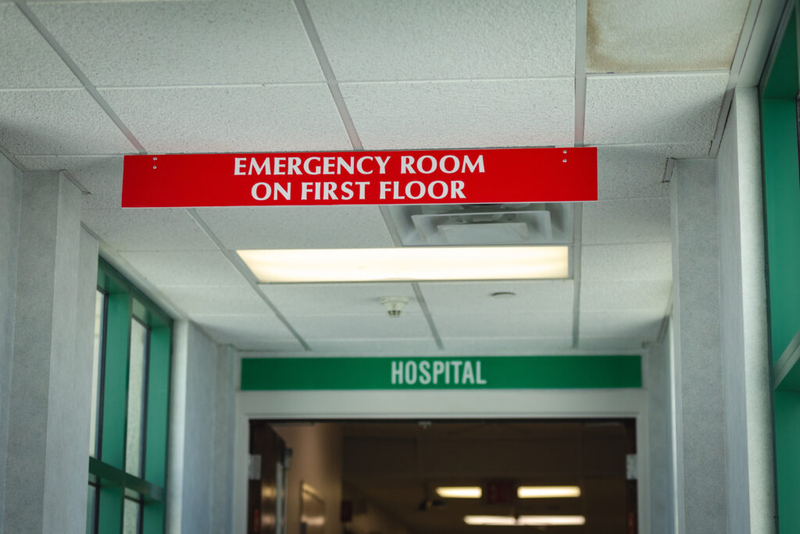
A hallway at Vaughan Regional Medical Center in Selma, Alabama on Tuesday, Sep. 3, 2024. Alabama's rural hospitals are struggling in part due a national Medicare wage reimbursement mechanism that pays health care providers in the state less than those in larger states. (Will McLelland for Alabama Reflector)
In 1948, Life magazine published ‘Country Doctor,’ a masterful photo essay by W. Eugene Smith that documented the work of Dr. Ernest Ceriani, the lone physician for the 2,000 residents of Kremmling, Colo.
In the photos, Ceriani manages to be everywhere all at once, covering an area that stretches 400 square miles on a plateau beneath the Rocky Mountains. On a house call, he sits at the bedside of a man who’s down with the flu. At Ceriani’s 14-bed hospital, he holds up a radiograph he developed himself and, with a cigarette dangling from his mouth, explains the image to his patient.
He amputates a gangrenous leg.
He tries to get away for some fly fishing on the Colorado River, but 30 minutes into the excursion, he’s called away to an emergency: A toddler has been kicked in the head by a horse. In one of Smith’s haunting photographs, Ceriani hovers over the tiny girl, deep worry lines etched into his 32-year-old forehead.
Almost 80 years later, I wonder how far we’ve really come since the days of the sleepless, fedora-clad doctor with his black medical bag. The portrait of rural life feels familiar in many ways.
Medicine as a practice has moved light-years since that grainy postwar period, but rural communities still struggle to keep hospitals open and sustain EMS operations.
Here in Alabama this July, Greene County briefly suspended its ambulance service because it could no longer afford to keep its equipment up to legal standards.
Thankfully, after Gov. Kay Ivey’s office and a private donor each chipped in $35,000, the county was able to source a couple of working ambulances, triaging the crisis temporarily.
Not even a week after the Greene County predicament, Atmore Community Hospital filed for bankruptcy. Its financial straits are by no means isolated; analysis published in May by one healthcare policy center estimated that 17 rural hospitals in Alabama—more than a third of them—are teetering on the brink, facing immediate risk of closure. Between 2005 and 2023, 10 rural hospitals in the state closed. Thomasville has seen its own practically new hospital shuttered since 2024.
A 2023 report by the Maine Rural Health Research Center gets cited a lot in news stories about rural healthcare. In it, the researchers identify U.S. “ambulance deserts,” or areas outside a 25-minute travel radius of an ambulance service location. Alabama ranks second-worst in the country, behind North Carolina. Sixty-four of Alabama’s 67 counties have ambulance deserts.
I realize that’s a hearty dose of bad news to take in all at once. If you’re tempted to click away from it, hang on. The numbers look less grim when framed against the total population of the state. Only 6.3% of the state’s population—or 12.3% of the rural population—live in ambulance deserts. I see those percentages and think: This is solvable.
The problem, as usual, is money. How can communities with few economic opportunities, many of which are seeing their populations decline, find the funds to sustain life-saving services? Many small communities simply do not have the resources to do it on their own.
To their credit, state lawmakers have tackled the rural healthcare crisis on a few different fronts. In 2022, they designated EMS as an essential public service, a label that many states have adopted in recent years. In this, Alabama finds itself at the vanguard of a national trend.
Last year, legislators created a tax incentive program for individuals and businesses that donate to rural hospitals, which promises to route tens of millions of dollars to those facilities each year.
In December of last year, Ivey’s office secured $203 million in federal dollars for rural healthcare, part of a five-year, $50 billion fund that U.S. legislators added to the “One Big Beautiful Bill Act” to soften the blow of the law’s more than $1 trillion cuts to Medicaid over the next 10 years.
And this year, state legislators passed a “treat in place” law that requires insurance providers to reimburse ambulance services for medical care even if the person they’re treating doesn’t get taken to the hospital. Previously, EMS providers essentially donated that time for free.
All of that is great, but it’s still not enough to put hospitals and EMS providers on sound financial footing. To solve this crisis, Alabama needs the big guns: federal support. And that’s where the positive momentum grinds to a halt.
Medicare reimbursements play a huge role. Currently, Medicare reimburses Alabama hospitals at the lowest rate in the country. The rates are tied to wages, which means that if a doctor in Alabama performs the same procedure as a doctor in California, the Alabama hospital gets paid less, because wages in Alabama are lower than those in California.
Alabama’s entire congressional delegation is advocating for that to change. To that, I say: Good luck and God bless. The current political gridlock doesn’t make me optimistic, but I’d love to be proven wrong.
Add in the massive slash to Medicaid, as well as careless departmental cuts that led to travesties like the termination of the entire National EMS Advisory Council, and the overall vibe emanating from Washington, D.C. is one of profound antipathy.
But that’s not to say we should give ourselves over to hopelessness.
The town of Kremmling, Colo., where Dr. Ceriani practiced, is still a tiny hamlet of 1,500 people perched 7,000 feet above sea level. Yet the doctor’s spartan facility is a thing of the past. Today it has evolved into a sleek hospital of stone and glass, complete with an emergency department, family practice, a Level IV trauma center, and glowing patient reviews. Statewide, Colorado has only three hospitals immediately at risk of closing, compared to Alabama’s 17.
If they can advance healthcare in the wild outposts of the Rocky Mountains, surely we can do the same in our neck of the woods.
Montgomery