Want to know if your nonstick pan contains PFAS? A new searchable database has the answer
Jul 24, 2026 | 4:48 am ET
Description
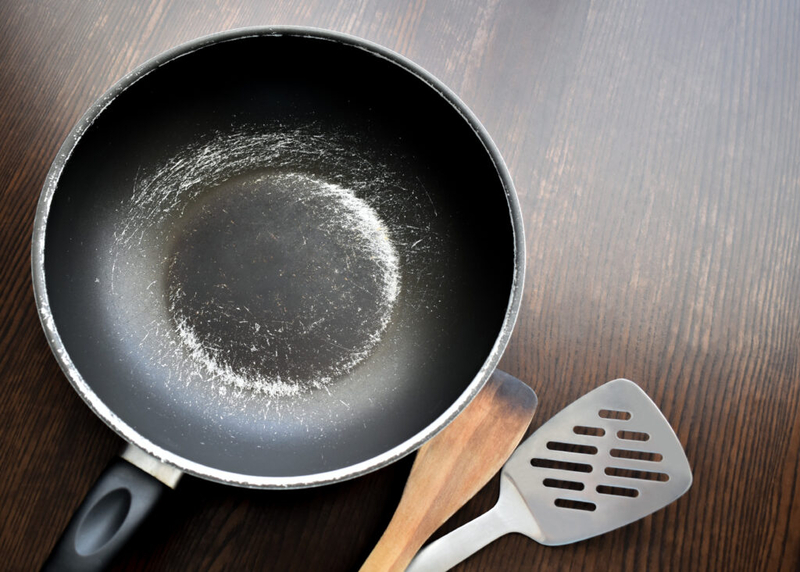
Using too high of heat, abrasive cleaners or other materials that cause the coating on a nonstick pan to chip can increase the risk for PFAS exposure, said Anne Sedlack with the Maine Medical Association. (Photo by Getty Images)
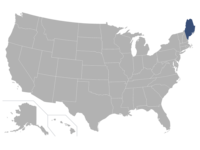
A new searchable database highlights the smooth rollout of Maine’s ban on forever chemicals — at least when it comes to cookware.
“I think that the implementation on this particular product category has been pretty excellent,” said Emily Carey Perez de Alejo, executive director of Defend Our Health, which advocates to reduce consumers’ exposure to toxic chemicals.
After reviewing more than 200 cookware brands for perfluoroalkyl and polyfluoroalkyl substances, commonly known as PFAS, the Maine-based nonprofit found that most companies were quick to remove products from Maine after the state’s sales ban on many consumer products with intentionally added PFAS took effect in January.
“Companies had really broadly pulled PFAS-containing products from physical stores in Maine, but we did find online sales compliance issues, and most of the companies that we contacted in that February-March period, they fixed those issues within a couple of days,” Carey Perez de Alejo said.
Carey Perez de Alejo said the organization wanted to see how well the law was being implemented, and focused on cookware because they knew it is often coated in PFAS, like Teflon, to prevent food from sticking to the metal.
PFAS are a group of manmade chemicals created in the 1940s that are used in a variety of consumer and industrial products, because they are both oil and water resistant. But they don’t break down in the environment or in the body, and have been tied to negative health impacts.
Maine isn’t the only state to ban many products that contain intentionally-added PFAS — Minnesota and Colorado also have bans, and Connecticut has passed a ban that will go into effect in 2028.
For the information on PFAS in products, Defend Our Health turned to California, which requires companies to disclose if their products contain PFAS and other chemicals. The organization sorted through those disclosures, identifying products with PFAS, and then checking if they were available for sale in Maine.
The searchable database is meant to make it easier for consumers to find that information, Carey Perez de Alejo said. She added that she already used the database for herself, when she was purchasing a new item for her kitchen.
“There are some products that I did not think had PFAS in them that do, and there are other products that I thought might be PFAS containing and aren’t,” she said. “And that’s really exciting to be able to just quickly fact check something before you check out.”
The database is less immediately important for Maine residents, who are already protected by the sales ban, Carey Perez de Alejo said. But it’s an important resource for residents in other states looking to avoid PFAS, and for Maine residents looking to remove items from their kitchens.
Overall, it’s a success story for this type of ban that focuses on a class of chemicals, she said.
“This is a system-level fix to a system-level problem that you should not need to think about when you are shopping,” Carey Perez de Alejo said. “And it’s really exciting to be able to see the data from Maine and Minnesota and Colorado and Connecticut and California and more states combined to protect consumers across the country, not just in Maine.”
And it’s particularly important when the Maine ban faced pushback in the state Legislature, where some argued that residents wouldn’t be able to buy any cookware, or cook common foods like eggs.
“In Maine, people are still able to cook omelets, they are still able to buy coffee makers,” she said. “This is not actually directly impacting anybody’s lived experience in the store, what it’s doing is that it’s just removing those couple of options that had PFAS without the folks needing to worry about it.”
Augusta, ME