Frederick GOP wants investigation of Baltimore campaign consultant
Oct 31, 2026 | 3:29 am ET
Description
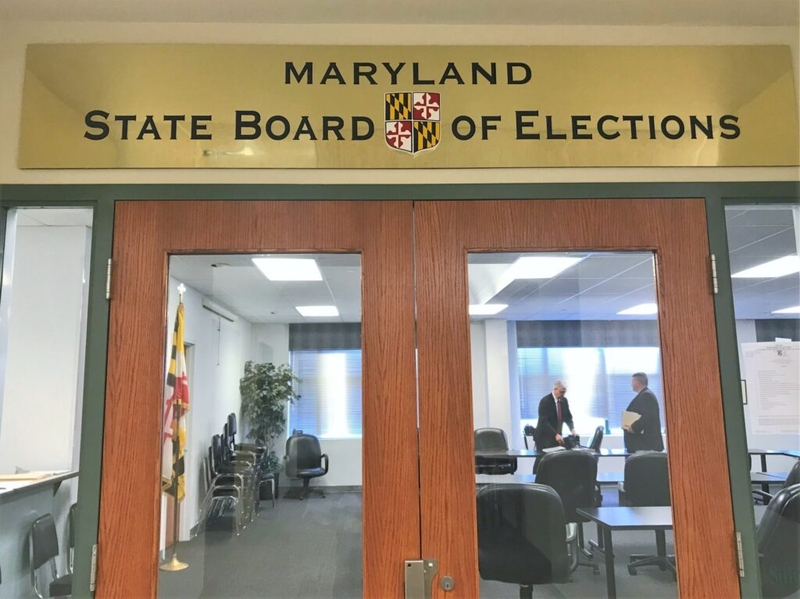
Frederick County Republicans are asking state election officials to investigate a high-profile Maryland political fundraiser who they say violated state laws barring coordination between a super PAC and a candidate. (File photo by Danielle Gaines/Maryland Matters)
Frederick Republicans say a high-profile Maryland political fundraiser violated state laws barring coordination between candidates and a super PAC.
The complaint, filed this week with the state Board of Elections by the Frederick County Republican Party, alleges that Baltimore-based consultant Sophia Silbergeld was paid last fall to work on a fundraising effort for Frederick County Executive Jessica Fitzwater, a Democrat.
Silbergeld now serves as treasurer of United Frederick, a political action committee that had spent nearly $500,000 as of Friday on mailings and online advertising attacking Jeff Holtzinger, Fitzwater’s Republican opponent for county executive. That constitutes an illegal coordination of campaigns, the Republicans charge.
“A consultant cannot work for a candidate and also run the Super PAC supporting that candidate,” said a statement from Justin Wages, chairman of the Frederick County Republican Central Committee.
“The law presumes coordination in exactly this situation,” the statement said. “Voters deserve to know whether it happened, and whether the people spending … to influence this election are legally separate from the campaign.”
The two events occurred within the state’s 18-month exclusion window meant to prevent coordination between candidates and independent groups.
Lierman seeks another term, Dunn just wants an ear in subdued comptroller’s race
“None of these facts alone proves coordination,” the county Republicans said in their statement. “Together, they raise questions the Board should answer. The Committee has filed a complaint with the Board asking it to investigate.”
Silbergeld is president of Baltimore-based Adeo Advocacy’s political division, which counts a number of high-profile clients, including Comptroller Brooke Lierman and Senate President Bill Ferguson (D-Baltimore City). She said Fitzwater “is not a client,” but declined to speak about the complaint.
She said she has not yet received a copy or formal inquiry from state elections officials. “When I receive a complaint, I plan to respond to it,” Silbergeld said.
In a statement, the Fitzwater campaign said Adeo Advocacy was hired “to manage a standalone event” roughly nine months before the formation of United Frederick. The campaign said Adeo had no access to “proprietary information.” Adeo has not worked for Fitzwater since, according to campaign and state records.
“The campaign does not coordinate or communicate with PACs such as United Frederick,” the campaign said.
The Republican complaint is the latest twist in a Frederick County executive race that appears tighter than expected.
Silbergeld’s website links to a Baltimore Banner story listing Fitzwater as a client, but in comments to the Frederick News-Post she said the reference in the Banner was an error. She said she organized a single campaign event for Fitzwater at the behest of David Trone, the former congressman and a Fitzwater supporter.
Trone is one of three donors who has helped pump $550,000 into the United Frederick PAC, along with the American Federation of State, County and Municipal Employees and the Maryland State Education Association.
Reports filed in January by the Fitzwater campaign show a $5,000 payment in November 2025 to Paul Fulcher as a reimbursement for fundraising expenses. Fulcher is the treasurer for the Fitzwater campaign.
The payment notes Silbergeld’s firm as the ultimate recipient of the payment. Maryland Matters asked the campaign how it reported the payment and was told Fulcher was reimbursed after he “used his personal credit card to pay” Silbergeld.
Maryland has one of the toughest independent expenditure laws in the country, requiring an 18-month separation period to ensure consultants and staffers are not enabling coordination between a candidate and super PAC activities.
So-called independent expenditure groups can raise and spend almost unlimited amounts. Maryland law sets 48-hour reporting deadlines to provide transparency. Other provisions are meant to ensure candidates and those outside entities are not coordinating.
“The whole point of this law is to protect the political process,” said Jared DeMarinis, state election director.“We want to make sure that when we say that they’re independent, they truly are independent from the candidate.”
DeMarinis said the law is an attempt to balance concerns about the flood of money in campaigns with constitutionally protected political speech.
“What you can protect is the integrity,” he said. “Maryland has taken a very hard line in saying, when we say independent spending, you are independent and you will be spending this money without coordination or without any sort of consultation with a benefiting candidate.”
DeMarinis confirmed receipt of the Republican complaint. He declined to discuss any specifics.
Complaints related to campaign coordination are rare. The one involving Silbergeld is just the second. Elections officials were also asked to issue a “declaratory ruling” for a Republican consultant looking to ensure they were not violating the law.
Violations of election law related to coordination are considered misdemeanors. The accused carries the burden of proving they are false.
One way to do that is to show there was a firewall between the “insider information” and the consultant.
DeMarinis said it is possible for candidates and independent expenditure groups to have shared vendors — even consultants — “as long as there is a firewall established restricting the sharing of strategic campaign information between those individuals.”
The Republicans, in their letter to state elections official, acknowledge the possibility of a firewall or a declaratory ruling from elections officials sanctioning the shared vendor.
“We have seen no indication that ether exists,” they said in their letter.
Annapolis, MD