How SNAP’s work requirements are hurting one West Virginia woman
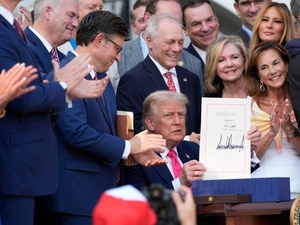
The One Big Beautiful Bill Act, signed into law by President Donald Trump a year ago, imposed stricter work requirements in the Supplemental Nutrition Assistance Program.
With some exceptions, recipients must do at least 80 hours per month of work, training or volunteering. The law also increased the upper age limit for work requirements from 54 to 64.
About 2.5 million Americans lost food benefits in the six-month period following the Republican-passed law.
In West Virginia, the Department of Human Services said late last year the expanded work requirements would affect 36,000 residents.
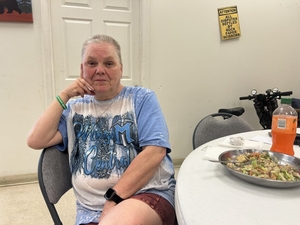
Among them is 62-year-old Helen Comer. She started receiving SNAP benefits after she quit her job at a bank to care for her ailing parents full time. But earlier this year, her benefits were cut to $24 a month because she’s under 65 and not working.



In Episode 37, you’ll hear from Comer about how SNAP’s rules don’t leave room for nuance and why that hurts beneficiaries across the country.
You’ll also get a weekly wrap-up from Daybreak newsletter writer Madyson Fitzgerald. She’s got you covered with the latest on: the debate over death row in the South, the fallout after South Carolina U.S. Sen. Lindsey Graham’s death, and the future of Daylight Saving Time.
Episode produced and edited by Mallory Cheng. Music for Stories From The States composed by David Singer. A special thank you to West Virginia Watch Deputy Editor Lori Kersey.
Got questions? An episode idea? Email us at [email protected].
Subscribe to Stories From the States on Apple Podcasts, Spotify and Youtube.
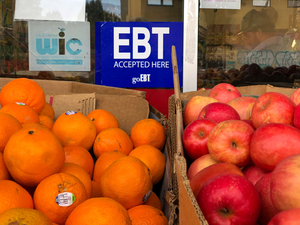
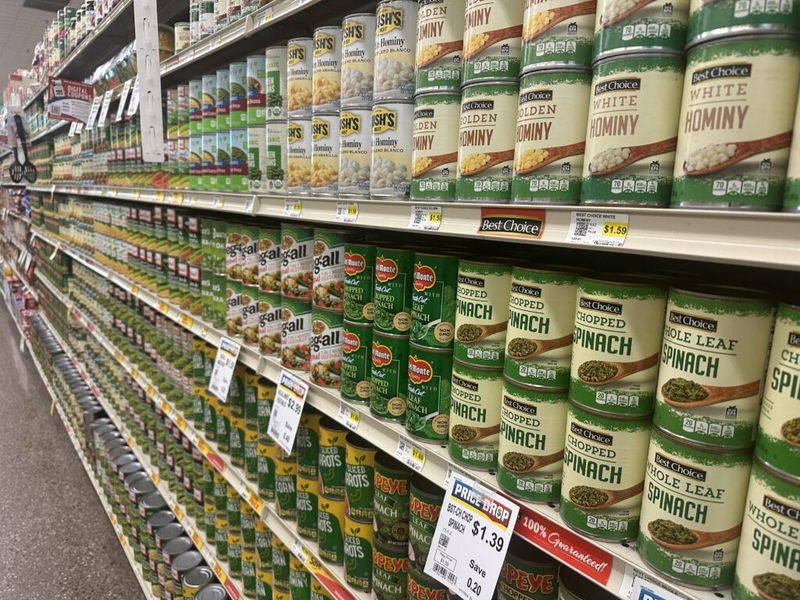
Photo: 14,000 West Virginians have lost SNAP food assistance because of Big Beautiful Bill changes. (Photo by Cami Koons/Iowa Capital Dispatch)
Stories From The States is a production of States Newsroom, the nation’s largest state-focused nonprofit news organization, with reporting from every capital. At this pivotal moment in American democracy, our veteran journalists from all 50 states are reporting the consequences of government decision making. By zooming into one story each week, Stories From the States contextualizes and gives a human voice to what is happening now.
Transcript was created using an automated software.
Chris Fitzsimon
This is Stories From The States. I'm Chris Fitzsimon. Here at States Newsroom, we know there's a lot going on around the country in every state capital. Thank you for being here. This week, we're jumping in with the news of the week from around the country. First, from South Carolina, where U.S. Senator Lindsey Graham's recent dea...
Transcript was created using an automated software.
Chris Fitzsimon
This is Stories From The States. I'm Chris Fitzsimon. Here at States Newsroom, we know there's a lot going on around the country in every state capital. Thank you for being here. This week, we're jumping in with the news of the week from around the country. First, from South Carolina, where U.S. Senator Lindsey Graham's recent death has led to the appointment of Darlene Graham Nordone to finish out his term. You might be interested to know that name should sound familiar. She's actually Lindsey Graham's sister. We'll talk about the latest on Medicaid and SNAP, and then some stories about death row from across the South. And of course, we'll have one last thing. My hint to you this week-it's related not only to a pesky chore you have to do twice a year, but maybe how much sleep you can get before the sun comes up. Later in the show, we'll go to West Virginia, where SNAP's expanded work requirements have changed how much beneficiaries receive. For one SNAP recipient, Helen Comer, the rules don't leave her much room for nuance. We'll talk to Helen later in the show. Let's jump in and check on the news now with our States Newsroom letter author, Maydson Fitzgerald, author of Daybreak. Hi, Maduson. How are you?
Madyson Fitzgerald
I'm doing well. How are you?
Chris Fitzsimon
Good. Well, last last week we did check in with the World Cup. I have a couple other quick things before we get to the news, but pretty unexciting last. last semifinals, at least in terms of the favorite, all all the favorites made it.
Madyson Fitzgerald
Yeah, for sure. I had a lot of friends that were going for England, and so yesterday was a little bit disappointing. But you know, I'm excited to see the finals. I mean, I'm just there for the sport overall, so that should be really really exciting.
Chris Fitzsimon
Yeah, that's pretty exciting. And then I heard through the grapevine that you had you saw some amazing music from an artist that I didn't know much about. Who is Tame Impala?
Madyson Fitzgerald
Tame Impala is this amazing artist. I guess I would call his music kind of like rock, kind of like a little bit of house. But it's it was just such a good time. There was like lasers, and like I've never been to like a show of like that many lasers and lights, and so that, in addition to the fact that like he's actually a really good singer, it was a really great time. It I got in very late last night, but I am here today, and I'm happy to talk about the news.
Chris Fitzsimon
All right, well let's talk about the news without lasers. The the big I guess the big news-not just nationally, but in the states-is the, I don't know, for lack of a better word, Lindsey Graham drama.
Madyson Fitzgerald
Yeah, for sure, it has been one of the most notable stories this week. So much going on. So starting with last weekend, after U.S. Senator Lindsey Graham died on Saturday night of a brief and subtle illness, the South Carolina Republican was replaced by his sister. So Graham died from an aortic dissection, according to preliminary findings from the medical examiner. And Governor of South Carolina Henry McMaster appointed his sister Darlene Graham Nordone to finish out the term of her older brother. She was also recommended by President Donald Trump earlier that day or earlier in that week.
Chris Fitzsimon
Right. And just just just to be clear, just to be clear, Ms. Nordone does not have political experience.
Madyson Fitzgerald
That's what I was going to say. That's I think the question that we all are trying to figure out. And I was, you know, I've been reading around, and it looks like she, you know, she leads the South Carolina Commission for the Blind, and she will be the first woman to represent, you know, in this role for South Carolina. But in terms of like political experience, I see none of it. And so I think the big question is, how will she be able to take over? And I don't know, will it be as effective? But yeah, that has been probably one of the biggest stories this week. And she'll serve out until January, which is when Lindsey Graham's term was supposed to end, and then a special GOP primary will take place on August 11th to determine whose name will appear on the November ballot. There's a runoff that's scheduled for August 25th if needed as well.
Chris Fitzsimon
Right. One one other quick thing about her. I mean, I know this is going to well, her career has been helping people with disabilities. I think to be-I don't know how to say it without seeming ungenerous-the Trump administration has not been exactly excellent for people with disabilities. I think, according to disability rights people, and yet when she took her or went to the podium, she said she was looking forward to continuing the president's agenda. So I guess nobody really knows what to expect for her from her as a senator until the end of the year.
Madyson Fitzgerald
Yeah, I think it'll be really interesting to see how it all plays out. And I, I will say one of the things that I remember when President Trump was making all these cuts to Medicaid and other programs, one of the biggest concerns was people with disabilities because there's a lot of programs to help them, both students and children, and also older adults that have disabilities. So it'll be interesting to see what happens. But in related news, we also have been following up on the health of. With Senator Mitch McConnell in Kentucky, he is doing okay, and there's no news of him stepping down or retiring anytime soon. And so, I think that drama at least is wrapped up.
Chris Fitzsimon
But he can't. I mean, he obviously has to show up to vote, so there's no indication that he's coming to Washington anytime soon.
Madyson Fitzgerald
That's a that's also a good point, and I wonder what the timeline will be for the rest of his recovery, I'm you know it seems like he's doing well, but there's a lot of unanswered questions for sure.
Chris Fitzsimon
Yeah, all right. Let's talk about another big. I know you've been writing a lot, and the other journalists at States Newsroom about Medicaid and SNAP and what's happening there.
Madyson Fitzgerald
Well, one of the first things that I want to say, I always like to plug the work that we're doing at States Newsroom. But if you go to the newsfromthe states website, there is a new section that highlights the major changes to the SNAP program-that's Supplemental Nutritional Assistance Program-and Medicaid following President Donald Trump's tax and spending plan. That's a mouthful from last year. So this section was kind of just created to showcase how these changes made at the federal level are really trickling down to the states and how states are trying to look at these changes and help Americans or harm Americans that could lose access to the the nation's safety net. And so, South Carolina might be one of the best examples that we have from this week. Two weeks into the financial year, legislators are still at an impasse on the state budget with three options for moving forward as of Tuesday, one of those options is that the committee could just forego passing a new budget entirely, and so this would leave annual funding at the same levels past as last year. And the two major challenges that I noticed from the story was that there were disagreements about Medicaid and disagreements about SNAP, and so I think that a lot of states will continue to kind of go through these issues with budgets. You know, budgets. I mean, budget season is always stressful. And being in Pennsylvania, I know a lot about late budgets, and I know I think Michigan goes through a very similar experience. And so, I think that the challenges from the cuts made by President Donald Trump will only make it a little bit more challenging.
Chris Fitzsimon
Yeah, and I guess we've well, I was going to say we have an interview later in in this week's podcast with a woman in West Virginia who experienced these SNAP cuts firsthand. But it's also interesting. There's been a lot of reporting about if states, what the federal government perceives as high fraud rates, they might not get as much money. There's some talk of the president trying to enforce new voting rules or getting access to voter rolls-it feels like so much is wrapped up in this when we're really talking about people's food,
Madyson Fitzgerald
Right! Yeah, and I think that the other interesting part is that states states have a lot of resources, and I guess one of the big points of this is to give more power to the states so that they can make decisions. But when it comes to like just even your local food bank, or even like your just like your local organizations that are trying to help out, they can't fill the gap, and so there's there's a lot of like gaps to be filled in terms of food, and not even that you know like supplies for new parents and housing and things of that nature. All of these like programs that are trying to help people that might be falling through the gap. The gap's only widening.
Chris Fitzsimon
Another issue, which I guess really never goes away, is how states wrestle with and decide about capital punishment, who's eligible, how to execute people. It's it's some it's some grisly news, but there is seems like a lot of news about that.
Madyson Fitzgerald
For sure. And I think one of the big regions that is seemingly always dealing with this is the South, but this week in Alabama, attorneys for a death row inmate who successfully challenged the state's nitrogen gas execution protocol last month have asked a federal judge to prevent the state from using a different execution method to put him to death in the near future. In a July 7 filing, attorneys for Jeffrey Lee asked the U.S. District Court Judge Emily Marks to expand an injunction against nitrogen gas to lethal injection and electrocution, the state's two other statutory methods of capital punishment. The filing said that it would be it would be manifest injustice, and over the last few years, you know, this is a conversation that's taken place all around the South. Just this week, Tennessee's gubernatorial candidates were actually strongly disagreeing on death penalty methods and whether to invest in some rather than investing in others. And then also this week, the state of Florida actually put to death the 10th inmate that would be have been executed this year, and the 29th since the beginning of last year. As Republican Governor Ron DeSantis is really continuing on a record pace of executions.
Chris Fitzsimon
Yeah, it's interesting that I guess in Alabama they were the first to have that I guess nitrogen gas execution, which is really suffocation, which was so so controversial. I know our our reporter there, Ralph Chapoco, actually witnessed that, which I'm sure was very was was a traumatic experience. And now a lot of states are going back to the firing squad, which really makes you wonder. Like I thought we had gotten to some point, and now it feels like that's another way that people are execute being executed.
Madyson Fitzgerald
Yeah, I remember that being a very. I remember that story coming out last year. I don't want. I want to say it was Indiana, and firing squad came up again, and it was like that wasn't something that I was expecting. I mean, I don't think it was anything a lot of people were expecting. But another issue that you did point out is that the issue of witnessing executions, because I think that some states have also had to deal with challenges with that, with you know jails actually letting reporters in and letting people in to witness it and things like that. So it's definitely a conversation that I think will continue to continue to grow over the next couple of years.
Chris Fitzsimon
So interesting that we're still putting people to death as a government, but that's neither here nor there for the moment. Let's talk about something a little better, or what are interesting, our sleep. One last thing this week. Tell us about one last thing. Um, this is something that really is, I think, fascinating.
Madyson Fitzgerald
Yeah, for sure. Um, so I've always said that one of my least favorite holidays. This might apply to you and to other people as well. Is the daylight saving time that leads to us springing forward and missing an hour of sleep, and I personally, I do very much value my sleep, and so it's always been kind of rough. But this week, the U.S. House voted to make daylight saving time permanent nationwide in a bipartisan move that pushes the country one step closer to ending the long contested ritual of the semiannual clock changes. And so that House passed the measure, but its future in the Senate is a little uncertain. But permanent daylight savings time would mean keeping the clocks shifted forward one hour all year, eliminating the need to spring forward every March and fall back every November. And so the adjustment would extend more daylight into the evening, creating later sunrises and sunsets compared to the standard time. I I think I remember the first time I learned about what this like daylight saving time thing was all about, and I remember it had to do with agriculture, and it had to do with farming, and you know different types of crops in terms of whatever time of year they're better for. But I guess at this point we've we've kind of got the technology to be able to to work past that, and so I guess that we'll see how this legislation moves forward. That's all I'll say.
Chris Fitzsimon
What do you think? I saw a map the other day that said if they if this was passed, then in the this coming well whatever takes effect. If it took effect this winter, those of us you and I are on the east coast of the United States, so our we would start instead of a 5:30 or 51:5 it gets dark and everybody's freaking out because it's winter. When we woke, it wouldn't get light until like 8:30. So a lot of us would go to work in the dark instead of coming home in the dark. I don't know which one I like better.
Madyson Fitzgerald
I, you know, I like the feeling that my day is a little bit longer. Like even like summer is my favorite holiday, and so I've been enjoying like you know the sun is still up at 9p.m It's like my favorite thing ever, and even when I was a child, like I, I also went to school in the dark. I had to get there very early. My mom was a teacher, and so her day started very, very early, and we were in the car with her at 5:30 a.m. And so I don't think I would mind too much, but I also see how it would be a little bit unnerving, especially since I work remote. So I, my opinion's a little bit, a little bit skewed.
Chris Fitzsimon
No, no. Well, thank you, Madyson. As always, we really appreciate it.
Madyson Fitzgerald
Yeah, thank you.
Chris Fitzsimon
To stay up to date on the latest news every morning, you can subscribe to Daybreak, written every weekday by Madyson. You can subscribe at newsfromthestates.com/subscribe. The One Big Beautiful Bill Act signed into law by President Donald Trump last year imposed stricter work requirements in the Supplemental Nutrition Assistance Program, or SNAP. With some exceptions, recipients must now do at least 80 hours a month of work, training, or volunteering, and the law also increased the upper age limit for those work requirements from 54 to 64. About 2.5 million Americans lost food benefits in the six months period following the Republican passed law. One of those Americans impacted was Helen Comer. In a moment, we'll go to West Virginia to chat with Helen.
Moses Esheit
Hi. it's Moses Eshet, product associate at States Newsroom. At States Newsroom, we believe journalism should be fair, fearless, and free. With reporters working on the ground in all 50 states and Washington D.C. we provide nonpartisan coverage of all the state issues that matter most to you. You can subscribe to our work by going to statesnewsroom.com/subscribe.
Chris Fitzsimon
West Virginia's Department of Human Services said late last year the expanded SNAP work requirements would affect 36,000 West Virginia residents. One of those people is Helen Comer. The 62-year-old started receiving SNAP benefits after she had to quit her job at a bank to care for her ailing parents full time, and she has seen her benefits decrease to just $24 a month. She joins us now. Hi, Helen. Thank you for being here.
Helen Comer
Thank you for having me.
Chris Fitzsimon
Well, just to sort of start from the beginning, how did you come to be on SNAP? What did you? What what was going on in your life?
Helen Comer
My parents. Were aging. They were living independent by themselves, and it was becoming obvious that that they were needing more help in order to survive daily. They couldn't go out to their appointments. They couldn't do their grocery shopping. Dad was having some major health issues, and Mom couldn't handle him. So they moved here with me onto my property, and they were here a matter of months before it became evident that they needed more supervision than I could give them while I was working. So I ended up having to quit working in order to take care of them.
Chris Fitzsimon
And what what were you doing then? You were working. What what sort of job did you have?
Helen Comer
I was a bank manager.
Chris Fitzsimon
And what town were you in?
Helen Comer
I am in a small town in West Virginia called Yawkey.
Chris Fitzsimon
And did your parents live nearby before they before they moved to you?
Helen Comer
No, I moved here from Virginia, so they were still in Virginia, kind of up near D.C., and so it. I just I moved out here where I actually bought a foreclosure home. I was a little tired of the the rat race, and I moved out here to the country. And I I have a nice size home, and I wanted them to move in with me, but you know it's hard for your parents to give up their independence.
Chris Fitzsimon
Right.
Helen Comer
So they refused to live in my house with me. We ended up in the necessity of time putting a double wide up on my property for them to live in, and put it right next door to my house so I could easily access between the two.
Chris Fitzsimon
What was it like taking care of them?
Helen Comer
It was a nightmare. I mean, I really-it was the hardest thing I've ever done in my life. And you know, maybe it was the circumstances. Maybe it was because it was two of them. Maybe it was because I was by myself. But it was the hardest thing I've ever done in my life. They were here for about two and a half years, and I had no sleep within those two and a half years. It was a cat nap here and a cat nap there. Mom was up all day. Dad was up all night. And then dad had a catheter, so he had some pretty good health issues going. And it seemed like in the middle of the night, never failed. We'd have to run to the hospital because he had a blockage, or or a UTI, or or something. I'm not sure why it always happened in the middle of the night, but it just seemed like that was his norm. So, you know, I think the anxiety was what it was hard keeping up with them both, but the constant anxiety when I look back on it that you know because you're always on guard. You never knew what to expect.
Chris Fitzsimon
And so as as part of that process, then you applied for SNAP benefits?
Helen Comer
I did.
Chris Fitzsimon
And tell us about that. And and you started receiving them.
Helen Comer
Right. Right. Actually, that was was very simple, and and they were very supportive and very understanding, and and I had no issues whatsoever. Fortunately, I have I have a garden of my own, and I have some chickens of my own. So you know that the what I was getting was was helping to supplement what why needed to survive.
Chris Fitzsimon
And then the law changed.
Helen Comer
Right. So I got a letter in from the local Department of Health saying that I was being cut to $24 a month, and that that would be for three months. And then they, I guess that that plan was to review my status, was just what happened, and. when they went to review my status, they said basically you're under 65. You need to be working. And at this point, mom and dad had both passed. They both passed within five months of each other. And I'll be honest. I mean, I was so tired I couldn't even think straight. The exhaustion, and and not to mention, you know, I went to hospice with mom, morphine every two hours for days on end, and then five months later, I'm going through hospice with dad, morphine morphine every hour for days on end, and I was just beside myself. I was so tired, and I got really sick right afterwards. And I assumed it was exhaustion, but within a few months after Dad passed, I went to the doctor thinking I had Lyme's disease, and it came back negative. And then within another couple months, I went back to the doctor, and still nothing. So when the when the when I spoke to the SNAP people, and and they said, you know, you need a doctor's note. Well, I didn't know that I could get one because you know I'd been to the doctor, nothing was wrong apparently, so I felt like I just had to to deal with it. And as luck would have it, another in the same month I had my telephone conversation with the SNAP individual. I had a blood clot, and all this time, I had been harvesting a blood clot. I think it came on when I was sitting with Dad for hospice.
Chris Fitzsimon
Yeah, I'm so sorry. How are you doing now?
Helen Comer
Now I'm okay. It has been a slow process, and now that the clot, they you know they rushed me to hospital and rushed me into surgery, and the clot was affecting my kidneys. And now that that's gone, I realize how bad I truly did feel. And again, I was completely exhausted anyway. But obviously, it was a big strain on my my physical condition as well. So anyway, it kind of snuck up on me, and it wasn't lack of trying. I did go the doctor twice, and and it still did not get diagnosed until until one day I couldn't I couldn't walk across the driveway without falling on the ground. But I guess it was my kidneys, and then my legs started swelling, but you. you know, I felt like it's it's not black and white. You can't just because you're under 65 work. There, that sometimes there's reasons why you can't, whether it's diagnosed or not diagnosed. There, you know, there are conditions or circumstances where it's just impossible. I I could not have worked. I was not of sound mind after taking care of mom and dad to to hold a job.
Chris Fitzsimon
Yeah, is that is that why you're speaking out?
Helen Comer
Yes, yes. I I felt it it again. It's not black and white. There's a gray area here, and I was fortunate in that I had a garden, I had chickens, I had a very large pantry established to help help take care of mom and dad because I envisioned myself being stuck where I couldn't go to the grocery store to to take care of them. It is just me. I have no one. I have no family here, so it was all on me, so fortunately I had prepared, and then as I alluded to earlier, I I moved out here and bought a foreclosure home. So fortunately I didn't have a house. I don't have a housing expense or house payment or rent or anything like that. But you know the average person may find themselves in this position and and not have had the resources that I have, and I know this whole experience has been very taxing on me, mentally, physically. It's I've been at a whole new low. I've never been this low in my life before, and I just want to spare the next person from from having to to feel the way I've felt.
Chris Fitzsimon
Yeah, I wonder. Like 10-15, years ago, did you ever think that you would be in this situation? Was sort of when you heard these issues discussed or calls for you know stricter work requirements or whatever it is?
Helen Comer
Not at all. Of course, I planned on working a lot longer too, but my parents gave up everything for me when I went through a divorce with two kids, and I felt like I owed it to them. They didn't want to go into a nursing home, and you know, and that's a whole 'nother issue. You know, the the expenses and the care of nursing facilities that are already, you know, they've got their own issues to deal with. I just, I felt like I owed it to my parents to let them let them be comfortable and pass in dignity, and so I'm, I'm proud that I could do that. But at the same point, it really put me in a bad a bad place.
Chris Fitzsimon
What what would you want policymakers to know if if when you if you were talking to them or the folks who came up with this law?
Helen Comer
Well, again, I I just don't think it's all black and white. I think there's a gray area there. You know, I don't know that they would have continued paying me if my parents were still alive. I don't. I don't know that if they would have. It's just I'm. I'm curious if they would have made me go back. You know, still the same attitude where you're under 65 you need to be working. I don't know.
Chris Fitzsimon
And $24... $24 is not very much,
Helen Comer
you know, less than $1 a day. That's that's not going to do much. And that that brings me to to tell you this story. Right after the blood clot, and I'm starting to heal. I I had a random email from a woman. It didn't say what it was regarding. It didn't say she was with SNAP or or with the the Department of Health. There was there was no indicator of who this person was, and I just happened to open the email, and it was a quality review. I'd been picked for a quality review to to make sure I still qualified for $24 a month, and she wanted me to send her all my bank statements and any retirement income or information I had and my utility bills and I don't remember oh my insurance homeowners insurance and all all of all of that information so that she could review and make sure I was still eligible for $24 a month, and at at that point, I called her and I said, "Well, you know, this seems a bit much for for such an insulting amount, and so she said I could opt out of doing it, and you know, lose the benefits. Which ultimately, I did not send everything in, and and indicated to her that it wasn't worth my the trouble for $24 so they wrote me up for non compliance.
Chris Fitzsimon
Well, how are you getting along now?
Helen Comer
I took early retirement. At the time, at the time I was not, I couldn't take early retirement. I was I I just turned 62 in December, so in February I started on Social Security, but I did take early retirement, which you know I'm not making much at all. But I still feel like my I cannot tell you how how exhausted I was, and I couldn't think straight and function straight, and so I finally feel like you know it took a year before I could sleep through the night. So I finally feel like I'm I'm building my strength back up, and and you know maybe I will get a part time job. I've I've been helping to foster pets for our local rescue. You know maybe I'll I'll get into that, but I I'm slowly getting better, and again after the surgery, I realized how truly sick I was. I just attributed it all to to you know exhaustion, which I guess that's what my doctor thought too. Was it was just exhaustion?
Chris Fitzsimon
Yeah. Well, I'm so sorry you had to go through all that, but and I really appreciate you sharing your story with us.
Helen Comer
Well, thank you for letting me share it with you, and I I hope we make some progress. Thank you.
Chris Fitzsimon
Thank you so much.
Helen Comer
Bye bye.
Chris Fitzsimon
Thanks for listening to Stories from the States. I'm Chris Fitzsimon. Mallory Cheng produced and edited the podcast. David Singer produced our theme music. If you liked what you've heard, please share it with someone you think might enjoy it, and leave a rating and review. It means a lot to us to know what you think about the podcast, and it helps other people find us. To stay up to date on the latest episodes, subscribe now to Stories From The States, a podcast from States Newsroom, available wherever you listen to podcasts, we'll talk to you next week.