In East Idaho, a vaccinated adult contracted measles near outbreak area in Wyoming
Jul 15, 2026 | 7:52 pm ET
Description
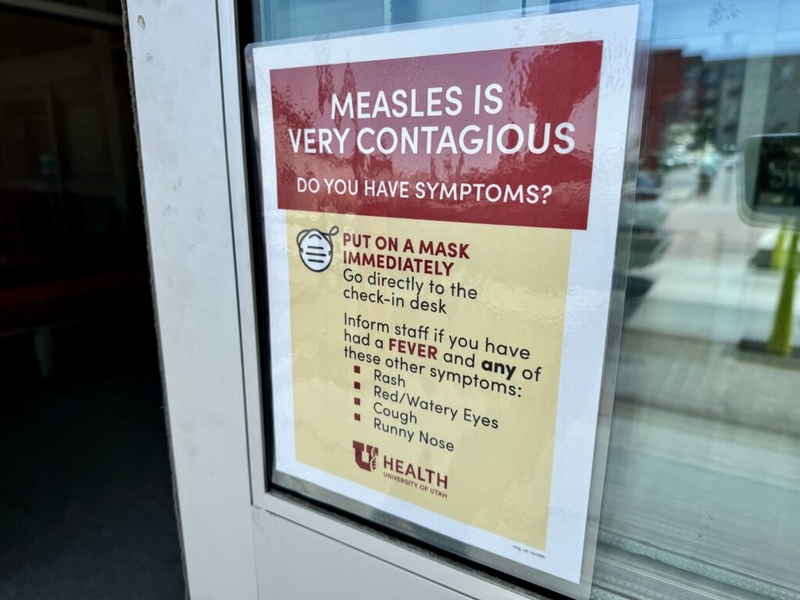
A University of Utah health clinic with a sign warning of measles is pictured in Salt Lake City on June 30, 2025. (McKenzie Romero/Utah News Dispatch)
In East Idaho, health officials are reporting that a vaccinated adult contracted measles in Teton County, near a Wyoming travel destination area that’s under an active measles outbreak.
The case marks Idaho’s 10th case of measles this year. That puts Idaho — like the rest of the U.S. — on track to outpace the state’s total case counts from last year, when the state reported 13 cases amid the U.S.’s worst outbreak of measles in decades.
Health Department declares measles outbreak in Wyoming’s Teton County amid influx of tourists
The local health authority, Eastern Idaho Public Health, announced the latest case Wednesday afternoon, which is the first case recorded this year in Teton County, a rural area along the Wyoming border.
The regional health officials say that the public may have been exposed to measles more than a week ago at the Broulim’s grocery store in Driggs between 5:15 p.m. and 6 p.m. July 6. Officials say they are in contact with “individuals known to be exposed, and will continue to monitor the situation.”
The eastern Idahoan who contracted measles, officials say, was in “close contact with a known case during their infectious period.”
People fully vaccinated against measles rarely contract the virus. Just 4% of Americans infected with measles last year reported that they completed their full two-dose regiment of the vaccine, according to the Centers for Disease Control and Prevention.
“Vaccination is the best defense against measles for both children and adults,” the health district’s Health Strategy Manager Jordan McAdam said in a written statement. “While a small percentage of vaccinated people [approximately two to three percent] may still contract the virus, high vaccination coverage provides strong individual protection and helps limit the spread of measles within the community.”
What to know about measles
Vaccination is the best way to prevent measles, which is highly contagious and usually leads to hospitalization for one in five children younger than 5 years old who are infected.
Idaho has the lowest rate of kindergartners — nearly four out of every five — who are reportedly up to date on their measles vaccine, according to Centers for Disease Control and Prevention data.
Measles is highly contagious but rare. Up to 90% of non-immune people in contact with an infected person can become infected. The virus can live in the air up to two hours after someone infected leaves.
Symptoms typically appear seven to 14 days after exposure and include high fever, cough, runny nose, red eyes, and a distinctive rash, the CDC says. While many recover without problems, measles can lead to serious complications, especially in very young children and people with weakened immune systems.
The virus’s serious complications can include pneumonia, encephalitis (an inflammation of the brain) and, in rare cases, death.
People with measles symptoms should not enter health care settings without calling ahead, and they should contact their health care providers. People exposed to measles should monitor for symptoms for 21 days after exposure.
There is no antiviral treatment for measles, according to the CDC.
Boise, ID