Alaska expands eligibility for early interventions for children with developmental delays
Jul 10, 2026 | 8:50 pm ET
Description
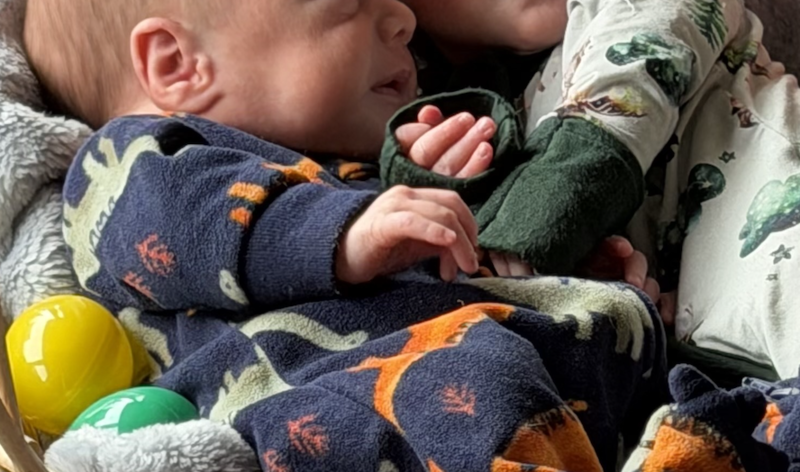
One month old twins are seen in April 2026 (Photo by James Brooks/Alaska Beacon)
More Alaska infants and toddlers who are experiencing developmental delays or disabilities can be eligible for early intervention services under a new law now in effect. But service providers say more funding is critical to meet the needs of Alaskan children and families.
The bill expands eligibility criteria that proponents say will allow earlier, targeted interventions for children from infancy to age three who are experiencing developmental delays or disabilities. The Alaska Legislature approved the legislation with bipartisan support by a vote of 59 to 1. Gov. Mike Dunleavy allowed Senate Bill 178 to go into law without his signature last month.
Previously, Alaska children had to demonstrate a 50% delay in order to be eligible for early intervention services. Under the new law, the requirement was reduced to a 25% delay, thus expanding eligibility and allowing more children to receive services and interventions.
Statewide, there are 17 infant learning programs that provide early intervention services funded by the state and federal Medicaid, at no cost to families. Intervention services can include screenings and assessments; targeted speech, feeding and movement therapies; and education and counseling for families on child development.
Amy Simpson is the executive director of the Program for Infants and Children, Inc. the largest provider of infant learning program services serving the Anchorage area, as well as rural communities in the Lake and Peninsula Borough approximately 200 miles southwest across Cook Inlet.
“It’s very exciting,” Simpson said of the bill’s passage in an interview Friday. “This will allow us to serve families and children sooner, so they don’t have to fall so far behind before we’re able to give them some support and help in learning, and you know catching up on their developmental milestones.”
Infant learning programs serve an estimated 1,800 families in Alaska each year, and Simpson said it’s been very difficult to turn children away who did not meet eligibility requirements.
“It’s a really difficult thing to sit with a parent and say, ‘Oh, you know, we’re really worried about your child’s development, and they are clearly behind their peers, but they’re not behind enough.’ And so then we give them referrals to private therapists in the community, but you know, in most communities in Alaska, there’s not a list of private therapists to help families,” she said.
Laura Norton-Cruz is a social worker, filmmaker and advocate who produced a film spotlighting infant learning program successes in the Matanuska-Susitna Borough region to push for the legislation for expanding eligibility, more awareness and funding for early intervention services in Alaska. “I was elated,” she said, of the bill becoming law on Friday.
“Being able to see and hear from families about what a big difference it made, both because it’s highly effective and because sometimes they’re on wait lists forever to get into other kinds of therapies,” she said. “Every day, if there’s a developmental issue or a delay, it can get worse, and so it’s very, very important to have timely support.”
But now with the new expanded eligibility, Simpson with the Program for Infants and Children said they are expecting a 77% increase in children who are eligible and funding is limited to help provide those services.
Dunleavy vetoed $3 million in additional state grant funding approved by the Legislature to support infant learning programs. Legislators also approved a $2.7 million funding increase intended to offset inflation which Dunleavy did not veto. State funding for the program totals $10.1 million this fiscal year.
“So this might be a little bit of a hollow victory for kids and families if funding doesn’t permit us to expand eligibility, which really could make a huge difference,” Simpson said.
The legislation does provide for over $450,000 for the Alaska Department of Health to implement the changes in policy, including two new full time positions to manage expanded eligibility, billing and statewide staff training. The bill also expands the services eligible for Medicaid reimbursement, which Simpson said will be helpful.
In particular, she said, serving rural communities only accessible by boat or plane requires more expensive travel for specialists and therapists to visit families to provide services. “So we’ll have to kind of see how that goes… if billing for services for all early intervention services will provide enough income for us to expand our staffing,” Simpson said. “I’m hopeful that it will, but I’m not certain.”
The Senate Health and Social Services committee sponsored the legislation, which was backed by the bipartisan Alaska Children’s Caucus of House and Senate legislators.
Sen. Löki Tobin, D-Anchorage, cited research on the Senate floor ahead of a vote on the bill in May that found nearly half of children who received early intervention services at age three did not require special education services when they reached kindergarten.
“That equates to an average of $229,071 of potential savings over the course of that child’s K-12 education,” she said. She estimated state savings at $39 million per year.
“But the most important piece of this is helping support children and families,” she said.
Juneau