Future New Hampshire landfills could face stricter siting process under new law
Jul 10, 2026 | 5:08 pm ET
Description
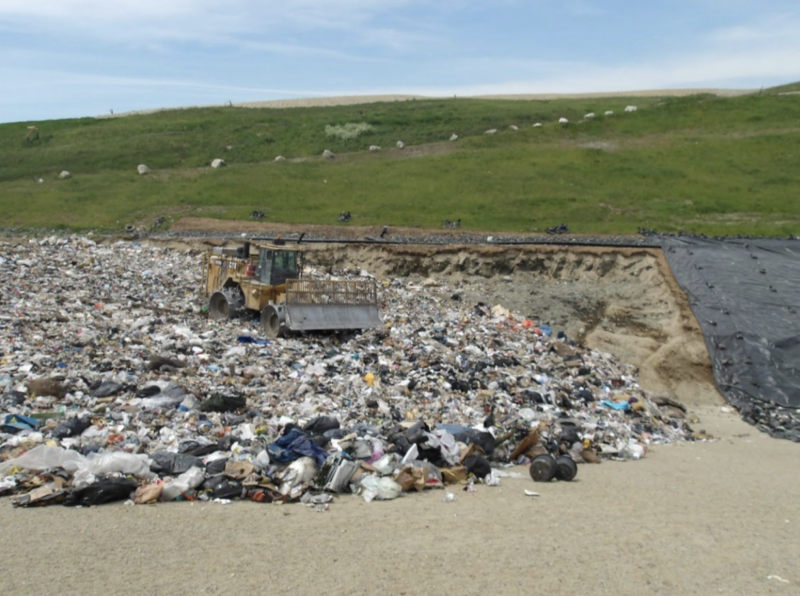
Waste at a landfill in Bethlehem, New Hampshire. Another landfill proposed for the nearby town of Dalton ignited opposition among locals and officials. Gov. Kelly Ayotte later joined legislators pushing for updates to New Hampshire's landfill siting process and on Friday signed a bill creating a seven-member site evaluation committee. (Photo courtesy New Hampshire Department of Environmental Services)
A long-debated step in New Hampshire lawmakers’ efforts to update regulations on solid waste today received final approval from Gov. Kelly Ayotte.
House Bill 707, which Ayotte announced she had signed in a press release on Friday afternoon, establishes a seven-member committee to evaluate proposals for new landfills and landfill expansions in the state. The bill also pauses proposals for additional landfill capacity until at least July 1, 2027, or until the site evaluation committee has adopted new rules, whichever is later.
Those regulations are the product of more than a year and a half of back-and-forth within New Hampshire’s Legislature since Ayotte, who took a stand during her campaign against a landfill near Dalton’s Forest Lake, recommended a version of such a committee in February 2025.
The seven-member body created by HB 707 will evaluate proposals using broader criteria than regulators have considered in previous landfill siting evaluations. The new criteria include a potential landfill’s impacts on human health, the environment, the local economy, and scenery.
The committee will be made up of three state officials from the New Hampshire Waste Management Council, Department of Business and Economic Affairs, and Department of Environmental Services, or their designees, as well as four members appointed by the governor.
The adoption of HB 707 follows struggles among lawmakers during the 2025 and 2026 legislative sessions to reach consensus about the best makeup and charge for such a committee. Multiple proposals from the House were later sent to interim study in the Senate while the Senate Committee on Energy and Natural Resources workshopped amendments to the bill that Ayotte ultimately signed.
Debate throughout the process centered on the concept of local control. Earlier this year, North Country residents and lawmakers aired concerns that previous versions of the bill would prevent local communities from having a say in the siting process. Yet an amended version of the bill put forward by Loudon Republican Sen. Howard Pearl at the end of the legislative session was met positively by those who had been skeptical of past versions. That included Sen. David Rochefort, a Littleton Republican who had spoken throughout the bill’s development about the importance of local control.
In May, when HB 707 was sent to her desk, Ayotte called the bill a “win” for North Country communities.
“I said from day one we wouldn’t let beautiful areas of our state become a dumping ground for out-of-state trash,” she said in a release at the time.
Concord, NH