What Black poets and Latino WWII vets can teach us about American patriotism at 250
Jul 03, 2026 | 12:09 pm ET
Description
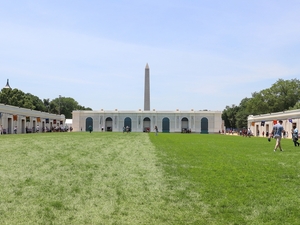
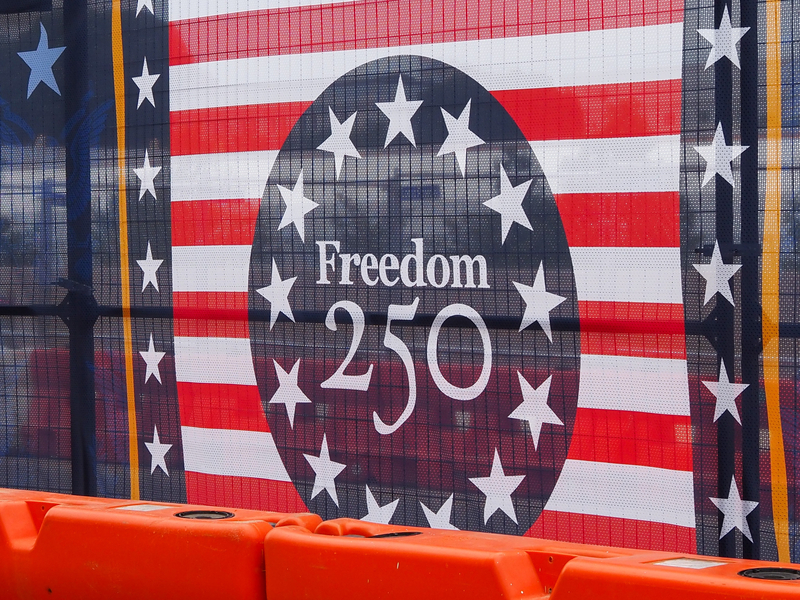
Fencing along the Freedom 250 construction site on the National Mall near Madison Drive and 7th Street NW on June 22, 2026. (Photo by Ashley Murray/States Newsroom)
I’ve been celebrating our country’s 250th birthday for several weeks now, though not in the way you might think.
No fireworks. No flag waving. No parades.
Instead, I’ve been marking the occasion by watching, if you will, fragments of America’s often complicated story play out on stage.
When I’m not writing columns, I spend a lot of my time producing live theater. And for the past several weeks, I’ve had the privilege of mounting two shows that have served as reminders of what this country, at its very best, can stand for.
Let’s Rock: From Shakespeare to Tupac was conceived by my friend and colleague, Rod Ambrose, who’s been making theater in Arizona and across the country for more than 55 years. The play, which closed last week at ASU Kerr, dramatizes the poetry of some of America’s greatest Black poets: Langston Hughes, Maya Angelou, Frances Ellen Watson Harper, Claude McKay and others.
In addition to producing it, I had the honor of directing Rod’s piece, and the privilege of listening from backstage as the show’s actor-poets dramatized some of the most profound literary testaments to the principles of democracy ever written. The repertoire, which ranged in works from the slavery era to Jim Crow to today, included, “If We Must Die” (Claude McKay), “I Apologize” (Oscar Brown Jr.), “Why Is Everything White,” (Rashaad Thomas), “Faith” (Therosia Reynolds) and “In the Event of My Demise,” (Tupac Shakur).
More than once, I was brought to tears by Chris Owens’ spoken word piece, “No Sympathy for the Devil,” which opens with Owens prostrate on the floor in a graphic reenactment of the police killing of George Floyd in Minneapolis and the searing line, “I can’t breathe.” Then, after five seconds of total silence, the actor gasps and bolts upright in a sudden jerk, as if revived by Black America’s centuries-long struggle to survive.
After a rapid-fire declamation of more than a dozen names of unarmed Black men and women killed by police in recent years, Owens laments: “Excuse me for not remembering all of your names, but this happens so often I have trouble keeping up.”
As I listened to Owens’ performance, it struck me that the thread that tied his work to that of the other poets featured in the show is the idea that Black America, through its resilience, independence and moral righteousness, is as responsible as anyone for this union’s steady, if imperfect, 250-year march toward democracy.
Without Black America, we would not be America, and we likely would not have become a true democracy.
The other show I produced this summer is called Post 41. The play, which I wrote, is inspired by true events. It’s about a group of Latino WWII veterans who founded an American Legion post in South Phoenix that became a hub for civil rights activism. Its members, like co-founders Tony F. Soza and Ray Martinez, came home after fighting overseas, determined to claim their civil rights here.
Among its many successes, the group desegregated the Tempe Beach swimming pool in 1947. Later, post members forced local home developers to desegregate public housing and abide by the provisions of the federal GI Bill, which barred discrimination in the sale of homes to Blacks, Mexican Americans and other people of color.
Like their Black counterparts, the Latino vets who built Post 41 — literally brick by brick — knew better than most that the promise of the Constitution and the Bill of Rights was meant to be exercised by all Americans, not just white people.
“When we got out of the service…some of us knew we had a mission,” Martinez once told a local documentary filmmaker. “We knew we weren’t going to put up with the discrimination we faced before. We knew about the Preamble and the Constitution, and we knew after we whipped the Nazis and the Japanese Empire that we had earned the right to pursue the American way of life.”
Martinez’s words weren’t hollow patriotism, but an impassioned and active pledge to live up to this country’s democratic ideals.
To Martinez, the Fourth of July wasn’t just a day off from work as much as a perennial reminder that, if Americans of every race, creed and color could fight, and sometimes die, side by side in the trenches protecting democracy from the spread of fascism, then surely we could find a way to respect each other’s dignity and equal rights at home.
Today’s very real fascist threat, of course, resides in the White House in the personification of an authoritarian president who’s proven himself profoundly corrupt and more determined to pad his bank account than uphold the tenets of our constitution.
Yet as we mark the 250th anniversary of this great nation, I take comfort in knowing and believing that in the course of American history we have faced far more formidable threats and managed to survive.
Like Martinez and so many of the great Black poets of our ages, most of us know we have a mission, and that without us there would be no America.

Phoenix, AZ