Whose America is it?
Jul 03, 2026 | 6:00 am ET

Description
Tennessee has worked with the Trump White House to become a model for anti-immigration measures and emboldened Immigration and Customs Enforcement in detaining people, as in this April raid in Nashville. (Photo: John Partipilo/Tennessee Lookout)
As the nation celebrates 250 years, Tennesseans have an opportunity to reflect on their history. We rightly condemn the exclusionist policies of the past. Can we not apply that same moral fortitude to the present?
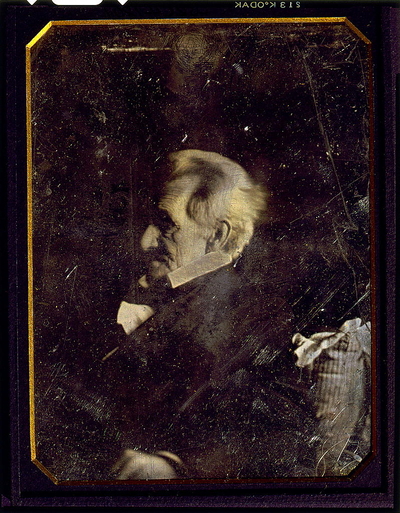
One of the few surviving daguerreotype photographs of Andrew Jackson, the 7th president of the United States, depicts an aging Tennessean in his bedroom at his Nashville plantation home, just two months before his death. Some Americans still lionize Jackson, and virtually all of his painted portraits depict a handsome, strong, charismatic leader.
But not his last photograph.
The grainy black-and-white image portrays a frail, pained man suffering from chronic disease and requiring the use of pillows to prop him upright. Gone is the relentless military commander and president. Left behind is the husk of a man, one who looks as though he may be reckoning with his policies of ethnically cleansing and killing thousands of Native Americans, or his ardent support of slavery that saw him go so far as to weaponize the U.S. Postal Service to intercept and burn abolitionist literature en route to southern states.
Jackson, and Tennessee more broadly, played an incisive role in America’s exclusionary policies two centuries ago. Today, our elected representatives are putting forth their own exclusionist agenda, which begs us ask pressing questions:
Whose America is it? Who has the right to be here?
Exclusionism, the effort to push certain people (the “other”) out of the social fabric of society and deny them basic human rights and dignity, has been flatly rejected in 250 years of major social advances, civil rights victories, Supreme Court rulings and congressional legislation.
Yet the right wing has always targeted one group or another for “othering.” Today, that group is immigrants; meanwhile, Americans are more open to immigration than they’ve ever been, and it isn’t even close. Two-thirds of Americans believe that immigrants currently in the U.S. without legal status should be able to apply for citizenship. Near-record numbers of Americans support increasing immigration (28%) or maintaining current levels (49%), while opposition to immigration is at an all-time low (21%).
But that hasn’t stopped Tennessee lawmakers from pushing for legislation so draconian that it is clearly intended to make the state inhospitable to immigrant families, both undocumented and documented.
Tennessee’s Republican legislators seek to create a new social underclass, anathema to the ideals of America’s founding
If one were to sit in the gallery of the Tennessee Legislature at any point in the last two years, one might think they had been transported to the Tennessee of Jackson’s time. Every major civil rights victory and social advance has seemed to evaporate as Republican representatives put forth exclusionist bill after exclusionist bill targeting immigrants and naturalized citizens.
A few examples include:
Education: SB0836 failed to pass, but it would have allowed Tennessee school districts to deny enrollment or charge tuition to children who do not provide documentation papers, a direct challenge to the Supreme Court’s decision in Plyler v. Doe (1982).
Enforcement: SB6002 became law, creating Tennessee’s Centralized Immigration Enforcement Division and giving the state unprecedented immigration law-enforcement powers, typically reserved for the federal government. The result has been a sharp uptick in Tennessee Highway Patrol allegedly racially profiling drivers in traffic stops.
Criminalization: HB1704 passed, pursuing detention for individuals with federal removal orders who have not yet left the state, even if they are still appealing their cases. (Seeking lawful immigration relief in this country while being undocumented is not a crime).
Natural-born vs. Naturalized Citizens: HB2036 would have barred naturalized and dual citizens from running for federal office. The bill sought to create two classes of American citizens: those who could become elected officials, and those who could not. The bill failed to pass, but bill sponsor Rep. John Garrett is now running for Congress in Tennessee’s 6th Congressional District.
Celebrate the American experiment today, but defend it tomorrow
Almost two centuries ago, Jackson flouted the authority of the Supreme Court’s 1832 Worcester v. Georgia ruling that said Cherokee land seizures and Indian removal were illegal. “The Supreme Court has made its decision,” Jackson is said to have opined. “Now let them enforce it!” Whether he said those exact words or not, Jackson ignored the SCOTUS decision and proceeded to forcibly displace tens of thousands of Native Americans from their ancestral lands, killing thousands in the process.
Fast forward to today, and social media has been rife with right-wing pundits, commentators, and elected officials encouraging President Donald Trump to follow in Jackson’s footsteps and disobey the Supreme Court ruling striking down Trump’s attempt to end birthright citizenship.
It’s easy to observe two similar events 200 years apart and feel as though we are not making progress. Yet most Americans today look back and rightly condemn Jackson’s exclusionist policies of ethnic cleansing, genocide, and enslavement. And most Americans of future generations will not look back fondly on today’s Jacksonian contemporaries.
The principal question at the root of this thought experiment bears repeating. “Whose America is it?”
The answer is carved into a humble bronze plaque at the base of the Statue of Liberty, words written by poet Emma Lazarus as she sought to raise awareness for relief efforts supporting Jewish refugees fleeing European pogroms:
“Give me your tired, your poor, your huddled masses yearning to breathe free. The wretched refuse of your teeming shore. Send these, the homeless, tempest-tost to me, I lift my lamp beside the golden door!”
Most of us came from those huddled masses, and we know what kind of America we want, which is why it’s up to us to make the next 250 years even better than the last, for the American Dream does not discriminate.
And it awaits us all.
Nashville, TN