It’s time to fix wolf management in Colorado, not quit
Jul 03, 2026 | 5:30 am ET
Description
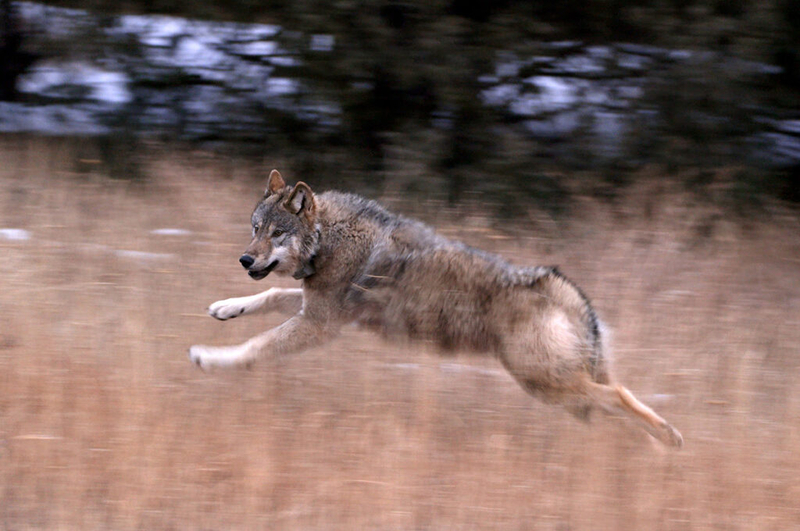
Wolf 2306-OR shortly after release in Grand County, Colorado, on Dec. 19, 2023. (Courtesy of CPW)
Colorado’s wolf program is not protecting the wildlife it was created to recover.
Colorado Parks and Wildlife records show the largest cause of wolves dying since recovery began has been from intentional killing by humans. The recent killing of Freedom, the lone Copper Creek pup, is not an isolated tragedy. It is a warning about a system that repeatedly sets wolves up to fail, blames them for the consequences, without considering what impact human actions and decisions played.
Nothing will get better unless we fix the problems in the management program; it’s our responsibility to do so.
The Copper Creek family should have been a success story. Two wolves from Oregon found each other in Colorado, formed a pack and had five pups. It was exactly what many Coloradans hoped would happen when voters approved wolf reintroduction.
Instead, the family became a symbol of conflict. Colorado Parks and Wildlife largely failed to tell the public what was happening, leaving key facts out and creating a vacuum quickly filled by anti-wolf voices. Media outlets rewarded outrage, amplified the most hostile voices and turned a conservation milestone into another tired urban-versus-rural fight. But every county in Colorado includes people who support wolves. The agency let others define the story, and the press chose conflict.
Public records show the Copper Creek wolves were drawn toward a livestock operation where carcass management was a known problem. In this case, a pile of dead livestock was a welcome mat attracting wolves and other carnivores. Just like dogs, once wolves are rewarded with food, their behavior can be reinforced quickly. The operator refused to remove carcasses and refused to let Colorado Parks and Wildlife remove carcasses.
Although conditioned by human-created circumstances, it was the wolves that were the problem.
Records also show livestock operator calls for the Copper Creek family to be killed shortly after their arrival and an ongoing campaign for their removal. For months, Colorado Parks and Wildlife tried to collaborate with operators around a solution. Their offer of assistance and their on-ground expertise was refused. Then the agency decided to relocate the wolf family after months of pressure from operators and advocates.
The consequences for the Copper Creek family were devastating. The father had been illegally shot by an unknown party and died within days of capture. His injuries likely contributed to conflict, exacerbating conflict. The mother and four pups were eventually re-released, but one unknown, four-month-old pup was left behind, unable to be caught, alone in hostile territory as winter approached in Grand County.
Against all odds, Freedom survived. He traveled hundreds of miles searching for his family and was heard howling day and night.
But Freedom was shaped by human mistakes and was set up to fail again. As a lone and young wolf, he preyed on vulnerable sheep on public land allotments. Sheep are especially susceptible to predation, and poor carcass management nearby only increased his risk. Instead of acknowledging the perilous human-created conditions, the need for basic actions to mitigate further conflict, the system branded him a “chronic depredator.” The press repeated the label.
There’s no standardized and transparent process for investigating wolf losses and requiring (or documenting) appropriate and effective nonlethal mitigation before lethal action is authorized. This is a problem. Records show multiple points where critical interventions were missed. Despite those failings, Freedom’s death sentence was justified by the framework in place.
Records show a Wildlife Services officer took the first shot at the pup at night, wounding but not killing him in late August 2025. In June 2024, Colorado Parks and Wildlife Commission allowed thermal technology to aid in killing conflict wolves, despite how difficult it can be to use effectively in the field. The pup survived, injured and more desperate. He continued preying on sheep on public land. Colorado Parks and Wildlife’s effort to kill him went on and off again multiple times for months, concluding with their announcement of his death this month.
The recovery program failed Freedom. We owe it to all other wolves to learn from the mistakes and prevent the same chain of events from happening again.
As a Grand County resident, I see that the systems in place were built to fail wolves. All of us who support recovery have to be honest about that. But we owe it to ourselves and our wolves to finish the work of recovery, even when it is difficult. We must remain dedicated to building a sustainable population with more releases.
We aren’t quitters in Colorado. That means fixing the rules: stronger carcass-management requirements, transparent predation investigations, consistent mitigation protocols, limits on compensation for producers who refuse assistance and a media narrative grounded in facts instead of fear and editorialization. And when the public is paying the bill for compensation, an operator shouldn’t be compensated if they contributed to conflict by failing to use reasonable non-lethal measures, expertise, and other resources made available to them for avoiding and mitigating conflict.
Colorado’s wolf population is fragile. Business as usual will mean more wolves will meet the same fate as the Copper Creek pup. If this program is going to succeed, the system must change before it kills the wildlife it was created to protect.
Denver, CO