Wastewater In Lava Fields: Delayed Fix Costs Big Island $1K Daily
Jul 02, 2026 | 6:01 am ET

Description
Photo courtesy of Honolulu Civil Beat
Construction on an $31 million upgrade to the Kealakehe Wastewater Treatment Plant, which discharges about 1.7 million gallons of lightly treated wastewater daily into a pit in the lava fields on the West Side of Hawaiʻi island, is now four months overdue.
The delay could be costing taxpayers $1,000 a day.
That’s according to the settlement reached in 2025 between Hawaiʻi County and Hui Mālama Honokōhau, a group of Native Hawaiian cultural practitioners, fishers, paddlers and other people who use the area around the harbor recreationally.
The hui, represented by the nonprofit legal firm Earthjustice, brought a federal lawsuit against the county in 2023 for allegedly violating the Clean Water Act. In the settlement, the two parties agreed that the county would begin construction on an upgrade that would let it create R-1 water — the highest grade of recycled water — by March 1, 2026.
Hawaiʻi County released a request for proposals on time and subsequently hired Goodfellow Brothers. Then, in late February, the county received a formal protest from Hensel Phelps, a different construction company it had not hired.
When the county claimed the Hensel Phelps protest prevented it from moving forward with the construction on time, the hui disagreed and initiated an informal dispute. Now, the county has dropped its claim, and it has announced that it will start over with a new RFP process.
“It's disappointing that it doesn't appear that construction is going to start anytime soon,” said Elena Bryant, an associate attorney at Earthjustice who is working on the case.
In the meantime, there are graduated fees associated with the settlement: $250 for the first 15 days, $500 a day for days 16-60, $1,000 a day for days 61 and beyond. As of Thursday, the total fees add up to $89,750.
However, the fees will be waived if the upgrade is completed by the original date named in the settlement: June 30, 2029. If it doesn’t wrap up by then, the total fees the county amasses will be paid to the Hawaiian Islands Environmental Finance Center, a group that helps community groups and government agencies secure federal funding for water conservation, recharge and reuse projects.
Meeting that deadline is definitely still feasible, said Rick Gaffney, a fisherman and wastewater expert who served two terms on the county’s Environmental Management Commission.
Tom Callis, communications director for Hawaiʻi County, said the new RFP process will be transparent and “open to all qualified contractors who meet the rigid technical and engineering specifications required for this advanced facility upgrade.” The process has been a challenging one, he added, because the contractors need to meet “highly specialized engineering required to upgrade a facility under the nation’s modernized, post-Maui groundwater regulatory standards.”
Just Out Of Sight
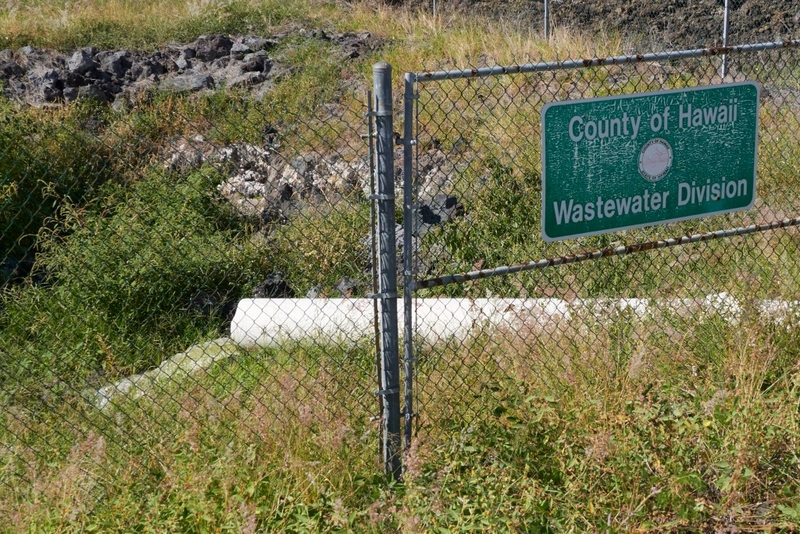
Embedded in the lava fields of North Kona, one of the driest parts of the island, the Kealakehe water treatment plant is well hidden from the public eye. But it’s less than a mile away from the popular Honokōhau Harbor.
Treated water from the plant seeps through the porous lava rock and ends up in and around the harbor, where its excess nutrients degrade the nearshore coral ecosystems and lead to algae blooms in the harbor and in the anchialine pools near the coast.
“You can actually see the groundwater seeping into the harbor, and it's not green and mucky, but it's a freshwater source that's always literally seeping in,” Bryant said.
Swimmers and paddlers have developed skin rashes and staph infections from the polluted water, according to Mike Nakachi, a Hawaiian cultural practitioner, professional diver and spokesperson for Hui Mālama Honokōhau.
“Municipalities have a way of always kicking the can down the road, but we can't kick this can anymore,” said Nakachi, who has been navigating the issue for decades.
Recycling the water instead of releasing it into nature, he said, “helps benefit the ʻāina and benefits the people who live off of that ʻāina — whether they're catching the aku at Honokohau, doing loko iʻa, limu restoration, or coral reef restoration.”
Upgrading the plant is only half the battle, said Gaffney. There is no department assigned to managing recycled water in the county. And without that added component, Gaffney said it’s hard to imagine a path forward where a significant portion of the recycled water doesn’t end up getting dumped. Gaffney said that there was talk of the Department of Water Supply taking it on, but that hasn’t happened.

“We have in the neighborhood of 1.7 million gallons of sewage going into the end of the plant and then coming out the back end and being dumped into this lava tube every day. So that's the amount we need to get rid of,” Gaffney said.
The handful of projects that will likely use the water include a new park near the plant that has been long-stalled but has new support from Mayor Kimo Alameda, and the landscaping at Honokōhau harbor, the existing Old Kona Airport Beach Park and the golf courses at the nearby Kohanaiki resort. But that water will barely make a dent, Gaffney said.
While R-1 water is somewhat cleaner than the water currently being dumped by the plant, he added, it won’t remove the pharmaceuticals, heavy metals or PFAS — contaminants that don’t belong in the ocean.
The settlement requires the county to complete a reuse feasibility study that will identify reuse projects in the area by Oct. 3, but it only requires that the plant reuse at least an average of 100,000 gallons per day of recycled wastewater from the plant.
“It's our hope that they'll do a little bit more than what's required by the settlement agreement,” Bryant said.
The biggest challenge in ensuring the R-1 water gets used, and not dumped, is funding, especially given the fact that the county is already on the hook for updating other key infrastructure, such as the water treatment plants in Hilo and Pāhala.
As Nakachi sees it, the outcome is worth the cost when it comes to creating a reliable source of R-1 water. “We really need to think towards 2050,” he said. It's expensive, he added, but failing to get the ball rolling in time typically leads to more expense — as is the case with the county’s cesspools.
Callis, the county spokesperson, stressed that the county is “fully committed” to delivering high-quality recycled water. “By working collaboratively under a court-approved framework, we are ensuring that public resources are used responsibly to build a resilient, fully compliant infrastructure system for our community,” he said.
An R-1 upgrade on the Kealakehe plant was first proposed in 1990, and delays are nothing new, according to Gaffney. He was concerned that the county had put most of its attention on rebuilding the wastewater plant in Hilo, so he created a working group to help focus the county’s attention on West Side water issues. He says it’s working, and he recommends it as a model for other regions in the state looking to keep local wastewater solutions front and center for elected officials.
Earthjustice’s Bryant says she also plans to continue working to hold the county accountable.
“The county’s attorneys have assured us that the R-1 upgrade project is a priority for this administration, but priorities are measured by action — not promises," Bryant said. "So until we see meaningful action, those assurances are just words.”
Civil Beat's coverage of environmental issues on Hawaiʻi island is supported in part by a grant from the Dorrance Family Foundation; coverage of climate change and the environment is supported by The Healy Foundation, the Marisla Fund of the Hawai‘i Community Foundation and the Frost Family Foundation; and reporting on fresh water issues is funded in part by the Ulupono Fund at the Hawai‘i Community Foundation.
Honolulu, HI