CT officials cheer Supreme Court decision upholding birthright citizenship
Jun 30, 2026 | 3:12 pm ET

Description
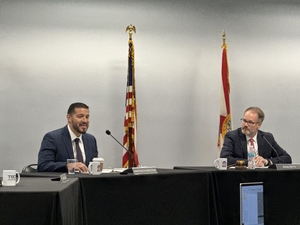
Photo courtesy of CT Mirror
This story has been updated.
Connecticut officials and immigrant rights advocates applauded the U.S. Supreme Court’s ruling on Tuesday that upheld birthright citizenship and blocked President Donald J. Trump’s attempt to curb automatic citizenship for those born in the U.S.
But they cautioned against taking their foot off the gas when it comes to opposing the rest of the president’s immigration agenda.
Chief Justice John Roberts delivered the majority opinion that struck down Trump’s Day 1 executive order to restrict citizenship for children who are born to parents who are living in the country illegally or who have temporary status.
The ruling upholds the prevailing interpretation of the 14th Amendment, which stipulates that “all persons born or naturalized in the United States, and subject to the jurisdiction thereof, are citizens of the United States and of the State wherein they reside.” Roberts’ majority opinion also leaned on a 1952 immigration law that includes much of the same language in that amendment.
“Citizenship, then and now, was the right to have rights — to freely participate in our political community. The Framers of the Fourteenth Amendment extended that promise to ‘every free-born person in this land,'” Roberts wrote. “We keep that promise today.”
For Connecticut Attorney General William Tong, Tuesday’s ruling was personal. Tong was born in Hartford to immigrant parents from China. He joined a coalition of attorneys general last year in suing over Trump’s executive order. And he filed an amicus brief to the high court in this case.
“Today is not just a legal victory. Today is a second ratification of the Fourteenth Amendment, on the 250th anniversary of our nation’s birth, by which we affirm as a people the essential character of our nation built by the sacrifice, ambition, and unyielding labor of immigrant hands,” Tong said in a statement.
“Donald Trump’s executive order wasn’t just wildly wrong on the law. It was an audacious attempt to override that American dream with the cruel legal fantasies of the most radical anti-immigrant fringe,” he said. “It was an effort to deny the existence and legitimacy of my own family, and so many Americans who share my story.”

In a virtual press conference with other Democratic state attorneys general, Tong ran through an oft-told family story: His father was on a tourist visa in the U.S. and his parents met in the 1970s at a Chinese restaurant in Bloomfield. Tong said his own citizenship provided at birth paved the way for his parents to sign a lease and later become homeowners, own Chinese restaurants and grow their family in Connecticut.
“His immigration story is a complicated one, and so there’s a great deal of uncertainty about what would happen to them,” Tong said. “But when I was born one thing was certain, that I was an American by right of my birth on American soil.”
“And it meant that in one generation, I could go from my parent’s Chinese restaurant on Park Street in Hartford to be the 25th elected attorney general of the state of Connecticut,” he added. “I tell you that story not because it’s a good story, but I tell you that story because it’s unremarkable, because it’s normal.”
Tong said he felt confident about the court’s decision because “the words are so clear” when it comes to the 14th Amendment’s citizenship clause. But he remarked that he was surprised by some of the dissenters, like Justice Neil Gorsuch.
The high court saved one of its most consequential cases of the session for its final day of releasing opinions. But the ruling in Trump v. Barbara was generally anticipated given the skepticism during oral arguments in the spring. The defeat on his executive order also comes as the Supreme Court weighed several cases that tested the president’s authority and expanded it in some ways.
Justice Brett Kavanaugh concurred in the judgment, but also dissented in part. He argued that Trump’s order doesn’t violate the 14th Amendment, but that it violates existing statutes and that Congress could decide to enact new legislation on the matter. Along with Gorsuch, Justices Samuel Alito and Clarence Thomas dissented.
“I am not sure that today’s opinion will stand the test of time. The Citizenship Clause ‘added greatly to the dignity and glory of American citizenship,'” Thomas wrote in his dissenting opinion. “Today’s opinion devalues that citizenship. I respectfully dissent.”
In a post on Truth Social, Trump appeared to lean on Kavanaugh’s argument that Congress could “amend or otherwise enact new legislation establishing exceptions to birthright citizenship for children born to foreign citizens unlawfully or temporarily in the country.” Trump urged lawmakers to draw up legislation to limit birthright citizenship, saying they’d have his support.
“The Supreme Court upheld Birthright Citizenship, which is too bad for our Country, but we can easily make it up in Congress through Legislation, with the support of the President, that has now been determined during this process,” Trump posted. “No long and unwieldy Constitutional Amendment is necessary! Congress should start TODAY to work on ending expensive and unfair to our Country, Birthright Citizenship. They will have my Complete and Total Support!”
Trump believes Congress could take it up instead of pursuing a constitutional amendment, which many of the president’s allies are calling for in light of Tuesday’s decision. Both efforts are unlikely to happen.
To that, Tong was dismissive: “It’s over. Go home, Donald Trump. Don’t come back to the court again and cause trouble by sitting in the front row and making a spectacle of yourself.”
The Democratic members of Connecticut’s congressional delegation also celebrated the ruling, but shared disappointment that the opinion wasn’t a wider margin or that the case even reached the highest court in the country.
“Birthright citizenship is crystal clear in the Constitution. This ruling should never have been so close,” U.S. Rep. Rosa DeLauro, D-3rd District, said in a statement. “But today, millions of Americans — people born here, raised here, who have lived all their lives as American citizens and who call no other country home — can rest.”
“Although I am heartened by the Supreme Court’s majority decision in this case, birthright citizenship should never have been up for debate,” U.S. Sen. Richard Blumenthal, D-Conn., said in a statement. “I know this is not the end of the Trump Administration’s attacks on immigrant communities and I will never stop fighting for our Constitutional rights.”

Trump has long sought to target birthright citizenship, which is enshrined in the Constitution. He made it a campaign promise during his first presidential run in 2016, but he ultimately didn’t take it up during his first term.
But on his first day back in office in January 2025, Trump issued an executive order that would limit who qualifies for automatic citizenship. It sought to restrict children if neither parent is a U.S. citizen or permanent legal resident.
In an unprecedented move, Trump sat in the courtroom in April as the justices heard arguments in the case. While the conservative majority has ruled in favor of a number of Trump policies, the high court has dealt the administration some major defeats, including on his wide-ranging tariff agenda.
That led him to publicly lash out at some of the six justices who struck down the tariffs, including the two he appointed: Gorsuch and Barrett.
But even with the defeat on birthright citizenship, the conservative justices have sided with the president on other parts of his immigration agenda, including the court’s majority opinion last week that upheld Trump’s decision to end Temporary Protected Status for 1.3 million people in the U.S. from 17 countries. That will leave the biggest impact on Haitian communities in Norwich, New London and Bridgeport.
Trump applauded other major rulings released Tuesday, including allowing unlimited coordinated spending between candidates and political parties ahead of the November midterm elections as well as upholding state laws that prohibit transgender women and children playing in school sports. The latter leaves some uncertainty regarding challenges to statutes in places like Connecticut that allow transgender athletes to play based on their gender identity.
While immigrant rights groups in Connecticut celebrated Tuesday’s opinion on birthright citizenship, they remain concerned about the administration’s agenda on immigration enforcement.
“No one should have to prove they belong in the country where they were born. This executive order would have created fear and uncertainty for families across Connecticut and set a dangerous precedent by allowing politicians to decide who is ‘American enough’ to deserve rights and protections,” Wendy Cardenas, executive director of Make the Road Connecticut, said.
“While we welcome today’s decision, our commitment remains unchanged,” she added, “we will continue fighting for the dignity, rights, and respect that every immigrant family deserves.”

Hartford, CT