Fifty for 150: ‘Los Seis de Boulder’ activists killed in two car bombings in 1974
Jun 26, 2026 | 6:05 am ET
Description
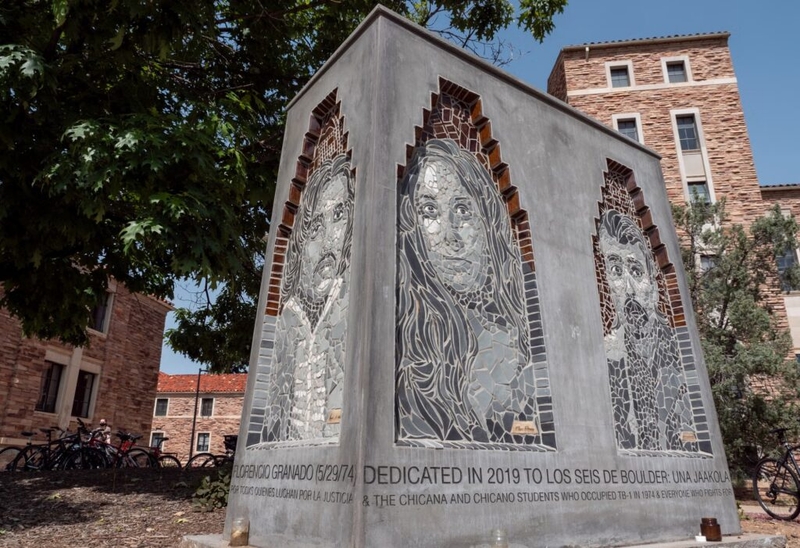
A memorial to Los Seis de Boulder on the campus of the University of Colorado at Boulder. (Courtesy of University of Colorado)
On May 27, 1974, a bomb exploded in a car parked at Boulder’s Chautauqua Park, killing three people associated with the United Mexican American Students, a University of Colorado student group that had fought for civil rights on campus since its founding six years earlier.
Two days later, just after a memorial service for the three activists who were killed, another bomb exploded in a car with four UMAS activists inside, killing three and injuring one.
The twin car blasts that killed “Los Seis de Boulder,” as they would become known, were the deadliest incidents in a series of bombings that rocked Colorado during a period of intense political conflict over civil rights, the Vietnam War and other issues in the 1960s and 1970s.
A 1970 dynamite attack that destroyed 24 empty school buses at a Denver Public Schools facility was widely suspected to be a politically-motivated attack on the district’s court-ordered integration program, though no one was ever charged. Within three weeks, the homes of a white segregationist school board member and a Black pro-integration activist were both targeted in similar attacks.
A New York Times report on this spate of fires and explosions — which “ranged from suspected right-wing activity through minor-league arson to the apparent work of student revolutionaries” — attributed the trend in part to the free availability of explosives historically associated with the state’s large mining industry. The first state and federal controls on such explosives were enacted later that year.
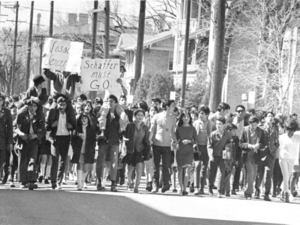
Colorado at the time was also a hotbed of the Chicano movement, led within the state by Rodolfo “Corky” Gonzales and the organization Crusade for Justice, founded in 1967. Inspired by the movement, the CU students who formed UMAS pressured the university to expand scholarship, financial aid and other equal-opportunity programs on campus.
Tensions rose in 1974 as UMAS members lost confidence in the student organization’s university-appointed leaders, whom they accused of “white-washing” the program and its activist aims. Some students began occupying the university building that housed the UMAS offices on May 13.
The Los Seis de Boulder bombings occurred two weeks later. Those killed were Reyes Martinez, a recent CU law graduate and civil rights attorney; Una Jaakola, a CU alumna from Minnesota and Martinez’s girlfriend; Neva Romero, a 21-year-old junior and former homecoming queen; Florencio Granado, an alumnus and former UMAS chapter president; Heriberto Teran, a Texas native and aspiring poet; and Francisco Dougherty, a pre-med student and friend of Teran from Texas.
Police investigators in Boulder quickly and publicly concluded that both deadly explosions, two days apart, had been accidentally triggered by the victims themselves while they were assembling bombs they planned to detonate elsewhere. A subsequent federal investigation documented evidence linking some of the deceased activists to other, nonfatal bombings in and around Boulder that year, and theorized that they’d intended to plant a bomb at the university building students were occupying at the time.
In the immediate aftermath of the attack and in the decades since, Los Seis de Boulder’s allies within the Chicano movement and other social justice groups have been deeply distrustful of those conclusions. The known facts of the widespread surveillance and infiltration of left-wing groups by law enforcement during the period — including the FBI’s notorious Counterintelligence Program, or COINTELPRO — have led many to believe the bombings were the result of sabotage or an attack by another group, among other possibilities.
A 2024 Colorado Public Radio investigation, published on the 50th anniversary of the explosions, called it “a story that is more complicated and nuanced than either side has told for much of the 50 years.”
Neither a federal grand jury nor the Boulder County district attorney ever charged anyone in connection with the bombings — or with any of the previous bombings investigators believed the activists had perpetrated.
The organizers behind a sculpture memorializing Los Seis de Boulder, which is now permanently installed on campus outside the building occupied by students in May 1974, say the bombings “were never adequately investigated, and the cases were never solved.”
Today known as UMAS y MECHA, CU Boulder’s Chicano and Latino student group continues to organize on campus. Since last year, they have been among many activist groups demanding the university cut ties with Colorado-based Key Lime Air over its operation of detainee transport flights for U.S. Immigration and Customs Enforcement.
Denver, CO