Minnesota leaders have a big role to play in the future of family farming in the Farm Bill
Jun 10, 2026 | 10:55 am ET
Description
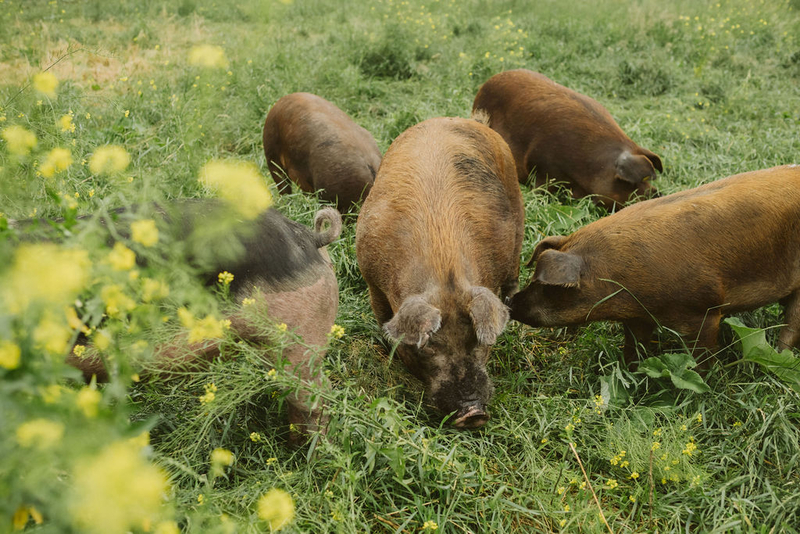
At Feathered Acres Learning Farm + Inn in central Minnesota, ppigs have space to move, fresh air, bedding, and the ability to express natural behaviors. (Courtesy photo)
My family and I own Feathered Acres Learning Farm + Inn in central Minnesota. Every day, we work to raise animals with care, steward our land responsibly, and build a farm that can support the next generation. That’s why it’s so crucial that the Save Our Bacon Act that Big Pork and multinational corporations are pushing be removed from the final Farm Bill.
The recent discovery of a Texas calf infected with screwworm — a devastating, flesh-eating insect that hadn’t been seen in the United States since 1966 — has underscored the need for more rigorous health and safety standards, which the Save Our Bacon Act would undercut.
Luckily, Minnesota’s own Sen. Amy Klobuchar and Rep. Angie Craig serve as the ranking members on their respective agriculture committees in Congress. Both have been supportive, and I am grateful they are making it possible for our farm to survive.
The Save Our Bacon Act currently in the House Farm Bill would preempt hundreds of food safety and animal welfare laws across the country. It is pushed by Big Pork in response to state and local laws like California’s Proposition 12, which required higher animal welfare standards for products sold there.
For family farmers, Proposition 12 created something that is increasingly rare in agriculture: a market that rewards quality and care rather than sheer scale. We are proud farmers for Niman Ranch, a network of more than 600 independent family farmers and ranchers across the country who share a commitment to humane animal care, sustainable farming practices, and raising pigs without gestation crates. For us, those values are not marketing. They guide every decision we make.
Our pigs have space to move, fresh air, bedding, and the ability to express natural behaviors. We chose this model because we believe animals deserve better treatment, consumers deserve meaningful choices, and family farmers deserve opportunities to succeed by producing high-quality food — not simply by getting bigger.
Proposition 12 gave farmers like us the opportunity to meet a market demand. The Save Our Bacon Act would undermine that opportunity for me and other Minnesota farmers and destroy our investment in improved animal welfare. Hormel Foods has said they have adopted to Prop 12 standards. A new local meat processing plant has opened in Staples, Minnesota, sponsored by the Minnesota Farmers Union. It will also be Proposition 12-compliant. If the Save Our Bacon Act passed, many of the farmers who have invested in higher-welfare production systems would face bankruptcy because lower priced and less humane practices would win a race to the bottom. That is not saving family farmers. It is protecting a system that increasingly favors consolidation and corporate control.
Farm Bill should protect Minnesota farmers, not change the rules to advantage Big Ag
The Save Our Bacon Act is not just about animal welfare, however. The far-reaching language of the bill blatantly says no state “may enact or enforce, directly or indirectly, a condition or standard on the production of covered livestock other than for covered livestock physically raised in such state.” This could impact over 600 state laws on food safety and animal disease that are designed to protect public health and consumers.
Livestock farmers are especially concerned with safety risks given the screwworm outbreak. Minnesota’s cattle industry could be left exposed if New World screwworm reaches or threatens cattle in another state, because rapid import bans and movement restrictions are exactly the kinds of tools states use to stop animal pests before they spread. The Save Our Bacon Act would allow out-of-state producers to challenge Minnesota’s ability to block cattle from Texas or another affected state, even when the state is trying to protect its farmers, herds and food supply from a devastating parasite.
As Congress continues work on the Farm Bill, lawmakers will face pressure from powerful lobbying groups seeking to eliminate standards they oppose. They need to hear from the farmers, consumers and rural communities who believe there is another path forward.
My family is not asking for special treatment. We are asking for a fair chance.
A fair chance to raise animals humanely.
A fair chance to sell into markets that value our work.
A fair chance to keep our farm viable for the next generation.
Most of all, I want my children to grow up knowing there is still a future in family farming. I want them to see that independent farmers can survive and thrive when consumers, voters and elected leaders stand with them.
The fight over the Save Our Bacon Act is about much more than pork production. It is about who agriculture works for, what kind of rural communities we want to preserve, and whether family farmers will have a place in America’s future.

Saint Paul, MN