Kaine introduces legislation to address teacher shortage, equip new educators
Jun 10, 2026 | 5:25 am ET
Description
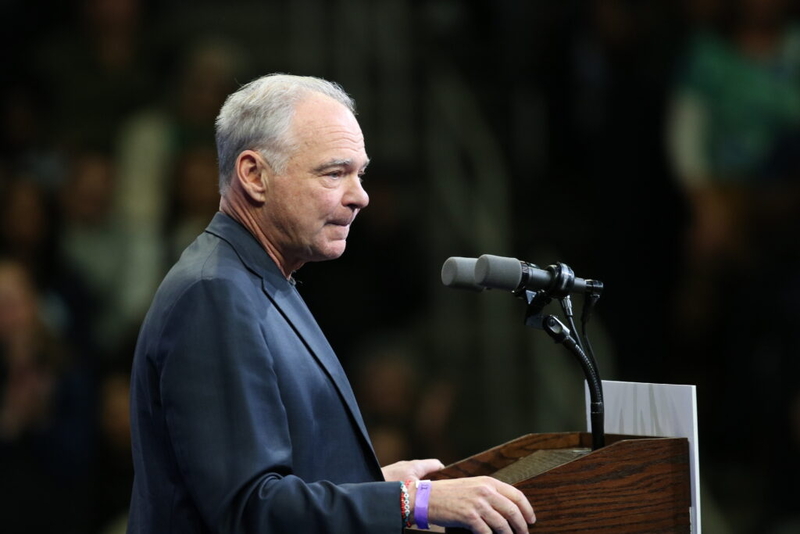
U.S. Sen. Tim Kaine, D-Virginia, seen here speaking at a rally in Norfolk for Democratic gubernatorial nominee Abigail Spanberger in 2025., said the Better Education Through Mentoring Act would support teacher and school leader induction programs in K-12 schools. (Photo by Charlotte Rene Woods/ Virginia Mercury)
One of Virginia’s federal lawmakers on Wednesday introduced a bill in Congress that would establish a grant program to address the national teacher shortage and better support early-career educators.
U.S. Sen. Tim Kaine, D-Va., is leading the proposal with support from U.S. Rep. Jahana Hayes of Connecticut. Kaine told reporters on Thursday that the Better Education Through Mentoring Act would support teacher and school leader induction programs in K-12 schools.
Kaine, who has introduced similar proposals to address teacher induction and retention in past years, said this bill is designed to reduce turnover rates.
“It’s one solution, not the only solution, but one solution that will lead to filling up the ranks of classroom teachers,” said Kaine to reporters last week. “We have shortages virtually everywhere in the country and also a retirement bubble that’s likely to hit in the next few years that will make those shortages even more acute.”
Teachers with the fewest years of experience have the highest turnover rate, with some moving to another school or leaving the profession, the bill reads. This can negatively impact student learning, disrupt school stability and detract from collegial relationships, collaboration and institutional knowledge.
Schools also incur high costs to replace teachers who leave.
Research cited in the bill text shows that comprehensive two-year mentoring and induction programs improve outcomes for educators and students, and boost teacher effectiveness, student achievement and retention.
Students of color and those in rural areas are also likely to be taught by inexperienced teachers,the proposal highlighted, further illuminating why targeted mentoring and induction support are needed.
Virginia’s legislature has appropriated millions in state funds to support such students, specifically in math and reading, due to low test scores.
The proposed measure also pointed to research showing rural schools face unique barriers, including limited access to qualified mentors and greater professional isolation. Studies show induction programs for school leaders improve teacher retention and student outcomes, particularly in disadvantaged schools.
If enacted, the proposal will promote mentorship, pairing early-career teachers with experienced mentors to help them become effective quickly. It will also include new support for teachers early in their careers and will offer new and expanded induction programs.
“It’s both an educational effectiveness program, but also a teacher retention program,” Kaine said.
The program will require funding, to help offset the cost of mentors’ time spent assisting other teachers. The proposal did not include an estimated amount.
The funding will first go to the committee level for consideration before being put to a vote for approval.

Richmond, VA