Kansas legislators push back against federal energy regulators ending competitive bids
Jun 05, 2026 | 4:44 pm ET
Description
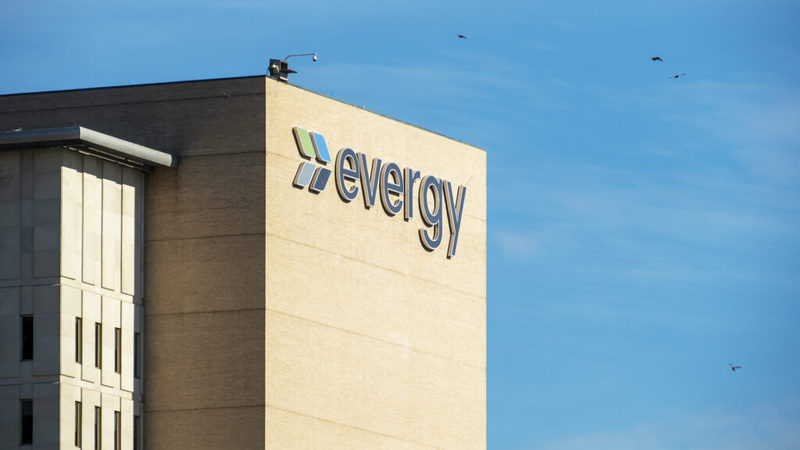
Evergy and other utility companies have appealed to federal energy regulators to shorten the process required to get transmission projections completed by allowing the elimination of the competitive bidding process. (Photo by Sherman Smith/Kansas Reflector)
TOPEKA — Two Kansas legislators asked federal energy regulators to ensure competitive bidding occurs on transmission projects, objecting to policies that handed a southcentral Kansas project to investor-owned utility Evergy without a formal bidding process.
Speaker of the House Dan Hawkins and Rep. Leo Delperdang, Republican chair of the House Committee on Energy, Utilities and Telecommunications, submitted a letter to the Federal Energy Regulatory Commission, expressing concerns about maintaining competition and avoiding monopolies.
They said they were disappointed that Evergy and International Transmission Co. went to the federal government to do a “tone-deaf end-run” since the state didn’t pass “monopolistic bills or policies.”
They referred to transmission projects planned by the Southwest Power Pool to meet predicted expanded energy usage. A southcentral Kansas transmission line project, valued at about $493 million, was given to Evergy by SPP without going through a competitive bid process.
“Specifically, they seek the right to build and own transmission projects regionally planned by SPP and then recover those costs from Kansas ratepayers, without those projects first being competed for ownership,” Hawkins and Delperdang said in the letter, dated May 11.
The letter was submitted as part of a FERC case, in which companies that call themselves the “Grid Acceleration Coalition” requested a ruling to accelerate the SPP process so energy projects can get online quickly.
SPP is a regional transmission organization, one of seven approved by the FERC as nonprofit member agencies that oversee transmission infrastructure, ensure utility system reliability and manage the wholesale electricity market.
Evergy and International Transmission Co. are part of the coalition, along with Ameren Services Co.; American Transmission Co.; Cleco Power; Entergy Services; Oklahoma Gas & Electric Co.; The Empire District Electric Company; and Xcel Energy Services Inc.
The companies argue in their FERC docket that the nation “faces an unprecedented energy emergency and time is of the essence.” They said shortening SPP’s process can delay a project by 16 to 20 months.
“As part of the 2026 Grid Acceleration Coalition, Evergy has advocated to reduce federal red tape that is slowing down infrastructure needed to meet growing energy demand,” said Gina Penzig, Evergy spokeswoman, in a statement.
She said the coalition asked the FERC to reconsider provisions that require a bidding process for transmission because of delays it causes.
“If our region is going to remain competitive for economic growth, we need to be more efficient in meeting growing energy needs,” Penzig said.
Hawkins and Delperdang said competition is essential.
“The Kansas Legislature has twice rejected the pleas of ITC Great Plains, Evergy and other would-be monopoly transmission owners to pass a right of first refusal (‘ROFR’) law and end what little competition exists in constructing SPP planned transmission projects in Kansas,” their letter said.
Penzig said competitive bidding doesn’t guarantee a lower final project cost, noting that frequently low bidders turn in final costs that exceed their initial projections.
“We are accountable to the customers served by area transmission lines and to the Kansas Corporation Commission,” she said. “Whether built by Evergy or another transmission provider, the cost allocation of a project to Kansas and regional customers follows the same formula. As the local utility, we track carefully how the cost of infrastructure we build impacts our customers’ prices.”
The docket asks FERC to “implement a remedy” for time delays that are affecting the unprecedented energy load growth occurring nationally. In 2025, an SPP official said it expects energy usage will nearly double in the next decade.
The FERC docket only applies to SPP, which covers Kansas and 13 other states, and the Midcontinent Independent System Operator, another regional transmission organization that covers 15 centralU.S. states and Manitoba, Canada.
Hawkins and Delperdang rejected the coalition’s justification for allowing projects to move forward without competitive bids.
“Kansas is a state that supports freedom and competition — the notion of creating perpetual monopolies in state or federal law is very un-Kansas and the views of our state’s legislative process rejecting such attempts should not be dismissed by the Commission,” their letter said.
Topeka, KS