Not just a Las Vegas Strip problem: Trafficking happens at local casinos too, says advocate
Jun 05, 2026 | 8:00 am ET
Description
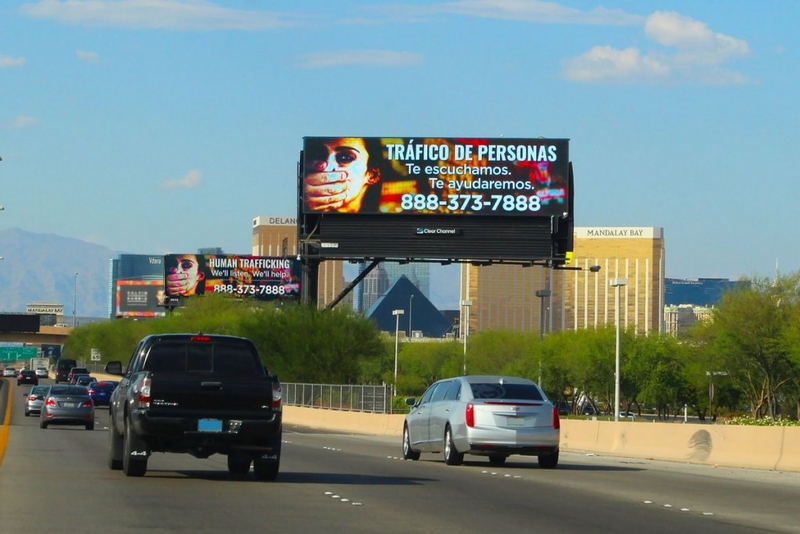
An FBI photo on social media from a campaign the bureau once conducted in Las Vegas. to call attention to sex trafficking in Southern Nevada.
If Nevada wants to do a better job protecting people from human trafficking, state lawmakers should look beyond the Las Vegas Strip, says one mental health provider.
Jessica Kay, a licensed social worker and trafficking survivor, told state lawmakers that, while Nevada has made strides to address sex trafficking and exploitation, gaps in data collection and how law enforcement responds to some incidents of sex abuse and assault have made it difficult for Southern Nevada to determine how rampant the problem might be.
“We need better systems for tracking violent incidents from hotel rooms to courtrooms,” Kay said. “Right now, it is really difficult to follow an incident from a Metro police report to a court record, to a jail record. Those gaps prevent us from identifying patterns of violence, exploitation, trafficking, and repeat offenders.”
Kay believes more needs to be done to collect data to identify which hotels are hotspots for trafficking.
That includes reviewing incidents at “off-Strip” casinos geared toward locals.
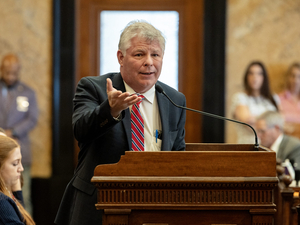
Kay made her comments to legislators last month during an interim legislative committee focused on housekeeping staff.
Kay told lawmakers she reviewed 77 human trafficking cases that initally were reported as child molestation, sexual assault, or abuse and neglect. Among the cases, which were from the past six years, there were instances when the same hotel – in some cases even the same room – is linked to multiple cases“
More needs to be done to connect the dots since “too often the larger questions are not immediately asked,” she said.
“Who booked the room? How long has the victim been here? Who has been coming and going? Is this connected to a broader trafficking operation?” Kay said as examples of unanswered questions. “The infrastructure to ask those questions exists, but the habit and sometimes the systems do not.”
The other problem with identifying minors who are trafficked in local casinos is they blend into their surroundings, she said, adding that seeing “minors are a normal part of the environment, unlike Strip properties.”
“Neighborhood casino resorts are community destinations,” she said. “Many victims do not like the way that people expect trafficking victims to look. They look like teenagers walking through casinos, sitting in food courts, playing in the arcade, and moving between hotel rooms unnoticed.”
One child Kay worked with told her that she would meet her trafficker “in the food court of a local casino hotel” before going upstairs. The common scenario often goes unnoticed.
Casino workers who spoke during public comment raised concerns about not knowing how to report suspecting trafficking.
Joleen Reyes, who works as a porter on the Strip, said there have been times where girls who look as young as 15 come into the restroom “crying and scared, but then leave to meet older men who were waiting outside.”
Tommy Principe, who works as a bellman and a limo driver on the Strip, said he often has young women come up to him asking for directions to a certain room. An hour later, they are leaving the property.
“In my mind, I think it’s suspicious,” Principe told lawmakers. “The training the company has always given is that they are guests and it’s none of our business. There is no system I know of or have been trained on. I don’t know what to do if I think it is sex trafficking.”
While Kay believed the state has made significant strides – she added the state was in a better spot with helping survivors since when she was trafficked in 2004 – Nevada still has many “critical pieces to the puzzle” that are missing from the policy discussion.
Lawmakers have repeatedly been told by survivors more needs to be done to bolster protections for survivors, some who often face prosecution despite being victimized.
The state as a whole, especially Southern Nevada, lacked housing for adult survivors of trafficking as well as clinicians specially trained to help survivors, Kay said.
How quickly law enforcement identifies a case as trafficking plays a crucial role in recognizing if there are casinos that are hot spots, she added.
“How many child molestation, sexual assault, abuse, neglect, runaway, or missing juvenile reports connected to a property have to accumulate before someone steps back and asks whether something larger is happening?” Kay asked. “If we cannot connect the data, we cannot fully understand the scope of harm that is happening in these properties, and we cannot build effective strategies to protect our most vulnerable community members.”
Las Vegas, NV