Lawsuit seeks to halt Tennessee law making illegal immigration a state crime
Jun 05, 2026 | 6:01 am ET

Description
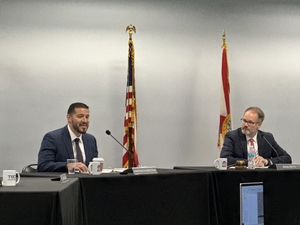
Tennessee House Speaker Cameron Sexton and Lt. Gov. Randy McNally announcing the GOP "immigration 2026" agenda in January. Part of the agenda included enactment of a state crime for immigrants here without legal status, which is now being challenged in federal court. (Photo: John Partipilo/Tennessee Lookout)
The ACLU and National Immigration Law Center on Thursday filed a legal challenge to a new Tennessee law that makes it a crime for immigrants without legal status to enter or remain in the state.
The federal lawsuit, filed on behalf of two noncitizens who have lived for decades in Tennessee, is seeking class action status in order to represent “hundreds if not thousands of noncitizens…subject to arrest, detention and prosecution,” under the new legislation, set to take effect July 1.
The plaintiffs are seeking a declaration that the legislation is a violation of the Supremacy Clause of the Constitution — a usurpation by Tennessee of immigration enforcement powers reserved for the federal government. The petition also seeks both a preliminary and permanent restraining order stopping state officials from enforcing the law.
“The rule has been clear for well over a century: Immigration enforcement is exclusively a federal power,” read a statement by Hannah Steinberg, staff attorney with the ACLU’s Immigrants’ Rights Project.
“The state’s overreach here is unlawful and inhumane, creating fear and upending lives for families, neighbors, and communities across Tennessee,” the statement said.
A model for the nation? Tennessee GOP ushers in sweeping ‘Immigration 2026’ agenda
The new state law, making illegal immigration a state crime, was enacted as part of Tennessee Republicans’ so-called “Immigration 2026” agenda that grew out of meetings between House Speaker Cameron Sexton and Stephen Miller, a White House advisor who is a key architect of President Donald Trump’s mass deportation agenda.
Tennessee Republicans also enacted legislation that creates new immigration verification requirements for public benefits, requires sheriffs to enter cooperative agreements with U.S. Immigration and Customs Enforcement and imposes penalties on truck drivers who don’t speak fluent English.
The legislation being challenged makes it a Class A misdemeanor under state criminal law for noncitizens to intentionally remain in Tennessee more than 90 days after being issued a final deportation order by a federal immigration judge. Class A misdemeanors carry a sentence of up to one year in jail and a maximum $2,500 fine.
The legislation also makes it a crime for immigrants without legal status to enter, or attempt to enter, Tennessee, a provision that will not take effect unless the Supreme Court overturns a previous ruling out of Arizona that found states cannot usurp federal immigration law. The provision may also take effect if Congress acts to explicitly allow states to take on immigration enforcement duties.
The lawsuit details the complexities of the U.S. immigration system that provides remedies for noncitizens with a final deportation order: they may be granted humanitarian relief, or legal protections as crime victims. Some individuals with final removal orders may be protected from deportation under the Convention Against Torture. Children, including unaccompanied minors and recipients of Deferred Action for Childhood Arrivals, or DACA – a form of relief set aside for individuals who entered the country as children – may continue to remain in the United States.
One plaintiff, identified only as “Lucy” in court filings, is a 58-year-old noncitizen who has lived in Memphis for the past 25 years. Lucy, according to legal filings, was denied asylum and issued a removal order, but has a separate pending claim under the Violence Against Women Act.
“Benjamin,” the other named plaintiff, entered the United States as a young child when his family applied for asylum. The family was denied and Benjamin, now 35, was ordered removed when he was a teen. He has since become a DACA recipient and lives in Memphis.
“A state cannot replace Congress’s immigration scheme with its own,” the lawsuit argues.
The Tennessee law “jettisons (the existing immigration) system, grasping control over removal from the federal government and allowing Tennessee to unilaterally prosecute noncitizens for refusing or failing to depart the state with no federal control or input.”
The lawsuit

Nashville, TN