Arts groups push for more state funding after Pa. council ends key programs
Jun 04, 2026 | 5:19 pm ET
Description
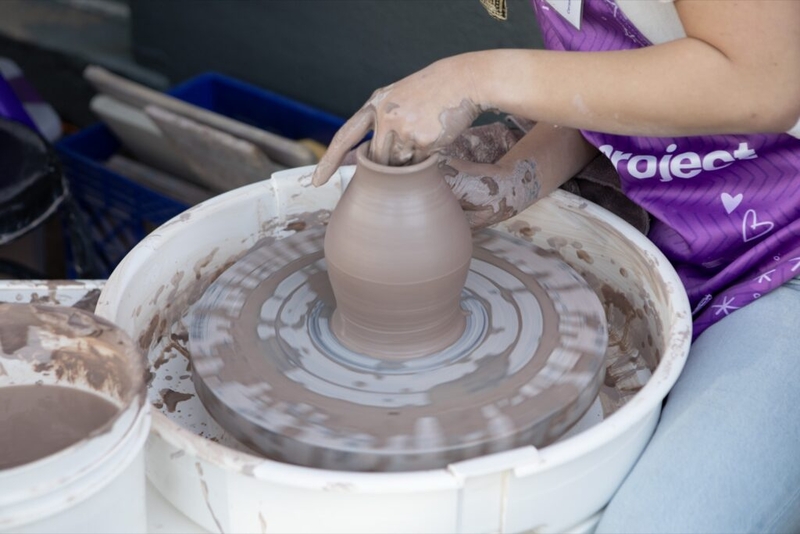
Organizations across Pennsylvania are pushing for an arts funding increase in this year’s budget. (Photo from PACast)
Emily Scolnick is a 2026 Dow Jones News Fund intern at the Pennsylvania Capital-Star.
Arts organizations are lobbying for a $5 million increase in funding in Pennsylvania’s next state budget and the reinstatement of longstanding arts partnership programs set to end with the fiscal year on June 30.
Recent strategic changes from the Pennsylvania Council on the Arts (PCA) — which has rebranded as Pennsylvania Creative Industries — have effectively shuttered several arts access and educational programs. But flat state funding is a more persistent problem: The “Grants for the Arts” line item has remained stagnant at $9.59 million since 2015.
“Pennsylvania deserves better,” Patrick Fisher, the CEO of the Greater Pittsburgh Arts Council, told the Capital-Star. “Arts organizations in Pennsylvania shouldn’t be expected to do more with less.”
Fisher noted that Pennsylvania ranks 32nd in the country in investment in the arts — investing just $0.81 per capita — despite placing ninth in arts vibrancy. New York and New Jersey spend $4.09 and $3.41 per capita, respectively.
“We should probably be in the $20 million [arts budget] range by now,” said Rep. Joe Ciresi (D-Montgomery), who serves on the council and the Pennsylvania Legislative Arts and Culture Caucus.
The Council on the Arts was established in 1965 to promote “the encouragement and development of the various arts” in Pennsylvania. The group recently adopted the name Pennsylvania Creative Industries and announced a new strategic vision, increasingly redirecting funds towards creative entrepreneurship and economic development opportunities.
“With this framework, we have expanded grant opportunities to offer increased flexible support, technical assistance, and networking opportunities for a wider range of organization types and artistic disciplines,” PCA Chief of Staff Norah Johnson wrote in a statement. “These new opportunities ensure taxpayer dollars have greater impact and go further to support the arts across Pennsylvania.”
However, the new strategy prompted the shuttering of two of PCA’s marquee programs: Arts in Education and Folk and Traditional Arts. It has also eliminated its Preserving Diverse Cultures division, decisions that are facing backlash from arts organizations statewide.
“We’re trying to secure these organizations so they have a future,” Ciresi said.
Ending partnerships
Ciresi encouraged organizations to “lobby their people to make sure they will vote for a bill that increases funding for the arts.”
Fisher has spearheaded such efforts. He said that the Arts and Education program, which placed teaching artists in school residencies across the state, also gave those artists — some of whom are seniors — supplemental income that will now vanish.
“Many of [them] are likely going to have to look to employment in other areas, potentially outside of the arts altogether, which is really disappointing to see,” he said.
The Folk and Traditional Arts program supported opportunities within artistic traditions that are “learned through ongoing participation in community-based activities” rather than traditional instruction methods.
“I couldn’t help but think about how my curiosity might have been sparked if I had been given the chance to sit with the traditional artists in my own community,” Fisher wrote in a letter he distributed to members of the House and Senate Appropriations Committees in Harrisburg this week urging them to adopt the funding increase.
PCA adopted its new framework following an extensive listening process with partners around the state that included focus groups and a survey that garnered over 800 responses. But several of those partners felt that the new framework goes against the results of that survey, which identified top needs as opportunities for rural communities, diversity in program offerings and audiences, and collaborations across diverse cultures.
“The majority of folks that were interviewed for that process, who were part of the different study groups, and who took the survey were not necessarily artists or from arts organizations,” said Susannah Faulkner, the executive director of Erie Arts and Culture (EAC). Many of the changes came as a surprise to EAC, which has maintained a 28-year relationship with the state, and other groups.
The allocation of grants was decentralized in the 1990s due to an inequitable distribution of funds between urban and rural areas, according to Kelly Gibson, the board president at Creative Pennsylvania. As a York area partner, she helps distribute PCA grants and facilitate its programs for local organizations.
With PCA’s new framework, she worries about that inequity returning.
She said that while advocates are “100% in favor” of the state’s increased investment in entrepreneurial and economic opportunities in the arts, it should not come at the cost of “longstanding, supporting grants” for existing organizations and programming.
Faulkner shares concerns about rural areas maintaining access to the arts, as 70% of the organizations in her region are set to lose funding.
“Most of our service area is rural,” she said. “We’re deeply concerned about them getting left behind with this new model.”
New grants and programming
PCA has recently created new initiatives to maintain its statewide support of the arts amid its programming shifts. A series of workshops highlighting grant opportunities begins next week and will continue into July. A new Creative Districts Program will offer up to $50,000 per year to communities that use “local assets” to highlight creative ventures, and state Innovation and Impact Grants — which range between $100,000 and $150,000 — aim to support “initiatives that drive innovation and sector visibility.”
The council also passed a recommendation for a new grant program for small arts organizations — defined as those with $10,000 to $100,000 in annual revenue — at a special meeting Thursday.
“There are some neat elements of some of the grants, but in no way does it fill any gaps or holes,” Faulkner said. “If anything, it creates more administrative burden.”
Members of the council said at Thursday’s meeting that “dramatic decisions had to be made” due to funding struggles.
“Our legislators have a lot of different needs that they need to fulfill,” said Jeffrey Parks, a former council chair and the president of ArtsQuest in Bethlehem. “I encourage you, if you think the arts are important, to reach out to your legislators at budget times and other times.”
Around 20 elected officials have signed onto letters of support for the budget increase, according to Creative Pennsylvania. Fisher said that the effort has been met with strong bipartisan support.
Harrisburg, PA