New SC law taxes vapes, while giving tax break to electronic tobacco devices
Jun 04, 2026 | 9:30 am ET
Description
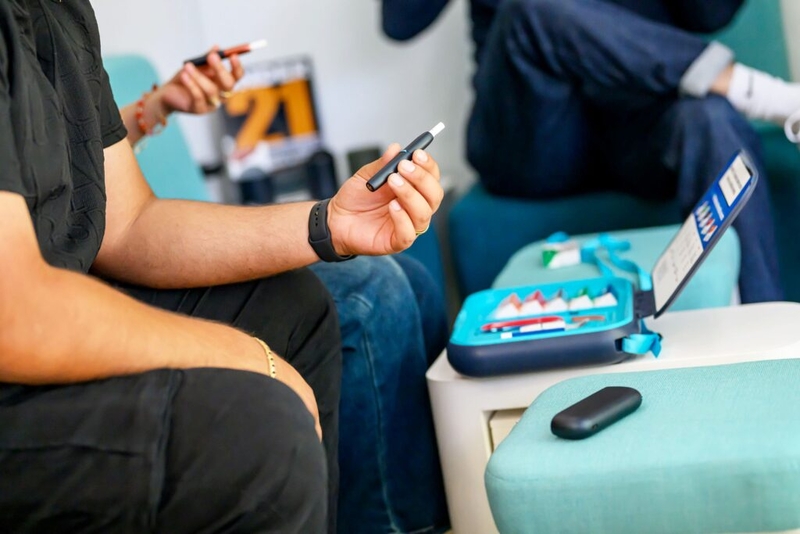
In this image released on April 16, 2025, Philip Morris launches IQOS, a heated tobacco product, at VENUE in Austin, Texas. IQOS is the first heated tobacco system authorized by the U.S. Food and Drug Administration. (Photo by Chris Saucedo/Getty Images for PMI U.S.)
COLUMBIA — A state law that takes effect in October newly taxes vapes and sends the money to Medicaid to help cover revenue lost by fewer South Carolinians smoking cigarettes.
The same law, signed by Gov. Henry McMaster two weeks ago, also cuts taxes in half for electronic cigarettes that — unlike vapes — actually use tobacco to deliver a nicotine kick. That prepares for sales of so-called heat-not-burn products that aren’t currently available in South Carolina stores.
But vapes, also called e-cigarettes, have been rising in popularity for two decades without any vice tax. Only sales taxes apply.
“Particularly, more and more young people are getting their nicotine from vapes,” said Senate Minority Leader Brad Hutto, who pushed to add the vape tax to the bill that initially dealt only with heated tobacco products.
The number of smokers is dwindling, but SC could do more to stop tobacco usage, report says
Starting Oct. 1, vapes will be taxed at 5 cents per milliliter, similar to rates set in North Carolina and Georgia.
South Carolina’s cigarette taxes are 57 cents per pack of 20, unchanged from a 2010 law that raised the tax by 50 cents a pack and dedicated most of the money to the state’s portion of Medicaid.
The law worked as advocates intended: The higher cost contributed to fewer South Carolinians smoking. However, that also reduced the tax collections that help pay for escalating Medicaid costs.
The state’s Medicaid agency expects to receive $77 million in cigarette tax revenue for the fiscal year that ends June 30. That’s down from nearly $109 million five years ago.
The state covers roughly 30% of the cost of the government health insurance program for the poor, elderly and disabled. The federal government pays the rest.
But rising health care costs requires spending about $100 million additional in state taxes in 2026-27 just to keep paying doctors and providing Medicaid services at current levels.
Beyond going to the state’s Medicaid Reserve Fund, cigarette tax revenue also provides $5 million annually for smoking cessation programs and $5 million annually for cancer research at the Medical University of South Carolina.
That spending is required by the 2010 law that increased cigarette taxes for the first time in 33 years.
And while companies have billed both vapes and the newer heated tobacco products as less dangerous tools to help cigarette smokers quit, health organizations still warn that all nicotine products can cause health problems.
“The harmful effects of vaping are still there,” said Hutto, D-Orangeburg. “People are still getting cancer, still have lung transplants and everything else from vaping.”
That’s why vape sales should help pay for healthcare costs, he said.
It’s estimated the new vape tax will bring in $14 million annually for Medicaid, while the 28.5 cents-per-pack tax on heated tobacco products could raise $7 million once it’s available, according to the state’s financial analysts.
Legislators cut tobacco taxes in half for those products on the assumption they don’t cause nearly the health problems as regular cigarettes.
The U.S. Food and Drug Administration allows Phillip Morris to sell its battery-operated IQOS device and the sticks of processed tobacco it heats as a modified risk tobacco product.
SC senators advance taxes on vapes, reduced taxes for electronic tobacco devices
That allows the company to claim smokers who quit smoking and switch to the product can reduce their exposure to harmful chemicals, according to the Centers for Disease Control and Prevention.
It cannot claim the devices reduce risks of tobacco-related diseases. More research is needed, according to the federal agency.
The devices heat the tobacco instead of burning it like a traditional cigarette. Phillip Morris says the lower temperature creates a nicotine-laced aerosol, not smoke, with the taste of tobacco. The nicotine hit comes with fewer toxins, the company claims.
But health advocates and the CDC warn that doesn’t mean the devices are risk free.
The devices, which look a lot like vapes but deliver nicotine through actual tobacco instead of a liquid, were briefly sold in South Carolina.
In 2021, Phillip Morris sold heated tobacco products in Charleston and Myrtle Beach as part of the FDA’s pre-marketing approval. But a patent infringement lawsuit halted their sale later that year.
In the U.S., the company sells heated tobacco products in Florida, Texas and Mississippi, according to its website.

Columbia