Advocates say feds’ Medicaid work rule could make qualifying for healthcare needlessly hard
Jun 04, 2026 | 4:00 am ET

Description
Advocates say the federal rule for implementing new Medicaid work requirements includes stringent requirements that may make it more difficult for people who could qualify for an exemption to meet those requirements. (Getty images)
Wisconsin healthcare advocates have been worrying for months that new work requirements for some people on Medicaid that will take effect next year will make it harder for people who are eligible to get on, or stay on, the health insurance program.
Those worries increased this week now that the federal government has issued its rules for states to implement the new requirements.
“More people are going to have a harder time complying with the bureaucracy, and they’re going to get caught up in that,” William Parke-Sutherland, government affairs director at Kids Forward, told the Wisconsin Examiner Tuesday. Kids Forward is a Wisconsin research and advocacy organization for children and families of color and facing barriers to opportunity.
Medicaid — known as BadgerCare in Wisconsin — provides health insurance primarily for people with incomes below the federal poverty guideline: $15,960 for one person and $33,000 for a household of four. Medicaid is regulated and partially funded by the federal government, with the states administering the program and sharing responsibility for its costs.
Work requirements were among changes to Medicaid included in HR 1, the tax and spending megabill that congressional Republicans passed a year ago and President Donald Trump signed July 4, 2025. HR 1’s cuts to Medicaid will total more than $900 billion over 10 years, according to KFF, a health policy research and news nonprofit.
The new Medicaid work requirements apply to people who were added to the program as a result of Medicaid expansion under the Affordable Care Act, the federal health insurance law enacted in 2010.
Under the ACA, states were able to get additional federal funds by expanding Medicaid to cover families with incomes up to 138% of the federal poverty guideline — $45,540 for a family of four.
Wisconsin didn’t adopt the full ACA expansion, however. Instead, under former Gov. Scott Walker, the state extended Medicaid healthcare coverage to childless adults with annual incomes up to $15,960, the federal poverty guideline.
About 190,000 childless adults in Wisconsin were covered by BadgerCare in April, according to the state Department of Health Services. Nationally at least two-thirds of people under Medicaid expansion are already working, Parke-Sutherland said.
Starting in 2027 those additional Medicaid recipients must show they are working or engaged in community service at least 80 hours a month, or enrolled in an education program at least part time. The 2025 tax-cut law provided exemptions for people with disabilities or in frail health, as well as for pregnant women and caregivers for other people with disabilities.
We're looking at how many people with disabilities aren't going to be qualifying for an exemption and are at risk for losing their healthcare.
The federal rule that the Centers for Medicare & Medicaid Services issued Monday outlines how states must implement those requirements.
“We have been preparing to implement the requirement for almost a year based on limited verbal guidance we received from CMS as well as information we learned by collaborating with other states and learning from their approaches,” Elizabeth Goodsit, spokesperson for the Department of Health Services, said Wednesday.
DHS has spent months developing policies, procedures and system changes to implement the requirement, Goodsit said. “Our goal is to reduce the administrative burden on current and future Medicaid members to meet the new federal red-tape work requirements.”
Healthcare advocates contend that stringent terms in the newly released federal rule will make it more difficult for people to remain covered by Medicaid, even if they fully qualify.
For example, the rule presents “a much more restrictive definition of ‘medically frail’ than what appears to be in the statute of HR 1, and what people had been hearing from CMS,” Parke-Sutherland said.
Advocates said the rule also makes qualifying for an exemption more complicated for people with disabilities.
“We’re looking at how many people with disabilities aren’t going to be qualifying for an exemption and are at risk for losing their healthcare,” said Tamara Jackson, public policy analyst for the Wisconsin Board for People with Developmental Disabilities.
Unpaid family caregivers are supposed to be exempt, but Jackson said the relevant language in the federal rule “is, I think, really confusing and really difficult for unpaid family caregivers [to navigate].”
Jackson said the state will face “a tremendous amount of problem-solving that has to be done in a very short amount of time.”
It appears the federal rule doesn’t permit states to automatically declare a person exempt from the work requirement on the basis of a particular illness or diagnosis — such as Parkinson’s Disease, multiple sclerosis, HIV-AIDS or cancer.
Many of those conditions are cyclical, with patients alternating between times when symptoms seem mild and times when they’re deeply debilitating, Parke-Sutherland said.
Patients “[are] going to have to prove that they can’t work in order to qualify” for coverage, he said. “That’s a big change, and it’s going to make it harder for individuals and it’s going to make it harder and more costly for the state.”
In a statement issued earlier this week, Lisa Lacasse, president of the American Cancer Society Action Network, said the new restrictions collide with cancer patients’ essential need for health coverage.
“Knowing 1 in 3 children diagnosed with the disease and 1 in 10 people with a history of cancer currently count on Medicaid for their health insurance, this coverage is a matter of life or death for millions of people nationwide,” Lacasse said.
The restrictions in the new federal rule “link the definition of medical frailty to a person’s ability to work,” Lacasse said. The “debilitating side effects of the disease or treatment” complicate the task of fulfilling a work requirement or proving they can’t work, however.
Many cancer patients want to work between rounds of chemotherapy, she said, but instead, they “will have to choose between losing their Medicaid coverage, working the required 80 hours per month, or giving up working altogether to qualify for an exemption.”
Parke-Sutherland said the work requirements alone are expected to cut Medicaid nationwide by $326 billion over 10 years.
“That will not make people healthier and will not make people more likely to work,” he said. “The only way it reduces costs is because people who are currently eligible are not going to be eligible any more, not able to prove they’re working, not able to prove they have a condition [that makes them exempt], or they’re going to get caught up in the bureaucratic red tape of trying to prove those things.”
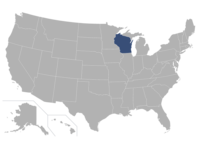
Madison, WI