Oklahoma schools beat national average in student attendance, report finds
Jun 03, 2026 | 5:06 pm ET
Description
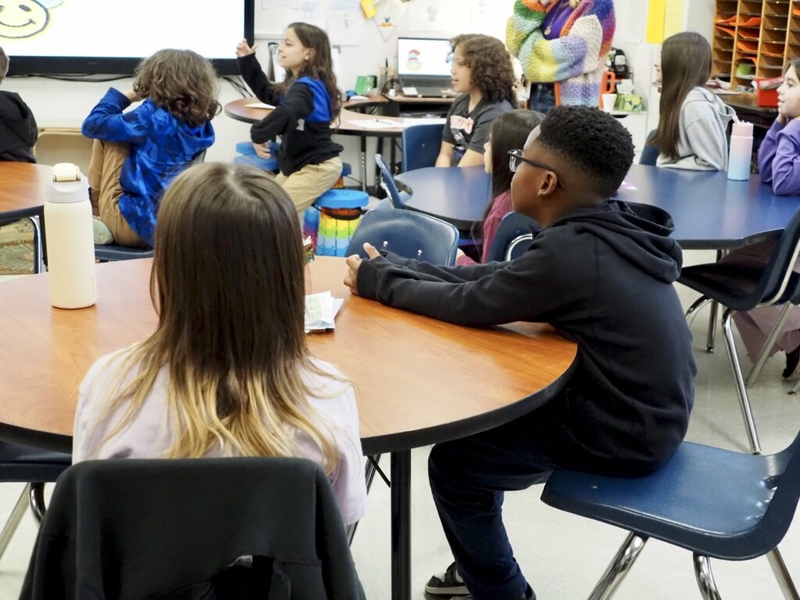
Fourth graders sit at their classroom tables at Cleveland Elementary in Oklahoma City on March 6. (Photo by Nuria Martinez-Keel/Oklahoma Voice)
OKLAHOMA CITY — Often known for bottom-tier educational rankings, Oklahoma has improved over the national average in a critical area: student absenteeism.
Nineteen percent of Oklahoma students were chronically absent from school in the 2024-25 academic year, better than the nationwide average of 21%, according to a report issued Tuesday from Johns Hopkins University and the national nonprofit Attendance Works, which focuses on absenteeism issues.
A student is considered chronically absent after missing 10% or more of the school year for any reason.
The state’s 19% chronic absenteeism rate matches that of both the 2023-24 school year and pre-pandemic levels, a benchmark many states have struggled to meet since the outbreak of COVID-19, according to the report, which combined state-level and federally collected data from 31 states.
Oklahoma State Department of Education data, though, indicates the state’s 19% chronic absenteeism rate is still higher than before the pandemic. Annual state report cards found 81% of Oklahoma public school students were in good attendance in 2024-25, the most recent data available, compared to 86% in 2018-19 and 86.5% in 2017-18.
Most states are experiencing greater levels of high or extreme absences than before COVID-19, as well, the national report found. Meanwhile, the number of Oklahoma schools with high or extreme absences has declined even below rates seen in 2017-18, according to the report.
The report considered a school’s absenteeism rate “high” when 20% to 29.9% of students were chronically absent and “extreme” when reaching 30% or more.
Large numbers of absences have “ripple effects” and indicate a school might need more intensive support and a more comprehensive approach to attendance issues, the report states.
“The churn in the classroom makes it more difficult for teachers to teach and affects the learning experience of all students,” it states.
Maintaining strong attendance rates has been a priority in Kingfisher Public Schools. The district 50 miles northwest of Oklahoma City had 95% of its students in good attendance in 2024-25, and it maintained similarly high levels even after the COVID-19 outbreak, according to the Oklahoma State Report Cards, which measure chronic absenteeism levels in every public school.
Kingfisher Superintendent Andy Evans said school officials call parents, send letters home and even knock on families’ doors as a student’s absences increase. In more severe cases, the school will notify the county district attorney, who could prosecute students or their parents for truancy.
Usually the school counselor or assistant principal will “go find out what’s going on in that child’s life,” he said.
“You’ve got to build that relationship with your kids that you know who they are and you know where they are,” Evans said. “You’ve got to make sure you’re listening to what the causes of the attendance problems are.”

He said CareerTech vocational classes and concurrent college enrollment have helped Kingfisher maintain strong attendance rates among its high school students, an age group that tends to show higher levels of chronic absenteeism.
The most important factor influencing good or bad attendance, he said, is “the value of the education to a person.”
“The ability of students to get to school is directly proportional to the students being able to read on grade level, and it’s extremely proportional to the students’ ability to do math on grade level,” Evans said. “If they’re not here, they’re not going to be on grade level.”
Despite beating the national average, Oklahoma still gave itself a D grade for chronic absenteeism in its annual statewide report card for 2024-25. About 95% of Oklahoma students would have to be in good attendance for the state to give itself an A, according to the report card.
However, a school’s attendance rate won’t count against its A-F grade on the 2025-26 Oklahoma School Report Cards, which haven’t been released yet.
State lawmakers in 2025 removed chronic absenteeism from school performance evaluations. They said parents, not schools, are ultimately responsible for whether children have good attendance.
The state still will include chronic absenteeism in yearly report cards as a non-graded metric, an Education Department spokesperson confirmed.
Oklahoma City, OK