What vacant ambassador posts means for Colorado
Jun 03, 2026 | 2:02 pm ET
Description
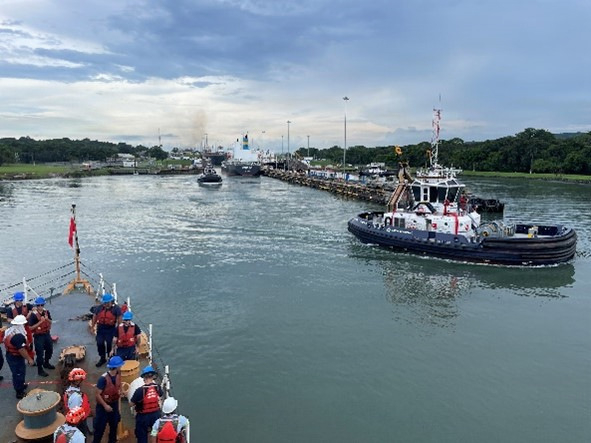
A view of the Panama Canal in 2025. From 2018 to 2022, the U.S. embassy lacked an ambassador in Panama, where China rapidly expanded its control around the canal. (U.S. Coast Guard photo by Lt. j.g. David Cecil)
Across the Western Hemisphere today, more than a dozen U.S. ambassador posts are either vacant or awaiting Senate confirmation. At the same time, instability across the region is growing.
In Haiti, a worsening security and humanitarian crisis is fueling migration pressures across the region. In Bolivia, political unrest is testing fragile institutions. These are not distant challenges — they are unfolding in America’s own backyard where U.S. leadership is increasingly stretched thin.
I served as chief of the Intelligence Division at U.S. Southern Command following the Sept. 11 terror attacks. What I learned then still holds: When the United States doesn’t show up, we lose the ability to shape outcomes before crises emerge. During that period, I depended on more than 30 U.S. embassy teams across the region. Their sustained, on-the-ground relationships were what turned fragmented information into actionable understanding.
Our national security is only as strong as the diplomatic and development infrastructure that supports it.
That lesson is directly relevant to what is happening now. Guatemala, El Salvador, and Honduras — the Northern Triangle — all lack sitting ambassadors. These countries have long struggled with poverty, gang violence and systemic corruption, driving migration pressure toward the United States. Without ambassadors present, Washington’s ability to engage, influence and deter emerging threats is diminished exactly when it’s needed most — and the consequences come knocking at our door.
I am traveling to Washington this week to attend the U.S. Global Leadership Coalition’s Impact Forum, where national security, nonprofit, business and agriculture leaders and policymakers will argue exactly this case. I am bringing this message from Colorado, because the stakes are too high for our state.
Our economic prosperity is directly tied to trade across our hemisphere. Mexico and Canada are our state’s number one and two trade partners, respectively, and countries across Latin America are growing markets for Colorado exports. These relationships support tens of thousands of jobs across our state and depend on stable diplomatic engagement and predictable international conditions that military strength alone cannot achieve.
Strong supply chains depend on regional and global stability. This has real impacts for Colorado as the nation’s second-largest aerospace economy and number one aerospace employer per capita. Satellites, propulsion systems, avionics, and precision components are not built in isolation — they are part of highly integrated supply chains that rely on stable trade relationships, predictable regulatory environments, and trusted partners. When instability grows, those networks become more fragile and costs increase, putting more pressure on a sector that drives our economy.
As China increases its focus on the Western Hemisphere, our access to the supply chains and trade routes that matter to Colorado and the broader U.S. economy are threatened by our own diplomatic absence.
Panama is a stark example. From 2018 to 2022, the U.S. embassy lacked an ambassador on the ground. During those five years, Panama signed 47 bilateral agreements with China and became the first Latin American country to join China’s Belt and Road Initiative, Beijing’s global infrastructure and development strategy. That allowed China to rapidly expand its control around the Panama Canal — a critical route between the Atlantic and Pacific markets that carries 40% of all U.S. container traffic.
Panama is a preview of what diplomatic vacancy produces at scale when we don’t show up. Each absence is an invitation. And our rivals are taking advantage.
Our military is the best in the world. But it is an undeniable truth that they cannot do everything alone. They cannot negotiate trade agreements. They cannot foster economic and cultural ties to build long-term international cooperation. They cannot support the international assistance programs that help prevent instability. That work belongs to diplomats, and when there is not a sitting U.S. ambassador, that work is much more difficult to do.
In intelligence work, we talk about the difference between warning and prediction. We rarely predict with certainty. But we warn. The warning here is straightforward: When America steps back, others step forward. China is doing so deliberately, systemically, and with a long-term goal.
Colorado’s aerospace workers, farmers, ranchers and the military families stationed at our bases all have a stake in this outcome. The jobs, the exports, the security architecture that protects them — none of those are self-sustaining without the diplomatic engagement and economic development that builds the conditions for stability.
Throughout my career, I witnessed firsthand what American absence costs — in lives, in lost intelligence, in opportunities surrendered to our rivals. The Western Hemisphere is not a peripheral concern. It is where the next crisis is already forming, and where American leadership is needed most. Now is the time for our top diplomats to be nominated and confirmed.
The stakes could not be clearer. Every vacant ambassador post is a gap in our visibility, our influence, and our ability to act before threats reach our shores. Colorado’s workers, farmers, and military families cannot afford that gap — and they deserve a government that fields every tool available to protect their security and prosperity.
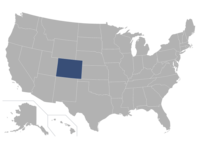
Denver, CO