New York’s Brand-New Casino Is in a $500M+ Fight With the State
Jun 01, 2026 | 5:00 am ET
Description
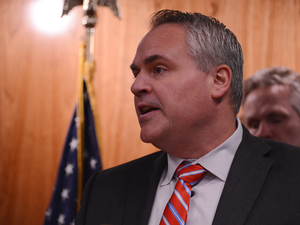
Governor Kathy Hochul's office said the "legislation is designed to ensure that the racing industry ... does not suffer adverse consequences." / Arabella Saunders / New York Focus
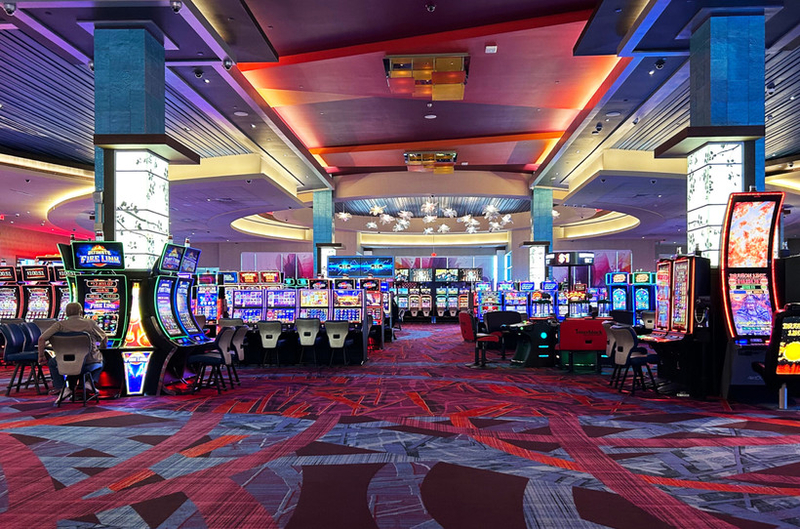
Fresh off opening New York City’s first full-scale casino, the owner of Resorts World is already locked in a dispute with the state about how much money the company owes.
Hundreds of millions of dollars are at stake in the disagreement, which centers on the payments that casinos are required to make to support the state’s horseracing industry. The Queens-based casino argues that those “racing support” payments are included in the taxes it pays, but the state’s Gaming Commission believes that the payments, worth at least $150 million annually, must be paid on top of its taxes, according to four sources familiar with the discussions, who were granted anonymity to describe the disagreement.
Those payments will ultimately be split between all three casinos in the area, but could cost Resorts World well over $500 million in the next four years, since the city’s other new casinos — Steve Cohen’s Metropolitan Park in Queens and Bally’s in the Bronx — are not scheduled to open until mid-2030. Current law requires Resorts World to shoulder all the payments alone until the other casinos open.
In recent days, Resorts World has pitched state lawmakers on legislation that could resolve the dispute in its favor. The bill would have the Gaming Commission make the payments “directly from the commercial gaming revenue fund” — the pot of money where Resorts World’s taxes go. The fund is earmarked mainly for education and public transit.
Notably, Resorts World would resume making its own payments once another casino opens in New York City, according to bill text reviewed by New York Focus.
Resorts World insists that it isn’t trying to lower its bills. A person close to the company said the legislation is a technical change needed to give the state the authority to make payments directly to the horseracing industry.
In a statement, company spokesperson Stefan Friedman pointed to Resorts World’s “15-year record of sending more than $4.5 billion to the state in education funds, more than $2.5 billion to horseracing interests and now $500 million and growing to the MTA.” He said the company will “strictly abid[e] by the payments we agreed to in our winning bid for a commercial license.”
Since opening the casino in April, Resorts World has already made weekly payments directly to the New York Racing Association — a nonprofit that runs the state’s three largest racetracks — by subtracting that money from its tax rate, said Friedman.
When each casino proposed its own tax rate during last year’s competition for the licenses, Resorts World bid a 56 percent annual tax on its slot machines and said that figure should be “inclusive of racing support.” The Gaming Commission previously promised that no casino bidder would be forced to pay a different tax rate than the one it proposed, which Resorts World says supports its argument.
It’s not clear whether the Gaming Commission signed off on Resorts World’s payment plan when it accepted the bid. A Gaming Commission webpage lists Resorts World’s tax rate as 56 percent and says 100 percent of that money will flow to education aid and the Metropolitan Transportation Authority — making no mention of racing support. Neither of the other two winning casinos indicated publicly that their tax rate should include racing support.
Joseph Addabbo, a Queens state senator who has aligned with Resorts World in the past, acknowledged that “there is an issue” about whether the tax rate includes racing support.
“It’s a matter of interpretation,” said Addabbo, who chairs the Senate’s Committee on Racing, Gaming, and Wagering and did not comment directly on the proposed legislation. “That’s part of the problem, to get people at a table to decipher, what is the meaning of the 56 percent?”
Resorts World initially wanted the proposal passed as part of the budget, but it was not included. The company is circulating it again in the remaining days of the legislative session, according to two sources granted anonymity to discuss the private talks. Senate and Assembly leaders were sympathetic to the budget request, one source said, but the state Gaming Commission — controlled by Governor Kathy Hochul — was opposed. A commission spokesperson declined to comment.
Resorts World, owned by the Malaysian conglomerate Genting, was awarded one of three downstate licenses in December. Because it already operated a video gambling facility at the Aqueduct Racetrack site, it was able to quickly open a full-fledged casino with live table games in April. Metropolitan Park and Bally’s have to be built from the ground up.
Racing support payments were conceived in 2001, when New York legalized video lottery terminals and required the companies that operated them to pay a share of their revenues to help prop up the state’s declining horseracing industry. In 2023, after the state began the process of permitting three new casinos in the New York City area, lawmakers added a new rule requiring future casinos to maintain racing support payments at the same level that the video lottery facilities were making as of 2019, plus inflation — a response to fears that the new casinos would compete with smaller-scale video facilities and cut into their revenues.
The payments flow to the Racing Association. In 2023, the state projected that downstate casinos would owe a total of $151,679,185 annually to the Racing Association, a number that has since grown with inflation.
Resorts World has expressed anxiety about its tax rate. During last year’s competition, Resorts World executives said they felt bound to at least maintain the 56 percent rate that its video-only facility already paid. That’s significantly higher than the maximum rates for the two other winning casino bids: Bally’s will pay 30 percent, and Metropolitan Park will pay just 25 percent.
After those rates became public, Resorts World asked the state to lower its proposed rate, Bloomberg reported. The state board that evaluated the projects shot that idea down, writing that “any reduction” in the proposed tax rates would undermine the approval process.
Upstate, another Genting casino has struggled. Resorts World Catskill is trying to refinance $300 million in debt and has been in talks to receive a bailout from Sullivan County worth more than $500 million. That bond deal had not closed as of March, the Sullivan County Democrat reported. Analysts predict Resorts World Catskill may struggle even more once new casinos open downstate.
Albany