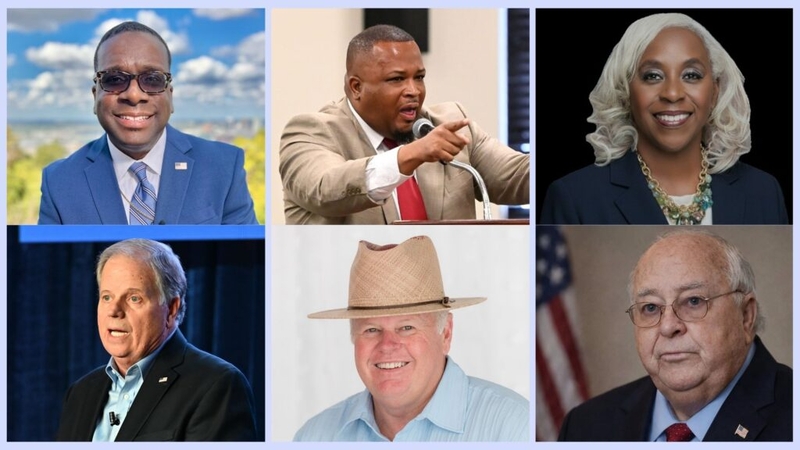
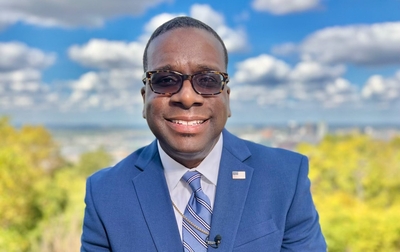
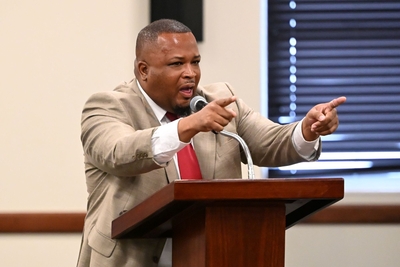
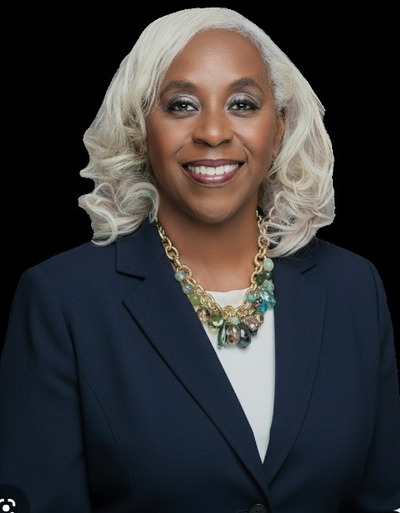
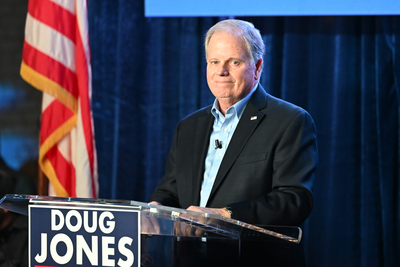
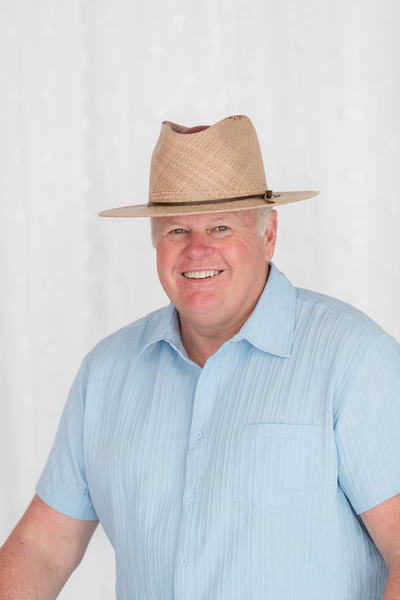
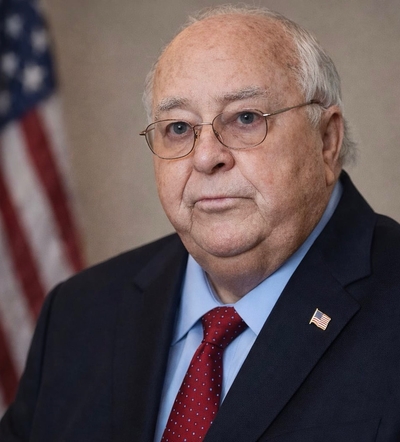
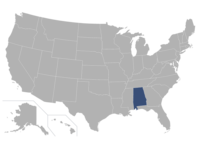
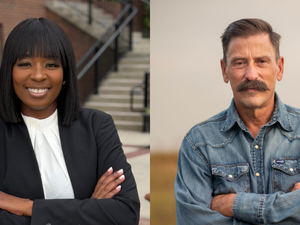
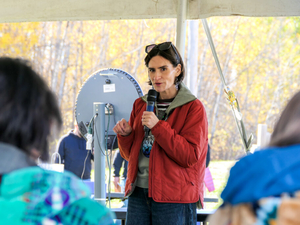
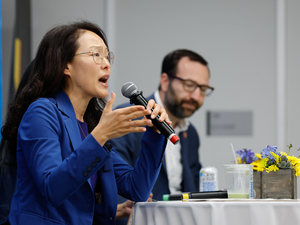
Democratic voters in Alabama will choose between (clockwise) Will Boyd, JaMel Brown, Yolanda Flowers, Doug Jones, Chad "Chig" Martin and Nathan Mathis for the Democratic nomination for governor. The winner will face either Ken McFeeters, Will Santivasci or U.S. Tommy Tuberville in the general election on Nov. 3. (Boyd, Flowers, Martin and Mathis photos courtesy of candidates; Brown photo by Brian Lyman/Alabama Reflector; Jones photo and graphic by Anna Barrett/Alabama Reflector)
In a crowded field for the highest elected office in Alabama, Democratic voters will choose between six candidates on Tuesday in the primary election.
Pastor and engineer Will Boyd, talk show host JaMel Brown, speech therapist Yolanda Flowers, former U.S. Sen. Doug Jones, business owner Chad “Chig” Martin and former state Rep. Nathan Mathis are seeking the party’s nomination.
Almost all of the candidates have run for statewide or federal office before. Jones was the first Democrat to win a statewide office in a 2017 special election since 2008. He lost his reelection campaign to U.S. Sen. and GOP gubernatorial candidate Tommy Tuberville in 2020. Boyd, the first to enter the race in June 2025, ran for Congress in 2018, U.S. Senate in 2017 and 2022, and lieutenant governor in 2018.
Flowers was the Democratic nominee for governor in 2022, and lost to Gov. Kay Ivey, getting 30% of votes. Martin ran for governor in 2022, losing the nomination to Flowers. Mathis was in the Alabama House of Representatives from 1983 to 1995, and made several unsuccessful campaigns for other state and federal offices.
If no candidate receives 50% of votes, a primary runoff election will be on June 16. The winner will face the winner of the Republican primary, where voters have the choice between Ken McFeeters, Will Santivasci and Tuberville. The general election is on Nov. 3.
Messages seeking comment from Brown were left Thursday and Friday.
The candidates
Boyd, 54, said in a phone interview Wednesday that he is running because people in his life asked him to.
“People asked me over a year ago, about a year and a half ago, to consider running, and they felt that I was the best advocate for the people of Alabama to represent them in the governor’s office,” he said.
If elected, Boyd said he wants to expand the state’s economy, make healthcare affordable and stabilize communities. He said he has 21 policy plans to “move Alabama forward.”
“There is so much more that I can say, but I offer policies that are not just ones that I’ve imagined could do well, but these are ones that have proven to bring in the revenue. I’ve offered timelines of implementation and return on investment on each plan,” Boyd said. “I have 21 different plans to lead Alabama forward.”
Flowers, 65, said in a phone interview Wednesday that she “never stopped running” after her 2022 loss to Ivey. She said she wanted to make sure that there was a candidate on the ballot that would give all Alabamians a chance to succeed.
“I haven’t stopped, because when I ran in 2022 I saw so much. People are unaware of the difference between a mayor and a governor and seeing all of the … imbalance,” she said.
If elected, Flowers said she wants to focus on improving test scores, prison reform and improve the state’s economy.
“And I know a lot of people are talking about healthcare and all, but if the economy is poor, then that is not going to help the healthcare system,” she said.
Jones, 72, said in a recent phone interview that he is running because he does not feel good about the direction the state and the country is headed, and he wants to change it. In April, the U.S. Supreme Court set a higher bar for violations of the Voting Rights Act, which led to a special session, legislation and a special election in Alabama.
“I think people are looking for change, and they want to win. I think that that’s why they will look toward someone who has a proven track record of winning and getting votes,” Jones said.
If elected, Jones plans to work with the Republican supermajority to expand Medicaid, pass a lottery to fund education and reform the state’s utility regulatory board. At his campaign kickoff event in December, Jones promised to expand Medicaid with an executive order if the Legislature does not do so, and to focus on “kitchen table” issues. He said recently those promises still remain a priority, but other issues have come up in the five months since the campaign’s launch.
There’s a few things that have shifted up, and they’ll probably shift again between now and November, but it is in part based on the actions of the Legislature,” Jones said. “We want to make sure people have a say, not just the special interests in Montgomery, who’s calling the shots right now.”
Martin, 58, ran for the nomination in 2022. He said he did that to generate some name recognition for 2026. If elected, he said he would use his experience of owning Honeysuckle Hemp Company to govern.
“I’m wanting to use my background as a businessman here in Alabama and put together one of the best industry recruiting teams in the country and work hand in hand with me,” Martin said.
Martin also said he wants to use a gaming and lottery law to fund healthcare and hospitals, and make Alabama a leader in medicinal herbs.
“I also want to take our universities that are geared toward agriculture and be a leader in the teaching systems of natural medicine and meaning allow people to get their doctorate right here in the state,” he said.
Mathis said in a phone interview Wednesday that he is running for governor to “fix” a mistake he made in the Legislature. He said he was the deciding vote in the House creating Victoryland dog racing in the 1980s, which later became casinos on federal Native American reservations. Alabama does not get revenue from the casinos.
“I’m not trying to start gambling. We already got gambling,” Mathis said. “What I’m trying to do, number one, legalize it; number two, regulate it; and number three, tax it; so we can solve some of the problems we have.”
He said that if he is elected, he would push the Legislature to pass a constitutional amendment for a lottery to fund educational scholarships, programs to make homes more affordable and funding to repair the Mobile River dam.
“I’ll be more motivated than the others,” he said. “I’m not saying I’m smarter than them, but I’d be more motivated because the problem is a result of a vote I cast when I was in the Legislature. I realize when I die, I’ll answer for what I did and what I didn’t do.”
Secretary of Energy
Under legislation passed and signed into law this spring, the governor will have a new cabinet member: the Secretary of Energy. The position was part of legislation that expanded the Public Service Commission (PSC), which regulates the state’s utilities. The legislation does not list any requirements for the secretary, so the governor will have free reign on their appointment.
Democratic gubernatorial candidates ranged from specific resumes to distaste for the position when asked who they would appoint.
Boyd said that the position was his idea, and found it flattering that Republicans in the Legislature picked it up. He said the overseer of the PSC should be educated in all areas of energy sources, including hydro pumps and solar energy, and that should also apply to the commissioners.
“I believe someone in that role should have an understanding of what it takes to embrace all types of energy sources and look for new ways to power Alabama,” Boyd said. “That’s what I want from our public service commissioners, people who are really going to serve the public as a public servant myself, I know that means listening to the people, being transparent, being accountable, and protecting the people.”
Flowers said the secretary should be a steward and be educated about the environment and energy sources.
“They have to not just be able to handle money. They have to know what they’re doing and be able to implement that so stewardship goes further than just money,” she said. “They have to be able to address the issues, be able to make themselves visible, report, not just to the staff, but to the citizens.”
Jones, who was a constant opponent to the legislation, called the position a “con job” and said he would work to amend the law to make the Secretary of Energy an elected position. He said he would find the “most qualified” person possible, but did not say what makes a candidate qualified.
“I’ll find the most qualified person I can to help set that agenda that is going to require rate case (hearings), is going to require the utility companies to come in and justify, through audits and other things, the things that we haven’t had in 40 years,” Jones said.
Martin did not give specifics, but said he would find a “trusted expert” for every cabinet position, including the Secretary of Energy.
“If I appoint anybody, they’re going to be a trusted expert in the field, whether it be energy, whether it be medical. In the state, we’re going to have experts,” Martin said. “That’s what a governor’s responsibility is, to put good, qualified people in office, and that’s exactly what I’ll do when, if the time comes for me to have that decision.”
Mathis said the creation of a new cabinet position did not fix the root issue, which he said is Alabama Power profiting off its consumers. He said his goal would be to find somebody that has not been reached by the company’s money.
“This thing about enlarging the Public Service Commission is the biggest joke trying to fool the citizens I’ve ever seen,” Mathis said. “I don’t care if you put 20 people on the Public Service Commission. Alabama Power’s still got all that money.”
Campaign fundraising
Jones leads in fundraising as of Friday. He has raised $2.2 million in cash and spent $1.1 million, according to campaign finance records. He has also raised $10,000 in in-kind donations. Nearly all of his donations, cash and in-kind, have come from individuals. Less than 1% have come from political action committees (PACs) and about 1% have come from businesses. He has about $1.1 million on hand.
Boyd has raised $71,000 in cash and spent almost $64,000, according to campaign finance records. He has also raised almost $82,000 in in-kind donations. Almost all of his cash donations have come from individuals with almost all of the in-kind donations coming from businesses. He has $7,900 on hand.
Martin has raised $28,500 in cash and spent $27,800, according to campaign finance records. He has also raised $6,000 in in-kind donations. About 16% of his cash donations have come from businesses, with the rest coming from individuals. He has $3,200 on hand.
Mathis started with $1,000 and has raised $10,000 in cash and spent $10,000, according to campaign finance records. He has also raised $2,700 in in-kind donations. His campaign is entirely self-funded. He has $1,000 on hand.
Flowers has raised $1,700 in cash and spent $5,800, according to campaign finance records. She has also raised $6,100 in in-kind donations. Most of her donations come from individuals, the others are from herself, including a $4,425 loan. She has $363 on hand.
Brown started with $1,105 and has raised $1,200 in cash and has not reported any expenditures, according to campaign finance records. He has also raised $2,600 in in-kind donations. Almost all of his campaign is funded by individuals, except for a $100 donation from a Montgomery-based daycare and a $1,600 loan. He has $3,900 on hand.
How to vote
Democratic voters across Alabama can choose between Boyd, Brown, Flowers, Jones, Martin or Mathis for the Democratic nomination for governor on May 19. Polls are open from 7 a.m. to 7 p.m. Polling locations can be found here. If no candidate receives 50% of votes, a primary runoff election will be held on June 16. The winner will face the Republican nominee in the general election on Nov. 3.
Meet the Candidates
Will Boyd
Age: 54
Residence: Hoover
Occupation: Engineer, Pastor, Educator
Education: B.S., Mechanical engineering, University of South Carolina, ‘94; MBA, Regis University; PhD, Religion, Christian Bible College; PhD, Organization and Management from Capella University; Doctor of Philosophy, St. James The Elder, 2013; Doctor of Psychology, St. James The Elder Theological Seminary, 2015
Political experience: Democratic candidate, Alabama 5th Congressional District, 2016; Democratic candidate, U.S. Senate, 2017; Democratic nominee, lieutenant governor, 2018; Democratic nominee, U.S. Senate, 2022
Ja’Mel Brown
Age: 35
Residence: Montgomery
Occupation: Talk show host
Education: unknown
Political experience: Candidate for Montgomery City Council, 2023
Yolanda Flowers
Age: 65
Residence: Birmingham
Occupation: Speech Therapist
Education: Associate’s Degree, speech therapy, 2004; B.S., Audiology, University of Tennessee, 2007; M.S. rehabilitation counseling, University of Tennessee, 2009
Political experience: Democratic gubernatorial nominee, 2022
Doug Jones
Age: 72
Residence: Birmingham
Occupation: Lawyer, Author
Education: B.A. Political Science, University of Alabama, 1976; Samford University, Cumberland School of Law, J.D., 1979
Political experience: U.S. Attorney for the Northern District of Alabama, 1997-2001; U.S. Senator, 2018-2021
Chad “Chig” Martin
Age: 58
Residence: Enterprise
Occupation: Owner of Honeysuckle Hemp Co.
Education: B.S. Criminal Justice, University of Tennessee at Chattanooga, 1991
Political experience: Democratic gubernatorial candidate, 2022
Nathan Mathis
Age: 83
Residence: Newton
Occupation: Retired farmer
Education: Associate’s degree, Alabama Christian College, 1963
Political experience: Houston County Commission 1974-1978; Alabama House of Representatives 1983-1995; Democratic gubernatorial candidate, 2006; Republican candidate, Alabama Senate, 2010; Democratic nominee, 2nd Congressional District, 2016 and 2020