Methane, federalism, and Earth’s fragile moment
May 15, 2026 | 5:44 am ET
Description
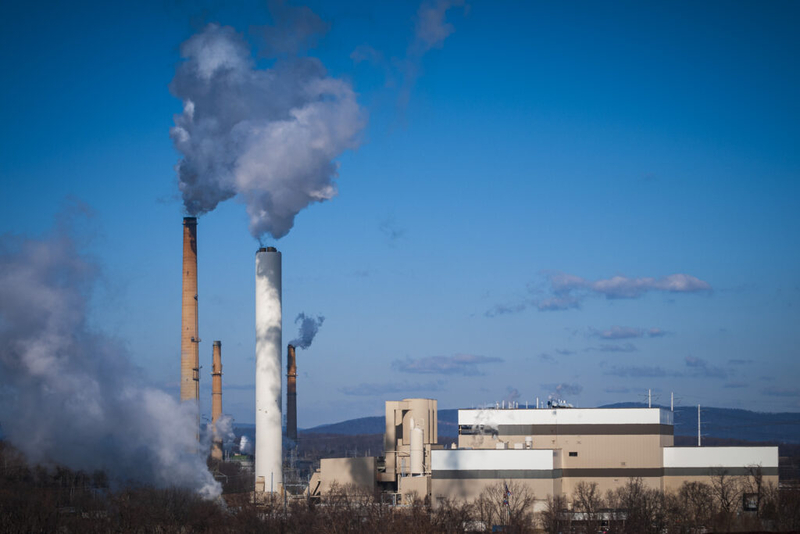
Montgomery County currently burns much of its trash to generate power at a resource recovery facility in Dickerson. (Photo courtesy EPA Clean Air Markets)
Given the absence of national climate leadership in our current political environment, states and localities are more critical than ever in advancing climate action. In New York and in Maryland, state and local politicians are poised to be climate leaders or laggards when it comes to controlling methane, a potent, short-lived greenhouse gas.
Second only to reducing carbon dioxide emissions from fossil fuel burning, the reduction of methane emissions is one of the most important controls we have in slowing the rate of climate change. A new study suggests that we could be far closer — just a couple decades away — to crossing a critical climate tipping point, where we induce an irreversible collapse of the great ocean conveyor. On these timescales, methane is more than 80 times as potent in warming the planet. Despite methane’s potency as a greenhouse gas, methane is removed from the atmosphere much faster than carbon dioxide.
Methane accounts for an estimated 30% of human-caused warming over the past century. It also contributes to the formation of ambient ozone, which harms public health and causes crop losses. The leading sources of methane in the United States are oil and natural gas systems, agriculture and landfills.
If we stop releasing methane, the methane already in the atmosphere will be removed relatively quickly, thereby helping to mitigate climate change over the next few decades. Reducing methane emissions will help buy us time as we decrease our dependence on fossil fuels and thereby mitigate climate change caused by longer-lived carbon dioxide.
Your opinion matters
Maryland Matters welcomes guest commentary submissions at [email protected].
We suggest a 750-word limit and reserve the right to edit or reject submissions. We do not accept columns that are endorsements of candidates, and no longer accept submissions from public officials or political candidates.
Opinion pieces must be signed by at least one individual using their real name. We do not accept columns signed by an organization. Commentary writers must include a short bio and a photo for their bylines.
Views of writers are their own.
In New York state, Gov. Kathy Hochul wants to discount the global warming potential of methane. Her proposal, if it comes to fruition, would undercount that pollutant’s short-term impacts and would weaken New York’s efforts to mitigate climate change. A March 7 letter signed by 67 climate scientists protested Hochul’s proposal.
In Montgomery County, County Executive Marc Elrich is urging the county council to export the county’s huge amount of trash (600,000 tons/year) to an out-of-state landfill. Right now, the county’s trash is burned in a resource recovery facility, and the resulting ash is landfilled.
In landfills, the anerobic decomposition of organic waste creates methane, which is not produced when trash is treated in a resource recovery facility. In part because of methane’s potency, but also because landfill gas collection systems can be inefficient, a common finding of life cycle waste management models is that, for each ton of trash treated, landfills create much more greenhouse gas pollution than resource recovery facilities, which emit carbon dioxide. And recent research shows that U.S. landfills are leaking much more methane than previously thought.
Because the Trump administration is taking a slash-and-burn approach to climate change regulations, state and local governments must push back. Ours is a federal system in which much political authority is decentralized. A prime manifestation of that decentralization is state and local laws that aim to protect human health and the environment.
In fact, it’s quite usual in the U.S. for state or local entities to adopt environmental regulations ahead of the national government. In the greenhouse gas arena, many states have moved aggressively to promote climate action or renewable energy. California’s leadership in this arena is well known. But even Republican-dominated states like Texas and Iowa have embraced renewable energy.
Going forward, Montgomery County’s leaders must ensure that they minimize waste-related climate impacts. New York’s state lawmakers should not weaken the state’s method for measuring the climate impacts of methane pollution. Keeping New York’s current method is consistent with that used by law in Maryland.
With the nation’s 250th birthday just around the corner, we should not forget that the founders imagined that the states and national government would restrain and complement one another. In describing our famous system of checks and balances, James Madison famously remarked in Federalist 51 that “ambition must be made to counteract ambition.”
As one of us (Mann) wrote in 2023 in “Our Fragile Moment: How Lessons from the Earth’s Past Can Help Us Survive the Climate Crisis,” we can avoid catastrophic climate impacts, but only if we take meaningful actions to address the climate crisis. Because the Trump administration is failing us in this regard, our state and local politicians must choose to be leaders, not laggards. And a critical weapon in their climate action toolkits is reducing methane pollution.
Annapolis, MD