Maine’s legislative session is officially over. Here’s a look at what happened.
May 04, 2026 | 4:50 am ET
Description
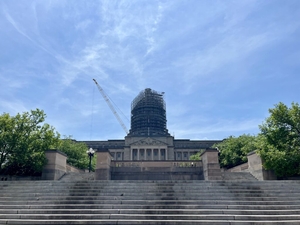
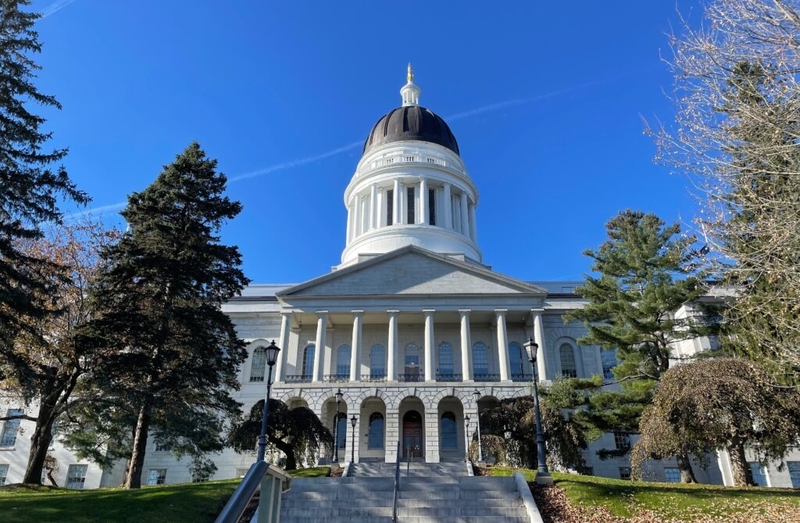
The Maine State House in Augusta. (Photo by Lauren McCauley/Maine Morning Star)
Maine lawmakers closed out the 132nd Legislature last week after months spent confronting the fallout of drastic federal policy changes and funding uncertainty, passing a slate of measures aimed at insulating Mainers from cuts.
From food assistance to healthcare, housing to energy costs, the Democratic-led Maine Legislature passed dozens of laws to counteract the adverse effects of federal cuts on affordability, while advancing several long-term Democratic priorities, notably a new tax on millionaires that aims to raise state revenue and permanently making community college free.
“The major accomplishments of the legislative session were efforts to counteract the cruelty of the Trump administration,” Maine House of Representatives Speaker Ryan Fecteau (D-Biddeford) told Maine Morning Star.
“We were able to do a lot of important things that will ensure that at least here in Maine, people are not going to go hungry, people are going to have access to health insurance, and we’re going to make sure that we’re making investments in housing, childcare and education.”
But lawmakers stopped short of fully counteracting mounting federal pressures. Several ambitious proposals failed in the session’s final weeks, including a $250 million healthcare bill meant to help Mainers struggling with rising marketplace insurance costs and changing Medicaid eligibility.
Gov. Janet Mills got a lot of what she wanted during her final legislative session. The Legislature again failed to override her vetoes, including what would have been a first-in-the-nation temporary ban on data centers. She also blocked continued attempts to return full sovereignty to the Wabanaki Nations. And, her “affordability checks” for some Mainers squeaked through, despite pushback from even some within her own party.
Republicans, meanwhile, argued that Democrats relied too heavily on tax increases and state spending.
“Costs are up, performance is down, and accountability is lacking,” said House Minority Leader Billy Bob Faulkingham (R-Winter Harbor).
Most legislation passed this session is slated to take effect on July 29, unless it was deemed an emergency, in which case it took effect the date the governor signed it, unless otherwise specified.
Safety nets
Through the budget, lawmakers codified ways to counter possible future federal cuts or other unanticipated changes that disrupt programs and services. That included allowing the next governor to spend up to $30 million to sustain Supplemental Nutrition Assistance Program benefits, if needed.
Maine also created a safety net for reproductive rights providers that have been deemed ineligible for federal funding because they offer abortions, adding a $5 million annual allocation in the budget. However, Fecteau’s $250 million health bill to help counter cuts to Medicaid and sustain rural hospitals failed.
“There’s always big decisions to be made about what you can fund in the immediate and obviously that bill cost a lot of money,” Fecteau told Maine Morning Star on Tuesday. “The reason why I wanted to have that bill before the body is to really capture and quantify the impact of the Trump administration’s cuts to healthcare.”
The Legislature passed two laws strengthening access to vaccines amid changes to federal immunization guidance under President Donald Trump’s administration. Maine’s vaccine policy is no longer tied to federal guidance, instead relying on recommendations from trusted medical and public health organizations. Pharmacists who administer vaccines are also protected from liability and granted more authority to prescribe certain vaccines to children and adults without requiring a doctor’s authorization.
How Maine’s new laws push back on Trump’s deportation agenda
The Democratic majority also passed a law helping immigrants who have been cut out of the federal SNAP program to maintain access to state-funded food assistance, and approved funding through the budget to decrease the state’s payment error rate in an attempt to reduce the amount of cost-sharing Maine is responsible for in future years.
But it failed to advance any bonds to appear on the November ballot. Lawmakers had proposed a swathe of bonds for transportation, University of Maine maintenance, agriculture and housing.
A proposal to lump together all those measures made little progress because of its high price tag, totalling $207 million of the state’s total bond capacity of $210 million. A $45 million bond for agricultural and forestry programs seemed to gain more momentum, managing to reach the necessary two-thirds majority in the Senate, but ultimately failed to reach that bar in the House.
Crimes, courts, jails
Maine enacted several new laws that aim to counter Trump’s mass deportation agenda: a ban on immigration agents entering public schools, state libraries and hospitals without a judicial warrant; and a measure to protect tenants against the disclosure of their personal information, among others.
A few gun bills that had been carried over from last session failed, as they tried to make changes to recently passed firearm safety legislation. One measure sought to repeal the state’s three-day waiting period for gun purchases, which took effect last August. The other tried to roll back Maine’s new red flag law that voters overwhelmingly approved in November. A proposal that would have restored the right to possess firearms for people previously convicted of nonviolent felonies passed both chambers, but when the Legislature adjourned on April 14, it died because it wasn’t selected for funding by the budget committee.
Maine’s indigent defense system, however, saw its first large influx of funding in several years as the Legislature approved $13 million to support legal services for defendants who can’t afford their own attorneys. It also passed another measure that allows private defense attorneys who are not on the public defense agency’s roster to be appointed by judicial officers and requires the commission to pay them for those services.
Otherwise, lawmakers made few major changes to the state’s criminal justice system.
Legislators pursued three overarching types of reform: adding oversight of prisons, reestablishing parole and expanding criminal record sealing. The first two proposals were significantly walked back, while the latter was outright rejected in multiple bills.
A measure to increase jail funding was also shorted. The state will be sending a one-time additional payment of $4 million to counties for jail operating costs, but that’s less than the ongoing annual bump initially called for. Those running the facilities said they’re grateful for any change but that what passed is only a BandAid.
“We’re all happy we got what we got,” said Cumberland County Sheriff Kevin Joyce. “This does not fix the jail funding issue going forward.”
Separately, much attention was given to a bill to expand ranked choice voting in state elections, but it lost support after the state Supreme Court ruled it would be unconstitutional, ultimately dying in unfinished business in the Senate.
Privacy and security
Lawmakers decided to help houses of worship and other nonprofits improve security by creating a grant program for infrastructure improvements and hiring personnel. However, they slashed the proposed $1.5 million to $200,000.
Meanwhile, a proposal to create a comprehensive data privacy law failed after continued pushback from businesses. This marks the second two-year legislative cycle in which lawmakers have rejected such a plan after lengthy work sessions, debate and sizable lobbying influence.
But, the state did set some parameters when it comes to Artificial Intelligence.
A forthcoming law will close a loophole that had prevented charges from being brought against people creating child sexual abuse material through generative AI or machine learning. And political campaigns and political action committees will soon be required to provide a disclosure label for any content significantly altered by AI.
Through the budget, lawmakers also allocated funding for data management and training state employees on AI, though less than the governor had requested, and established a position to coordinate the implementation of state policies and partnerships related to AI.
Affordability
Maine has for years struggled with rising costs across sectors — from housing and construction, to fuel and groceries — but has seen further pressure since Trump returned to office.
Global tariffs have affected prices, and tariffs on Canada in particular have stressed many Maine industries. Further, the recent war on Iran has impacted costs across the U.S. economy.
This past session saw clashes over how to address rising costs, with views differing not only from one side of the aisle to the other but also within the Democratic majority.
The final budget of Mills’ tenure narrowly passed after some Democrats objected to the governor’s plan to send relief checks to certain Mainers, joining Republicans in critiquing the move as bad policy.
After years of rejecting calls from progressives to change the state’s tax code, Mills backed a new income tax on millionaires — a surcharge of 2% on the portion of a resident’s taxable income beyond $1 million for single filers, $1.5 million for heads of households and $1.5 million for people filing jointly.
The tax is expected to impact 2,631 returns and generate $150 million in the next biennium.
However, other proposals to change the state’s tax code died without final action. Those included a bill to increase the number of tax brackets and add a new top tier for high income earners, as well as another that would have raised the tax rate on corporations to support the agricultural economy.
Lawmakers also made several tweaks to existing tax credits through the budget, including increasing the property tax fairness credit for people younger than 65 years old.
Although lawmakers did not create new housing programs, they gave significant additional funding to existing housing programs. MaineHousing got $37.5 million in one-time funding in the supplemental budget, alongside money for shelters and eviction prevention programs.
How lawmakers tried to address energy affordability this session
Lawmakers also made several big changes to public education, including passing a change to the K-12 funding formula in light of municipalities being unable to support the increasing local share of education, expanding access to free school meals and increasing minimum teacher pay. Two proposals that expand access to free school meals for preschoolers and incentivize people to become early childhood educators were also funded through the budget.
Maine will also soon have an independent Office of the Child Advocate to help reform its troubled child welfare system.
Energy, environment and infrastructure
Energy affordability was top of mind for lawmakers this session, and they passed an assortment of proposals to chip away at prices for ratepayers — although the new laws aren’t likely to make an immediate impact on electric bills.
Lawmakers declined to advance a proposed climate superfund, after other states that passed similar policies have been sued by the Trump administration. Instead, lawmakers backed a study to assess how much money greenhouse gas emissions have cost the state. It was one of the few measures from the so-called study table to secure funding, and Mills signed it into law earlier this month.
Another measure that made it into law adds additional requirements around the testing of per- and polyfluoroalkyl substances, or PFAS, in water. It requires landlords for residential buildings supplied by well water to test for PFAS, and if a homeowner is selling their property, they must disclose if the well water has tested positive for PFAS contamination. The law also adds PFAS to the Department of Health and Human Services’ testing recommendations.
But another bill that would have allocated $1 million towards PFAS testing failed to secure funding. LD 2115 would have established the Well Contamination Response Fund for PFAS testing, remediation, and the installation and maintenance of filter treatment systems.
As for transportation, Mills did sign into law a measure to extend death benefits to Department of Transportation workers who are killed on the job. The law retroactively applies to the families of two workers killed in Waterville in January.
But another bill that would have created a pilot program for automated speed control cameras in construction zones failed to pass in either chamber.
Augusta, ME