Uncertainty at U.S. Forest Service and on America's public lands
The U.S. Forest Service is reorganizing. The federal agency will move their headquarters from Washington D.C. to Salt Lake City, closing over 50 research stations in 31 states, and will restructure management to rely on states more.
All these changes are coming while state GOP leaders and the Trump administration are pushing for the sale or transfer of federal public lands.
Montana voters of all backgrounds are loudly against this idea.






In Episode 26, you’ll hear from Stateline reporter Alex Brown, who has been covering all of the shifts within the Forest Service.
Then, you’ll hear from Mountain Ecosystems professor Rick Graetz, who led the University of Montana’s 2026 Voter Survey on Public Lands. He’ll break down how value misalignment between officials and voters on the issue of public lands could shift an election.
Finally, Evening Wrap newsletter author Danielle Gaines shares the top stories she’s watching.
Episode produced and edited by Mallory Cheng. Music for Stories From The States composed by David Singer.
Got questions? An episode idea? Email us at [email protected].
Subscribe to Stories From the States on Apple Podcasts, Spotify and Youtube.
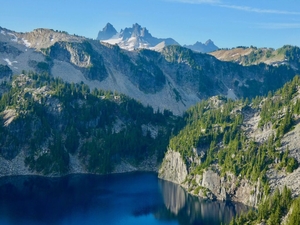
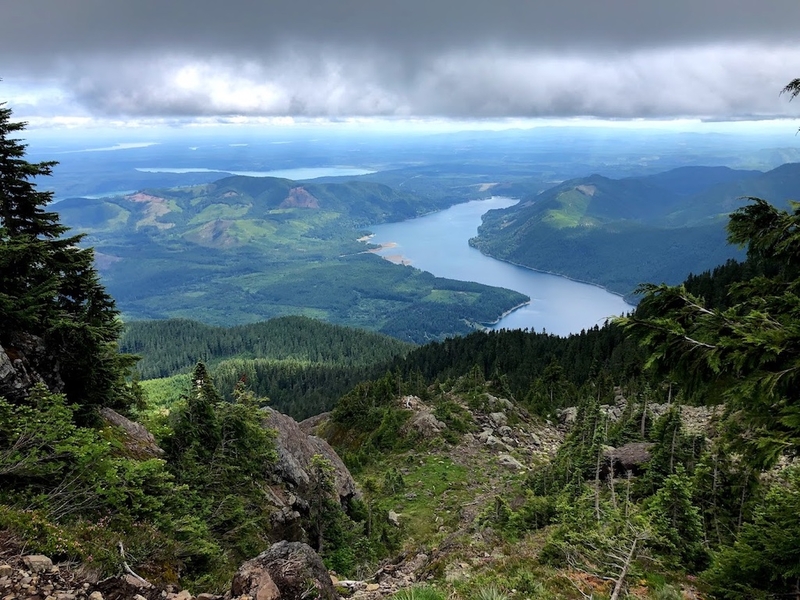
Photo: Clouds hang over Lake Cushman, as seen from the mountains of the Olympic National Forest. The U.S. Forest Service has announced plans to close 57 research stations in 31 states. (Photo by Alex Brown/Stateline)
Stories From The States is a production of States Newsroom, the nation’s largest state-focused nonprofit news organization, with reporting from every capital. At this pivotal moment in American democracy, our veteran journalists from all 50 states are reporting the consequences of government decision making. By zooming into one story each week, Stories From the States contextualizes and gives a human voice to what is happening now.
Transcript was created using an automated software.
Chris Fitzsimon
This is Stories From The States. I'm Chris Fitzsimon. Here at States Newsroom. We know there's a lot going on around the country, in every state capitol we want to thank you for being here. Today, we're talking about the shake up at the Forest Service and the fight over public lands. Republican state leaders and Trump administrati...
Transcript was created using an automated software.
Chris Fitzsimon
This is Stories From The States. I'm Chris Fitzsimon. Here at States Newsroom. We know there's a lot going on around the country, in every state capitol we want to thank you for being here. Today, we're talking about the shake up at the Forest Service and the fight over public lands. Republican state leaders and Trump administration officials have pushed for the sale or transfer of federal public lands, and over in the West, outdoor lovers from all sorts of backgrounds are totally against it. The University of Montana's 2026 Voter Survey on Public Lands found that no matter somebody's political affiliation, they don't want the public land sold off.
Professor Rick Graetz
It's we've been noticing, and it's across the lines. It's not there's no differentiation between Republicans or Democrats.
Chris Fitzsimon
But first, the Forest Service is moving its offices from DC to Salt Lake City. The move will boost state's roles. However, according to Stateline reporter Alex Brown, even supporters have some concerns we'll hear from him in a moment.
Chris Fitzsimon
Major changes are coming to the United States Forest Service, the agency's headquarters are moving from Washington to Salt Lake City. Regional management is being restructured, and research stations are being closed in dozens of states. Foresters across the West see this as a shift that the agency is going to lean more on the states to help manage millions of acres of federal land. Joining us now is Stateline reporter Alex Brown, who has been covering this, Stateline is an outlet with States Newsroom. Alex, thank you for being with us.
Alex Brown
Thanks for having me on.
Chris Fitzsimon
Well, this is a enormous shift for the management of the national forests, and people who probably don't follow this every day or might live in more urban areas in the East may not understand it. Why is this such a big a big deal?
Alex Brown
Yeah, there's a lot of significance to kind of all the components you just mentioned there. I think the biggest thing in my coverage, and certainly with our focus on the states, is this shift from regional offices to state directors. So previously, the Forest Service has nine regional offices, each of which oversee national forests across multiple states. Those offices are now closing, and the agency is opening up 15 state director offices, many of them in state capitals in the West, some of them with a single state focus. And for a lot of the State Foresters I talked to, their understanding is that this is part of a big shift with the Forest Service. The agency has kind of increasingly relied on partners, especially state agencies, to do a lot of work on federal lands. Partnerships such as the Good Neighbor Authority have really allowed more work being done by state agencies, tribes, counties, nonprofits, and as we've seen now, with the Trump administration, really shrinking the workforce of the Forest Service of other federal agencies, the Forest Service is going to be relying heavily on partners now to get more of this work done.
Chris Fitzsimon
So I guess there's a couple of things. It must mean a loss of jobs, of folks who are experts in the Forest Service. Just for starters.
Alex Brown
That's something that there's been a lot of concern about. The agency is saying that no one is losing their positions. This is not an attempt to downsize the workforce, but a lot of conservation folks I've talked to you know, note that during the first Trump administration, the headquarters of the Bureau of Land Management was moved out of DC to Colorado. The vast majority of staff decided not to uproot their families and not to make that move. And so now, when you have 1000s of Forest Service staff being asked to make similar moves, there is a lot of concern that there will be attrition, that a lot of people won't want to move, whether it's from that headquarters office in DC to Salt Lake City, or from these regional offices to the state director offices.
Chris Fitzsimon
I remember the Colorado Newsline of State Newsroom outlet doing a story about the BLM headquarters in Colorado, sort of being a ghost town because so many people didn't come there. So overall, I know this is going to sound maybe silly, but what does the Forest Service do? Why is it so important that we have this agency that is vibrant and well staffed?
Alex Brown
Well, it's a it's it oversees a huge area of land, close to 200 million acres. It is, I think, the second largest land management agency behind the Bureau of Land Management, especially out here in the West. It's hugely significant in rural communities. It has a multiple use mandate. So unlike the National Park Service, which is more about preservation, the Forest Service has this mix, where they they have timber harvests, mining, grazing, but also wilderness and wildlife habitat, watersheds, outdoor recreation. So there's kind of this, this balance that the Forest Service tries to maintain. And I think you could ask folks on either side, there's a push and pull of how these lands are managed, and depending on the administration, we might see different priorities. But for much of the rural West, the Forest Service is the agency that kind of has, you know, the biggest say in what happens on this huge portfolio of lands.
Chris Fitzsimon
And it's not, I don't think it would surprise folks who were listening that the Trump administration has seems to have different priorities when it comes to public lands or the question of drilling. And that's a BLM issue on those public lands and in Forest Service. I'm going to guess that the worry is that they that the Trump administration is more open to non conservation uses of these lands.
Alex Brown
That's right, there's been a focus more on extractive uses. Trump has issued an executive order seeking to increase timber production, kind of getting more board feet off the land, limiting environmental reviews, limiting endangered species protections, as we've seen now with this vote related to the Boundary Waters, trying to open up drilling for mining. So yeah, a much bigger focus on extractive uses. The Secretary of the Interior has repeatedly called public lands America's balance sheet, and has talked about getting more financial returns. So that is clearly the focus of this administration.
Chris Fitzsimon
And is that the is that the fundamental worry from conservationist about this, this downsizing of the Forest Service?
Alex Brown
That's part of it, I think there's concern, as we mentioned, the attrition, potential loss of expertise. There is kind of a concern about the if you want to call it a slippery slope toward privatization or transfers, we've seen some Republicans in Congress, Senator Mike Lee from Utah, seeking to offload federal lands, really hostile to federal land ownership.
Chris Fitzsimon
Sorry to interrupt when you say privatization. Tell us more. What do you mean?
Alex Brown
Yeah, so I think the state of Utah is really at the center of this. Senator Mike Lee has proposed selling off federal land. The state has sued the federal government over 18 million acres of federal land, seeking to take ownership. So there is this sentiment in some parts of the West, especially in really conservative places, that the federal government should not own this much land, that it should be given to the States or to private interests. And so there's kind of been this long effort to see less federal land management. And so there is some concern here that this is maybe part of moving the headquarters to Utah, diminishing the Forest Service staff and therefore kind of handcuffing management to the point that maybe the Feds can't handle all of this anymore.
Chris Fitzsimon
Yeah, let's talk about the research stations, which seems to be also creating some controversy. Tell us about research stations and what happens in this shift.
Alex Brown
That's right, yeah, a lot of the foresters I talked to all across the country, you know, really highlight the importance of the research that the Forest Service does, not just for federal lands, but for timber companies, for states, for tribes. Really, a lot of what we know about forestry, how forests react to wildfire, harvest methods, tree improvement that really is helping with producing more board feet that's coming from Forest Service Research. They really are the leading forestry research agency in the world. And so there is a lot of concern about these cuts of the 77 research stations nationwide, 57 are being closed and consolidated into a single operation in Fort Collins, Colorado. So a lot of the folks I talked to have said, you just can't a, you know, a, we might lose a lot of scientists who just don't want to relocate, but, but B, you just can't replicate this place based research that's happening in temperate rainforests and ponderosa pine lands and all these different landscapes, you can't just put all the scientists in a single location and replicate that research.
Chris Fitzsimon
Did anything surprise you reporting on this that you didn't expect?
Alex Brown
I think the the extent to which states are preparing to take on a bigger role, I think that's that's already been a trend even even before this, but from conservative states, from liberal states, they're all expecting that the Forest Service is really going to lean on them even more. And given that we still haven't seen a lot of details about this plan, which officials are going to be located at which offices, what authority they're going to have, how they're going to interact with the states, they really don't know what that means yet, other than we think the Forest Services is going to have us taking on more work.
Chris Fitzsimon
It does seem like just by definition, it will mean, instead of a national, unified policy about managing these lands, we'll have, in some ways, 50 different policy or however many places there are these national forests.
Alex Brown
That's right. I know states across the ideological spectrum are eager to take on more work and have more influence. Some conservative states want to increase timber production. Here in Washington state, the state is very keen on doing more wildfire mitigation work and partnering with the Forest Service. So there is an eagerness on the part of states, but there's concern, especially in the conservation community, that we are moving from a system in which we have federal public lands owned by all of us to now having these lands that are very subject to the influence of state governments.
Chris Fitzsimon
Is there anything the opponents of this idea can do or have done? I mean, is this something that will be in court? Is this something that there'll be a move to reverse this? Or what are your thoughts?
Alex Brown
There is some talk of legal challenges. I know some of the opponents of this have said that really, any any sort of move of offices in the agency, should be subject to congressional review. There may need to be some appropriations from Congress to really enable this transition to happen. So I think there is, or will be, an opportunity for congressional input, and if this does take place without congressional input, then perhaps some legal challenges as well.
Chris Fitzsimon
And finally, do we have a timetable doing? When do we know when these offices will close, when the new headquarters will open, and people will be expected to move, and those sorts of things.
Alex Brown
We really don't talking to our state forester here in Washington State, they've said All. All we've been told is dots on a map. This is where the new offices will be. But really no information about timelines, personnel, kind of how the new authorities are going to be structured so states are still waiting to see, really, how this is going to play out.
Chris Fitzsimon
Yeah, it seems like you mentioned the BLM example in the first Trump administration, and we were talking about how nobody, really, not many people move. The office was sort of a ghost town. At the very least, it seems like they'll be having to figure out how to staff a new office if people don't move.
Alex Brown
Yeah, I think that's that's a big question. We have a lot of you know, the Forest Service has a lot of people working in these regional offices, and it's unclear how they're going to be distributed to the new state director offices, but we really don't know until they start to set these offices up, who's actually going to make the transition. The one thing that was emphasized to me a lot is are the leaders of these state director offices going to be political appointees or career agency veterans who have the expertise?
Chris Fitzsimon
Do we know?
Alex Brown
We don't. We don't states. States have said, you know, in theory, transitioning to state director offices is not really something that anyone ideologically opposes, but how it plays out in practice, how it's executed, really matters.
Chris Fitzsimon
Well, I really appreciate you helping us understand what appears to be a major shift in public lands. Thank you so much, Alex.
Alex Brown
Thank you.
Chris Fitzsimon
A recent voter survey from the University of Montana showed that despite political affiliation, the majority of voters in Montana are worried about public land access and the possible sale of the lands. In a moment, we'll chat with Professor Rick Graetz on how this could play out in the election booth.
Moses Esheit
At a time when so many communities are losing their local news outlets. States Newsroom is filling a gap. We are now the nation's largest state focused nonprofit news organization with reporters based in every state capital and Washington DC. But we can't do it without your support. Your contributions allow us to produce award winning journalism and deliver it to you for free. No pop ups, no pay walls. This is a crucial time to support local journalism, and every bit helps to give go to statesnewsroom.com/donate.
Chris Fitzsimon
State Republican leaders and the Trump administration have used a law known as the Congressional Review Act to push for more coal mining in Montana, the US Forest Service has also approved a logging project on 28,000 acres of flatland National Forest, but a federal judge in Missoula stopped it. The Trump administration has also pushed for the sale of federally owned land. That's over the opposition of Montana voters across all political backgrounds. That information comes from the 2026 Voter Survey on Public Lands commissioned by the University of Montana's Crown of the Continent and Greater Yellowstone initiative. Joining us now is the person who led that survey. Professor Rick Graetz, teaches mountain ecosystems at the University of Montana. Rick, thank you for being with us.
Professor Rick Graetz
Good to be here.
Chris Fitzsimon
Well, let's talk about the survey. Tell us sort of who is the survey of what, what sort of snapshot of folks there? Can you tell us who's who's responding?
Professor Rick Graetz
Well, we've been doing this since 2014 we do it every other year. This is our sixth one. We hire. We don't do the hiring, but it's part of a grant Republican and the Democratic pollster and the whole marching orders are to go from every corner of the state, so we get a good representation, although the public lands on the prairie, as we call Montana, east of the mountains, is a way quite different than mountain Montana. You don't have the forest. We have grazing lands, prairie lands. There's little difference and but we survey everybody because access is so important.
Chris Fitzsimon
So whether it sounds like the majority of folks were who you surveyed were concerned about the well being of public lands and not too thrilled about them being sold, is that something that has been consistent over the years.
Professor Rick Graetz
You know, it's interesting, we're a small state, but the growth in the last several years has been bringing people looking for the quality of life we have in Montana. And of course, I would say our number one asset is the abundance of public lands we have, and so, yep, it's we've been noticing, and it's across the lines. It's not there's no differentiation between Republicans or Democrats.
Chris Fitzsimon
I think folks from Montana might be surprised about that. Obviously the Trump administration and Montana voted overwhelmingly for Trump, and is thought of as at least sort of a red state, and the administration is trying to do various things to publicly. And so how do you explain that to people not from Montana?
Professor Rick Graetz
The problem we have, and I think it's a lot people seem to feel that when they go in the voting booth, a lot of them say, Well, you know, I can't pull lever for a Democrat. I'm a Republican. And then they get into the taxes and and I think for somehow or another, they care about the public lands issue. But it just seems in a lot of places in Montana, Montana's got a lot of people that just barely make a living, and farmers and ranchers and people on the prairie, you know, they have a busy life, and they don't really get into the depth of the politics. So when they go in the voting booth, hey, I'm a Republican, and they pull a lever, and they don't think about the consequences, and that's unfortunate, because in the long run, they lose out.
Chris Fitzsimon
Yeah, what...What's so important about the public lands to folks in Montana?
Professor Rick Graetz
Well, for one, it's part of our life quality here. It's a huge thing. I mean, I'm at the University of Montana, one of the most beautiful campuses in America, and we're surrounded by wilderness and mountain lands, and we love it. People want to hike, fish back, country ski. Just see it. I mean, you sit around this campus, we're looking at snow covered mountains today. It's part of the life here. It's an asset. It's it's on people's balance sheet.
Chris Fitzsimon
Montana's delegation has generally also opposed the sale of land. Is that them reflecting the will of their constituents, I guess again, those are folks who were strong Trump supporters?
Professor Rick Graetz
I would say, yeah, so that's a complex question. We've had a change. It used to be we'd send people back to Washington that balance out their thinking. They look for common ground, and I think they really cared about the public lands, and certainly want to listen to the people today. Some of them, I think it's their opportunist. Whether they believe in it or not, I don't know, but yeah, they know damn well. If they went around talking about selling the lands, they may not get elected again.
Chris Fitzsimon
People who aren't from Montana, or aren't from a state, in the in the in the West, where there are a lot of public lands issues, I think sometimes don't quite understand the politics of it all. I know you sort of addressed it, but how do you explain this, if you were talking to students of yours or folks who weren't from that state, about how how important all this is?
Professor Rick Graetz
Yeah, that's a complex question. I mean, I deal in ecosystems, and of course, public lands are a major part of ecosystems. That's a tough one to explain. It's just part of our life here. It's an asset. It's something we don't we take for granted. Sometimes I think, you know, I travel, I go to Europe or back, going to New York, and it's you in the state of New Jersey. You don't look around. Oh, wow. I get oh boy, I got a trailhead here. I get out in the mountains. It's about the best way I can answer that for you.
Chris Fitzsimon
Is there anything that surprised you about the survey? You've been doing it for quite a while?
Professor Rick Graetz
Well, no, nothing surprised me. It's because I'm out in the field a lot. I talk to people like I travel the stage for our work. We have a program called Community Vitality. And nope, in fact, I felt it was going to be a stronger response, because the new people coming here.
Chris Fitzsimon
Well, we really appreciate you doing this, doing the survey, keeping us up today, and thank you for your time and being with us.
Professor Rick Graetz
You bet Have a good one.
Chris Fitzsimon
To stay up to date on how lawmakers in your state are reacting to the federal push to sell off public lands. You can always go to newsfromthestates.com. Coming up in a moment. We'll chat with Evening Wrap newsletter writer Danielle Gaines, we'll be right back you.
Nelle Dunlap
Hi, it's Nelle Dunlap, product and engineering director at States Newsroom. At States Newsroom, we believe journalism should be fair, fearless and free, with reporters working on the ground in all 50 states and Washington DC, we provide non partisan coverage of the state issues that matter most to you. You can subscribe to our work by going to statesnewsroom.com/subscribe.
Chris Fitzsimon
Joining us now, as she does every week, is States Newsroom's Evening Wrap newsletter writer Danielle Gaines, Hi Danielle.
Danielle Gaines
Hi Chris.
Chris Fitzsimon
Quite a week in the news world.
Danielle Gaines
A lot.
Chris Fitzsimon
I'm looking forward to how you just pick a couple...
Danielle Gaines
where to begin? I figured I'd start us off, actually, with a really locally important story that's part of kind of a serious issue nationwide, and something that maybe you're not hearing about with all of the news going on. So that is the sepsis rate in New Jersey.
Chris Fitzsimon
Well, tell us about that. That is an odd one.
Danielle Gaines
Yes. So for years the state has had a sepsis mortality rate that's above the national average. They have reined it in a little bit lately. But nationally, sepsis accounts for about 10 out of every 100,000 deaths. In New Jersey, it's about 16, and among Black residents, it's about 25 sepsis, of course, if you don't know is it's a systematic whole body reaction to infection. It can kind of start with the really minor wound or a cough, and it can rapidly spiral until multi organ failure and death. It's hard to turn around, even in a clinical environment, and about 1.7 million people annually contract sepsis, and about 350,000 of them die.
Chris Fitzsimon
No, I can see why that caught your eye. It's really I had no idea. I've heard of it, obviously, but I had no idea it was so widespread.
Danielle Gaines
Yeah, I've actually had a couple of people in my own personal life who have contracted sepsis, and that was actually their first diagnosis, because they were treating themselves at home for something that didn't seem like it was a big deal. The New Jersey Monitor who brought us this story, they shared the story of a family whose 19 year old daughter was hospitalized for an infection. She was up joking around with her family one night, they were eating fast food in the hospital bed, and then by the next day, she was being transported to a specialty medical facility, and she sadly died at the age of 19, so her father is now among the advocates that are pressing for this new law. It would require kind of a statewide training protocol for all hospitals in the state, regular staff training to kind of diagnose, treat, identify sepsis early and fast. And neighboring New York adopted a law that was named after a 12 year old boy who died after just getting a cut at the playground.
Chris Fitzsimon
Wow. Sad.
Danielle Gaines
Yeah.
Chris Fitzsimon
Well, what about coming up? What? What caught your eye that looking forward?
Danielle Gaines
Well, looking forward. I think, as we all are, I am paying attention to the fallout from this US Supreme Court decision issued Wednesday that weakened a major tenant of the Federal Voting Rights Act. So the case, of course, is Louisiana versus Callais, it could reverberate in our politics and in our daily lives for decades. Basically, the court's conservative majority curtailed the consideration of race when drawing maps, and until now, that Section of the Voting Rights Act has limited states from using maps that purposefully dilute the voting power of minority citizens. There's a lot going on here. Of course, a couple of advocacy groups said that Republicans could ultimately use the decision to to secure US House seats directly relating to redrawing without these kinds of rules in place. Um, this came up just as Florida was debating their maps, and they actually had given legal guidance even before the decision came down, to ignore that Section of the Voting Rights Act, just kind of banking on this being the decision by the Supreme Court.
Chris Fitzsimon
Yeah, I think we'll be hearing about this, and should hear about this quite a bit. I think state legislatures will look much different after 2028 than they do now, and I don't think people have really come to grips with that yet. It's just so soon, but that's going to be a startling effect of this law, I believe.
Danielle Gaines
I think, even almost bigger than the Supreme Court decision was the later conversations by officials in Louisiana saying they're going to delay the election to put this in place right away so people are getting ready to vote, and now they may delay that election. To purposefully disenfranchise some folks. It's really quite a turn of events.
Chris Fitzsimon
Yeah, it's astounding. Okay, how about one last thing, cheer me up.
Danielle Gaines
Let's see, is it brighter? Is it not brighter? I don't know. It's interesting. So we had this great story this week about drones becoming a major pest for farmers in Indiana, so they have to deal with all of their regular crop pests and the things affecting their animals and whatnot, and now they have to deal with drones. So they're increasing reports of people flying drones inexplicably around farm properties making people uneasy, maybe like surveilling what animal operations they have going on, also illegally hunting using drugs in the state. So there's a new law that is intended to kind of protect the the privacy of these lands, and there was just some really wild stories about drone activity on farmland. So one farmer described drones flying over the barns, hovering near livestock and even entering their poultry barn and then flying back out. And the state has another law that was just recently put to the test, where this, like prized deer, was being tracked by a drone for a week before the hunting season, and then two hunters just happened to take that deer down right at the very start of the season, and ultimately they were found to have used a drone to help their endeavors, their efforts, right?
Chris Fitzsimon
I'm not sure that cheered me up, but it's fascinating, and as I know Danielle, thank you very much. As always.
Danielle Gaines
Thank you.
Chris Fitzsimon
Thanks for listening to Stories From The States. I'm Chris Fitzsimon. Mallory Cheng produced and edited the podcast. David Singer produced our theme music. If you liked what you've heard today, please leave us a rating and review. It means a lot to know what you think about us. To stay up to date on the latest episodes. Subscribe now to Stories From The States a podcast from States Newsroom. It's available wherever you listen to podcasts. I'm Chris Fitzsimon. We'll talk to you soon.