How Medicaid fallout forced Idaho to retract past cuts
For years, Idaho lawmakers have set their sights on Medicaid. In their most recent session, they considered Gov. Brad Little’s call for $22 million in budget cuts and a bill to repeal voter-approved Medicaid expansion.
Last year, the legislature slashed funding for a mobile treatment program for people with severe mental illness. The Idaho Sheriffs’ Association warned the changes risked public safety.
In less than three months, four patients died, sparking outrage from providers and some lawmakers.
The deaths hovered over the debate about Medicaid before the Idaho Legislature restored the program. But lawmakers still reduced pay rates for providers who care for people with disabilities and extended cuts to Medicaid’s already low reimbursement rates for doctors.






In Episode 24, Idaho Capital Sun reporter Kyle Pfannenstiel reported closely on all the changes to Medicaid in the state.
Then, we’ll hear from Laura Scuri, the co-owner of Access Behavioral Health Services. She pushed the legislature to restore the mobile treatment program after one of her clinic’s patients who participated in the program died.
Finally, Evening Wrap newsletter author Danielle Gaines shares the top stories she’s watching.
Episode produced and edited by Mallory Cheng. Music for Stories From The States composed by David Singer.
Got questions? An episode idea? Email us at [email protected].
Subscribe to Stories From the States on Apple Podcasts, Spotify and Youtube.
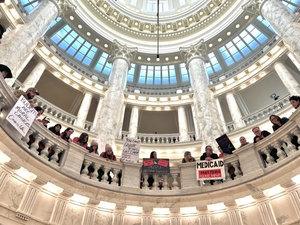
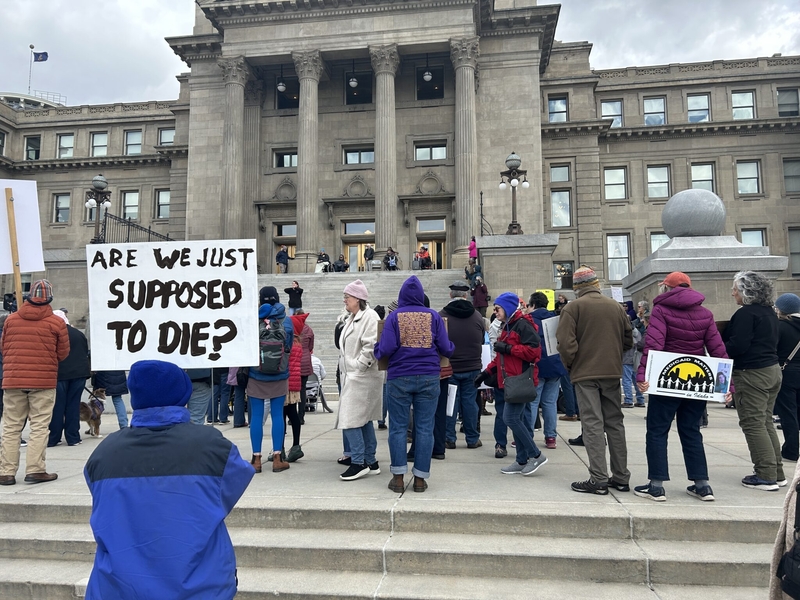
Photo: Advocates for Idaho Medicaid and people with disabilities rally against proposed federal Medicaid cuts in front of the Idaho State Capitol on Thursday, March 20, 2025. (Kyle Pfannenstiel/Idaho Capital Sun)
Stories From The States is a production of States Newsroom, the nation’s largest state-focused nonprofit news organization, with reporting from every capital. At this pivotal moment in American democracy, our veteran journalists from all 50 states are reporting the consequences of government decision making. By zooming into one story each week, Stories From the States contextualizes and gives a human voice to what is happening now.
Transcript was created using an automated software.
Chris Fitzsimon
This is Stories From The States. I'm Chris Fitzsimon. Here at States Newsroom, qe know there's a lot going on around the country, in every state capital. Thank you for being here. Today, we're talking about Medicaid, and one state where they cut a key mental health program and then restored it. For years, Idaho, lawmakers have set...
Transcript was created using an automated software.
Chris Fitzsimon
This is Stories From The States. I'm Chris Fitzsimon. Here at States Newsroom, qe know there's a lot going on around the country, in every state capital. Thank you for being here. Today, we're talking about Medicaid, and one state where they cut a key mental health program and then restored it. For years, Idaho, lawmakers have set their sights on cutting some Medicaid programs. Last year, lawmakers slashed funding for a mobile treatment program for people with severe mental illness, and in less than three months, four patients died, sparking outrage from providers and some lawmakers,
Laura Scuri
Losing a client that you've worked with as closely as you do in Assertive Community Treatment is devastating.
Chris Fitzsimon
The deaths hovered over the debate about Medicaid before the Idaho legislature restored the program, but lawmakers still reduced some other Medicaid services. In a moment, we'll chat with the reporter from the Idaho Capitol Sun about what was cut this legislative session.
Chris Fitzsimon
Back in 2018 Idaho voters passed a ballot initiative to approve Medicaid expansion. The Idaho State Legislature has sort of thought about repealing it. State lawmakers weren't successful this time around, but some Medicaid programs were cut. Kyle Pfannenstiel is a reporter at the Idaho Capital Sun who's been closely following this for years. Kyle, thank you for being with us.
Kyle Pfannenstiel
Thanks for having me.
Chris Fitzsimon
Well, let's talk about Medicaid in Idaho before we get to sort of the cuts that were made and then unmade. A lot of folks, I think, who weren't familiar with Idaho were surprised that in 2018 the state voters expanded Medicaid. What's the feeling of Medicaid in Idaho these days?
Kyle Pfannenstiel
Yeah, I guess the ballot initiative didn't happen in a vacuum. There had been pushes for years for the legislature to try to address this coverage gap. People who are in the coverage gap were often called the working poor. They made too much to qualify for Medicaid, but too little to qualify for subsidies for the state state's health insurance exchange. And every year since then, like you talked about since, since Medicaid expansion passed the ballot in Idaho, lawmakers talked about repealing it. So this year, it seemed like the talks were dialed up quite a bit. We had, we're facing a projected budget shortfall. Unless the legislature cut spending, we would have, we would have had less money in the bank than than we had to spend on programs. And so the budget, budget cuts defined this this legislative session and ways that it hadn't before.
Chris Fitzsimon
Just to be clear for folks who aren't familiar, understandably with Idaho politics, or just politics in general, it's pretty unusual for red states or conservative states to expand Medicaid. So the lawmakers themselves didn't do it, the voters did it, which I guess accounts for some of the tension.
Kyle Pfannenstiel
Yeah, there aren't many examples of laws being passed by ballot initiative. I can't remember exactly how many, but this had been the first time in quite a while, in the time in 2018 that voters passed this by ballot initiative. And coincidentally, after this, legislators tried to make it harder to get out initiatives to qualify for the ballot, and they even debated raising the raising the approval threshold to 60% to get a get more than a majority after that. So this had quite a bit of ripple effects.
Chris Fitzsimon
Yeah, well, let's talk about Medicaid this session. I guess there's two big things maybe to talk about. One is work requirements, and one is the cut in mental health programs, which sort of went back and forth. But tell us about the work requirements.
Kyle Pfannenstiel
The work requirements are something that Idaho has been, has been aiming for for several years. We've we've sought federal approval in the past from the Trump administration, the first Trump administration, and were denied. And this time, we're taking note from the federal government. We're trying to use the work requirements in the Big, Beautiful Bill. Those are, at a high level, 80 hours, 80 hours a month of proving you're either working or doing community service or you're exempt, like you're medically frail, you're enrolled in school. There's, there's a long list of exceptions, and in this bill and this the Medicaid work requirements would take effect by the end of this year. And and also, Idaho chose the longest period of time to look back at how long period of time that you were working before you applied for Medicaid. So Idaho said, we want to choose three months. And a lot of critics say that people are just going to get caught up in in in paperwork snafus and not be able to prove this long work history. And there's some precedent for that happening in Idaho during the big Medicaid unwinding after after the pandemic happened.
Chris Fitzsimon
Yeah, I guess there's research in other states that show, or nationally that shows that most of the people who drop off as. You mentioned it's more bureaucratic issues than it actually is not working.
Kyle Pfannenstiel
Yeah, yeah, about half of people on Medicaid right now in Idaho are working. And when we did this Medicaid renewal process during it was about 2023, 2024 that we wrapped it up, somewhere around half of people that we removed were removed because they didn't do the right paperwork to get re signed up for Medicaid. And that's also what some other states experiences with Medicaid work requirements has shown as well.
Chris Fitzsimon
Well, let's talk about the mental health programs that were cut. That was an interesting episode, sort of take us into the session and what happened?
Kyle Pfannenstiel
Yeah, yeah. So this is something I was following, kind of on accident for months. I was doing some reporting on our big Medicaid managed care contract. That's when a private company runs benefits, instead of the state. I had been hearing concerns that the contractor, Magellan, was delaying payments to providers. So I was talking to a bunch of mental health providers about how they were interacting with Magellan, and then one day, I just got a wave of tips from providers that said they were very concerned about these services that were going to be cut. They worried that it was going to risk public safety patients were going to die, and that ultimately, if, if these cuts went on too long, they worried that that some innocent person in the community would be hurt by someone who who was psychotic and wasn't receiving medical treatment in the community and and there's history of that happening as well, in the past, When this program was cut. So I'd been covering this leading up into the session, and then I think about in in late January or February, was when we got the first report of a patient having died, a patient who was receiving services through this program. It was a it was a mobile program that that brought treatment for people with severe mental health issues to their homes. These are people with schizophrenia, with bipolar disorder, who need routine access to medications. And the program is also designed for people who haven't done well in traditional treatment settings, like showing up to a doctor's office. Sometimes these folks forget to go to appointments. But you know, a lot of providers told me when when they're on their medications, they can be productive members of society. They're they're they're safe in their communities. And so over the course of the legislative session, we got about one death a month by by March we we had four deaths, and at just about every turn, I tried to write about it and show that this is what's happening after the cuts happened. And also highlight that there were solutions.
Chris Fitzsimon
What was it? What was the lawmakers reaction, or was there any to these, these deaths?
Kyle Pfannenstiel
It was very pointed. I sat there, and this is one of many bills that we're covering during the legislative session. There was a bill to reinstate the program. But on all these budget cuts, I kept hearing lawmakers come back to this program and these deaths as a warning sign of making cuts to systems without really understanding what you're doing, without taking a deep dive in understanding the people that will be affected, the systems that will be affected by cutting services. They just kept pointing back to we, we cut this. This was part of the governor's cuts last year, and and we don't even know the full impact of this yet is the the case I kept hearing over and over and debates over budget bills this year.
Chris Fitzsimon
And so what ultimately happened in the session to this program?
Kyle Pfannenstiel
Well, the program did get funded and reinstated. Instead of tapping into our state taxpayer dollars, we were tapping into legal settlement funds from lawsuits against opioid tobacco manufacturers, and this is one time funding to keep the programs afloat for this fiscal year which ends in which ends at the end of June, and then next fiscal year, which starts in July. But after that, if we want to fund this program, you have to make another plea to the legislature's budget committee. There was another bill this year that would have that, in theory, would have funded this more permanently. It would have protected the program in the state law. So I think the I think the intent behind that bill was, if we have another budget shortfall in the middle of the year and the governor orders budget cuts, this program can't be cut. It's baked into state law. You have to repeal the state law to cut this program in the middle of the year. But people are still seeing this as a win.
Chris Fitzsimon
Yeah, so did the governor little restore the programs, or did lawmakers or was it some combination of both?
Kyle Pfannenstiel
It was lawmakers on the budget committee that restored the program. They carved out money in the budget committee, and that went through a budget bill that passed the House and the Senate and was signed by the governor pretty quickly at the end of the session.
Chris Fitzsimon
Do you think this affects or did it affect. Could it affect what lawmakers think of Medicaid overall? Now, when they literally have an example of people who are dying because of cuts to a Medicaid program, does it change the sort of the feelings about Medicaid or not?
Kyle Pfannenstiel
I don't know that that's a really good question. I think like these are very similar warnings we had about Medicaid expansion repeal over the years. Like we had physicians, we had a very noteworthy physician who was a director of an ICU in eastern Idaho, who who said, Who told lawmakers that by refusing to expand Medicaid, they had killed X number of Idahoans, I think it was about 1000 that he said at the time of that he he based that up about a study about mortality, mortality rates from states that didn't expand Medicaid, and I focused on some of those concerns as we talk about repealing expansion, but I don't, I don't know why this, this will change the Medicaid debate. This is a relatively little known, not well known program. I didn't know much about this program until it was cut, and I'm suddenly talking to providers and learning about the history of this program, but that'll be interesting to see how that shakes out.
Chris Fitzsimon
Well. Thank you so much for all your good reporting on this, and we appreciate you being with us to understand it. Thank you.
Kyle Pfannenstiel
Thank you so much.
Chris Fitzsimon
Like Kyle mentioned, providers were concerned that more deaths would happen if the cuts in mental health programs weren't restored. Thankfully, they have been. In a moment, we'll chat with Laura Scuri, one of the providers who fought for the programs to come back
Moses Esheit
At a time when so many communities are losing their local news outlets. States Newsroom is filling a gap. We are now the nation's largest state focused nonprofit news organization with reporters based in every state capital and Washington DC. But we can't do it without your support. Your contributions allow us to produce award winning journalism and deliver it to you for free. No pop ups, no pay walls. This is a crucial time to support local journalism, and every bit helps to give go to statesnewsroom.com/donate.
Chris Fitzsimon
Last year, Idaho made Medicaid cuts. One of them affected a mobile treatment program for people with severe mental illness. That program was designed for people who have struggled in routine treatment settings, and in less than three months, four patients had died. Providers and the Idaho Sheriff's Association warned the cuts would risk public safety after an outcry from providers, state legislators and members of the community, the program has been reinstated. Joining us now is Laura Scuri. She's the co owner of Access Behavioral Health Services, and was one of the people who fought to repeal the cuts to these mental health programs. Laura, thanks for being here.
Laura Scuri
Chris, thanks for having me.
Chris Fitzsimon
Well, first of all, tell us about this program. Tell us what it does and when it works.
Laura Scuri
Assertive community treatment, referred to typically as ACT, is a long standing evidence based program to provide treatment for people who are consistently treatment resistant. Typically, they experience they're diagnosed with a psychotic disorder, meaning that they have schizophrenia, schizoaffective, and that they just don't succeed in traditional services. They don't have the wherewithal to follow a timeline. So showing up for appointments, being in the right place at the right time has just been elusive. And so in the 80s, when the United States decided to shut down a lot of its institutions, ACT was created and really served as kind of a hospital without walls. And over time, Idaho has had a an ACT team since the 80s. It's been run by the state. It's just been quietly going in the background, reaching out to people who are treatment resistant in a recovery type way. So jails and hospitals stabilize people and keep them safe, but act stabilizes people and has recovery based outcomes. So it's been around for a long time. It's an evidence based model. It's actually really neat, and when it works, it is pretty magic. People stabilize, people engage with their communities in a safe and meaningful way. People typically are employed. It reduces the burden on our community, and it creates a quality of life for our clients and for our members that is just remarkable.
Chris Fitzsimon
And so this program had been going along. You mentioned since the 80s, was there any indication before it was cut that this would happen?
Laura Scuri
Yes, in Idaho, specifically in 2008 or 2009 we had the financial crisis, and at that time, they reduced at the state level, they reduced funding to these programs at 50% so they had to go through their population and determine who was stable enough to stop receiving these services. A lot of the times, these guys don't carry insurance. They don't. They don't have funding, and so there was a 50% cut, and there was a critical incident in eastern Idaho in which an individual was having coffee at a local coffee house, and a person who was experiencing an active psychotic break shot him.
Chris Fitzsimon
Wow. When was that?
Laura Scuri
That was in 2009 and so it was pretty catastrophic. And this is an individual who, 90 days prior to that, had been receiving ACT services and was deemed, you know, a low risk individual, and still, you know, because of the level of psychosis that they were experiencing. This isn't a person who would normally shoot someone, but because of their psychotic break and the way that that engaged with them behaviorally, it put the community at risk.
Chris Fitzsimon
Right so now fast forward to this, to the cut in the current program. What did it remain at 50% before this recent cut? Or was it? Was it ever restored?
Laura Scuri
It was restored the state, the way that they operated their models. It wasn't, you know, they had to kind of make do with what they were given, and they did an extraordinary job. And so over time, the funding is restored. It didn't happen overnight, but through as the years went by, funding was restored. And all of the regions, Idaho runs off of a regional model, funding was restored, and people you know were served again. And then during the transition from state run programs to private run programs, which happened when they implemented a new managed care contract that was a full risk contract, they decided to privatize the ACT teams. And during that transition, we were all very aware of the risks and making sure that the right people got transitioned to the right teams and things like that.
Chris Fitzsimon
And then what happened in the when the recent funding was cut, at least for a while, tell us what that was like.
Laura Scuri
The funding ended December 1. We had been notified of it the month prior. We filed two lawsuits trying to prevent it under the ADA and the Olmsted act, we were very hopeful that those would create injunctions to stop the cuts, that we were not successful, and as they defunded the programs, there's six teams in Idaho. The teams tried to maintain some form of connection with these clients under traditional services and agencies that had the teams, you know, pro bonoed a whole lot of work that was not reimbursed by the state or by our MCO to try to keep tabs on these. Unfortunately, we had four people on four different teams pass away. All of them were not suicides. They were actually for folks that had some underlying conditions that went untreated. ACT has a medical component to it that stabilizes people medically and helps them access medical care. And that was something that's not something that is in traditional behavioral health services,.
Chris Fitzsimon
Right. I think the struggle a lot of times when people are talking about Medicaid or public policy or funding in these services that feel so abstract, and here we had four people who actually died as a result of these cuts. What happened then? What was it? What was the feeling like, both in the provider community, in the state, what was what was it? What was it like?
Laura Scuri
Losing a client that you've worked with as closely as you do in Assertive Community treatment is devastating. It's also creates an environment of fear. You know, we worry about people that we don't see and can't find, and so that heightened the attention on what these cuts had done, as well as with the teams, really created some anxiety to advocate for the reinstatement of these teams that got attention with both the Department of Health and Welfare and our local legislature here in Idaho to say, maybe we need to take a look at what we've done and what the consequences have been.
Chris Fitzsimon
The money was restored to the program, but it was from opioid settlement funds, which, you know, I guess, is a one time or feels like a one time expenditure. Are you worried that these cuts will come up again?
Laura Scuri
These cuts, this these programs are only funded for just a little over a year. So yes, we are very concerned about getting these programs that they put back in, which was ACT and peer permanently funded. So our project for next year, and we've already started working on it with both the state and the legislature, is to get this put back into the Medicaid budgets immediately. Those budgets will start being worked on in July, and we've already started discussions. We were well supported in our legislature, our legislative body, really, you know, we didn't have money to just refund things with the tax cuts and matching OBA, the pressure on the states was extraordinary, and so they're going to have to do some surgery on our budgets to get these reinstated, but because we had such an amazing legislative support, we had good leadership, both with our Department of Health and Welfare and with our legislature. While we're worried about it, we are confident that the players that need to be at the table are at the table, and that we should be able to get these reinstated permanently.
Chris Fitzsimon
And finally, before I let you go, what would you want people to know who are listening, who aren't familiar with the intricacies of either the program or Medicaid funding? What's What's the message that you always want people to sort of leave this conversation with?
Laura Scuri
So the population that we serve is the severely and persistently mentally ill. These are not people who can just get over it, and there are expenses to providing care for these people. These are the most vulnerable people out of our mental health population and going to spend the money somewhere, either in our jail systems or in repeated hospitalizations, neither of those are evidence based interventions that provide positive outcomes for the community and for the clients. So really understanding that this isn't a bootstrap situation, and that when we make cuts, we have to use a scalpel, we can't use a chainsaw. So you know, understanding and minimizing the stigma associated with mental illness, as well as understanding that putting some thought into how you spend your money as a community, having something that's going to have positive outcomes is always going to be a better choice, and understanding that that these folks are vulnerable. This isn't they didn't choose this. They didn't pick this. They're vulnerable, and as a society, we've agreed to provide supports for them. How we do that needs to be done carefully.
Chris Fitzsimon
Well. Thank you for what you're doing for those folks and for the community. We really appreciate you being with us.
Laura Scuri
Thank you very much. Thank you
Chris Fitzsimon
To stay up to date on what Medicaid cuts are happening in Idaho or in your state. You can always visit newsfromthestates.com. Coming up shortly, we'll chat with Evening Wrap newsletter writer Danielle Gaines on the top stories she's looking out for. And one last thing.
Nelle Dunlap
Hi, Nelle Dunlap, product and engineering director at States Newsroom. At States Newsroom, we believe journalism should be fair, fearless and free, with reporters working on the ground in all 50 states and Washington DC, we provide non partisan coverage of the state issues that matter most to you. You can subscribe to our work by going to statesnewsroom.com/subscribe.
Chris Fitzsimon
Joining us now is States Newsroom Evening Wrap newsletter writer, Danielle Gaines, as we do every week, checking in to find out what's happening. Danielle, how are you?
Danielle Gaines
I'm good. How are you?
Chris Fitzsimon
I am well, all right, so tell us about this week. What caught your eye?
Danielle Gaines
Yeah, I'm always looking out for stories that are either like the -irst or the -est. So the first, the worst, the latest. And so today we had a first of its kind story. So lawmakers in Maine passed a moratorium on data centers. And this is different because we've seen this kind of happening on a smaller level, but this is a statewide moratorium until November 2027, and it would basically prohibit new construction, and they have funded now also a Maine Data Center Coordination Council, which would help guide future planning and kind of try to create really strong rules for data center construction in that state. So it was, of course, a big debate, as it has been across the country, in every state. So you know, Republican lawmakers were concerned about losing out on economic opportunities, even if you would still feel the negative impact of data center construction in nearby states, and Democrats argued that the potential environmental and energy costs would just be too high and so that they should just take a pause.
Chris Fitzsimon
It's amazing how many states are having these debates.
Danielle Gaines
Well, yeah, it's it's going on and on, of course, and it's probably one of the most talked about issues this legislative session across the country. Stateline just recently had a story that even though public scrutiny of data centers is growing, a bunch of states that have data center incentives, more than a dozen... 14... don't disclose or estimate how much revenue they think they'd lose to those kinds of tax breaks. So this was from a report from Good Jobs First, a watchdog group, and that was really interesting to just not even know what you might be losing out to a what's becoming a mega industry, because the states that do know know that they're losing quite a bit, and so they're kind of thinking of backtracking now on that Virginia especially.
Chris Fitzsimon
Wow. It's really interesting. All right, what about something coming up?
Danielle Gaines
Yeah. So I'm watching, of course, another thing that we've been watching all year long, but redistricting. So we had Florida Governor Ron DeSantis push back that state's redistricting special session. He has said it was, you know, a top priority to redraw the state's congressional maps, of course, in a way that would benefit Republicans. There was reporting that he wanted to hold off on that until after Virginia's special election on redistricting, which is happening next week. That's looking like it could be a really close call. Voting is starting to pick up an early voting there in Florida, there are some members of Congress even who are a little concerned that a redistricting special session might end up with fewer Republican seats in the end. So we'll have to kind of see how Virginia plays out, how Florida plays out. The governor has also added some items to that special session, so bills that failed during the regular session amid House and Senate tensions, and of course, it's all Republican controlled, so a little bit of inter party drama in the Sunshine State.
Chris Fitzsimon
Yeah, that will be really interesting to watch. Okay, what about one last thing?
Danielle Gaines
Yeah, this story caught my eye. It was out of Louisiana. There's a lawmaker who has proposed a bill that would allow lawmakers to spend up to $2,500 a year from their political accounts to buy, clean and maintain their clothing. So it would extend to dry cleaning,
Chris Fitzsimon
Maintain?!
Danielle Gaines
I was a little skeptical, but it, you know, it's, it was kind of an interesting, multi layered story. So a legislative committee widely approved that measure, and this particular lawmaker said that when he was first elected, he had, you know, one suit. He wore it to funerals, and he wore it to weddings, and now he needs to be in the legislative session. Most legislative chambers have strict rules about how to dress and specifically what people need to wear, and that if you don't provide some sort of assistance, you would only end up with a certain type of lawmaker who has that type of clothing already. And so this might help bridge the gap for folks that need a broader wardrobe. Of course, there were also a lot of warnings about the slippery slope that this could lead to. You know, is it a personal expense? Are you never, ever going to wear that suit, or ever get something dry clean to go to a wedding?
Chris Fitzsimon
That is really interesting. Maintaining. I wouldn't have thought that would have been in there.
Danielle Gaines
Maintaining is what really caught my eye. I was really surprised by that one.
Chris Fitzsimon
Well, Danielle, fascinating as always. Thank you very much for being with us.
Danielle Gaines
Thank you.
Chris Fitzsimon
Thanks for listening to Stories From The States. I'm Chris Fitzsimon. Mallory Cheng produced and edited the podcast. David Singer produced our theme music. If you like what you've heard today, please leave a rating and review. It means a lot to know what you think about the podcast. To stay up to date on all the latest episodes, subscribe now to Stories From The States, a podcast from States Newsroom, available wherever you listen to podcasts. We'll talk to you soon.