New Mexico Primary 2026: GOP governor candidate Gregg Hull
Apr 10, 2026 | 12:10 pm ET
Description
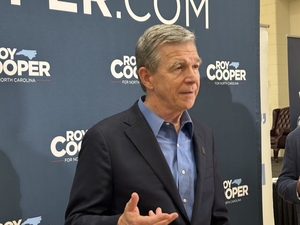
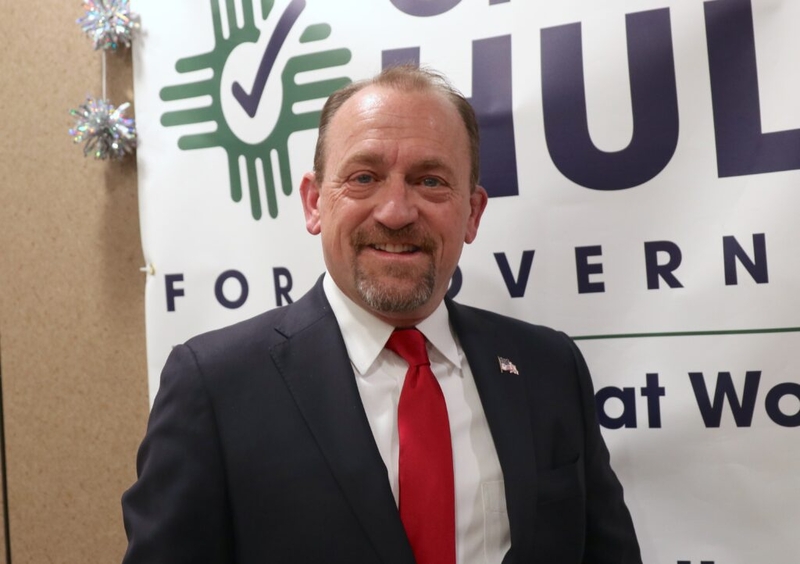
Rio Rancho Mayor Gregg Hull is one of three candidates in the June 2, 2026 Republican gubernatorial primary. (Danielle Prokop/Source NM)
Rio Rancho had a population of about 93,000 when Gregg Hull was first elected mayor in 2014. It’s since grown to nearly 113,000 residents, according to U.S. Census Bureau data, and its sprawling events center routinely hosts stops for touring musicians, comedians and the Harlem Globetrotters — soon, it will be the home rink for New Mexico’s pro hockey team.
Hull, who’s running as a Republican for governor and will face public relations professional Doug Turner and former state cabinet secretary and hospital executive-turned cannabis CEO Duke Rodriguez in the June 2 primary, thinks the state could learn a thing or two from Rio Rancho.
“I think Rio Rancho sets the example for what actually can be done when you have a vibrant, growing economy,” Hull told Source NM before a campaign event on Wednesday with local business leaders at an Albuquerque brewery. “While the state has lost population, we’ve grown by 20%.”
At the state Republican Party’s pre-primary convention, Hull earned 55% of the delegate votes — more than double Turner (Rodriguez did not participate in the convention debate). Source NM spoke with Hull about his gubernatorial aspirations. The conversation has been edited for clarity and concision.
What makes you the best choice for Republicans in the primary election?
The fact that I’ve spent the last 12 years as the mayor of Rio Rancho, overseeing the development and growth of that city.
We’ve been nationally recognized as a best place to live; we’ve been nationally recognized as a safe community and the policies and procedures that we’ve put in place speak to my leadership style.
This is what’s happened in the last 12 years: cleanest audits in the city’s history; we’ve had 12 Government Finance Officers Association budget awards where we’ve been recognized.
We’ve lived within our means…our sales tax rate in Rio Rancho is the same today as it was when I took office 12 years ago.
As a Republican, how would you approach governing with a Democratic-controlled House and Senate?
I was for eight years the chairman of the New Mexico Mayors Caucus. I worked with every mayor across the state. One of the things I like to point out is that my training ground for public leadership has been in the nonpartisan world. I work with everybody.
I’m currently the board president of the New Mexico Municipal League, so I essentially represent every city in the state…that’s an on-the-ground understanding you just don’t get unless you’ve been a mayor.
What do you think is the biggest issue facing New Mexico right now?
I think there’s five.
You’ve got education, public safety, health care, infrastructure and energy.
If you’re not working on those five issues, it’s really hard to attract companies into the state and create opportunities for individuals who want to move here.
The current governor has called multiple special sessions to address Trump administration budget cuts. How would you approach governing through the remainder of Trump’s presidency?
We’re going to have to figure out what we’re going to need to do to deal with those budget cuts.
I’m going to be a big proponent for going in and looking at and making sure that the money we are spending on the Medicaid and Medicare programs are being appropriately spent. But also making sure that they’re benefiting the rural communities the way that the programs are supposed to.
We’re going to have to look at what resources we do have and manage those in a careful way. If that requires some scaling back, then we’ll have to look at that. If you don’t have the money, you don’t have the money. But our goal would be to make sure that the most vulnerable in the state do get served.
Controversial land-use issues, including proposals for oil and gas drilling and data centers, currently face New Mexico. What approach would you take to these developments?
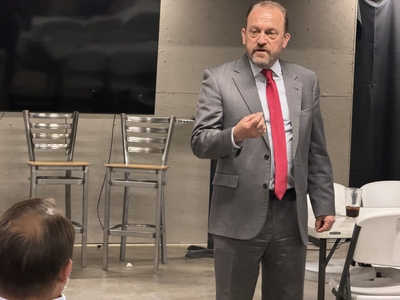
For example, with Project Jupiter, I think it would be less controversial had that project located, say, over in the southeast portion of the state where they could have used produced water to cool that facility. I think that you try to pair up your resources. Now, the developers of Project Jupiter might not have wanted it over there.
The big concern is going to be around the water, obviously. I know they’re worried about onboarding the power plant, but in this particular case, that actually makes sense because New Mexico doesn’t really have the energy resources right now in the grid to support a facility like that.
I think there’s some creative ways we can look at these projects. Project Jupiter is already way down the line, but you have other projects that tend to stir up a little bit of controversy, like in Rio Rancho we had Castelion.
There was some concern around all that and the governor was really a big lead on that one with the state Economic Development Department and the county.
We need to make sure we’re providing a good, safe environment for these companies to come to New Mexico. It’s 300 very high-paying jobs.
If elected, what’s your first order of business?
Education. That’s another big one for economic development. Having a ready-to-go workforce in the state is always important to companies coming in and having a strong education system is key to that.
One of my big initiatives that I want to really lean into is helping every school district in the state develop some form of career technical education program. I think we need to get back to some of those jobs that are AI-proof.
I think education’s going to be one of those things — looking at the structure from the Public Education Department down and trying to push more authority down to the local districts so they can make decisions that are more in line with the character and culture of communities. The one-size-fits-all approaches have not worked.
How will semi-open primaries impact your campaign?
Our campaign must speak to independent voters. These are the individuals who feel like they don’t have a place in the Republican Party, they don’t have a place in the Democrat Party, and they’re looking for somebody that can really speak to them. Well, who better than somebody whose training ground was in a nonpartisan world?
Santa Fe, NM