When ICE enforcement and the First Amendment collide
President Donald Trump’s second term has been marked by aggressive attacks on the press that have led to restrictions in access, the search of a reporter’s home, heated public exchanges and even arrests.
Journalist Estefany Rodríguez was arrested and detained by Immigration and Customs Enforcement agents on March 4, 2026 in Tennessee. The Nashville Noticias reporter was held in ICE custody for 15 days.
Since her release, Rodríguez and her lawyers have asserted in court that the federal government violated her rights under the First and Fifth Amendments. They claim Rodríguez’s arrest was connected to her reporting on ICE activities in Middle Tennessee over the past several months.
The case raises the question: With threats to journalists rising under Trump’s second term, how are they being protected?


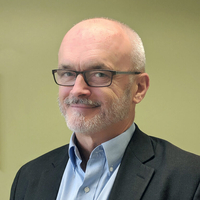



In Episode 23, you’ll hear from Tennessee Lookout senior reporter Anita Wadhwani. She’s been covering Rodríguez’s case and how members of the Tennessee media community are reacting.
Journalists and news outlets across the country are again trying to navigate how to report in these times.
Lisa Zycherman, vice president of Legal Programs of Reporters Committee for Freedom of the Press, is helping out. The organization provides legal services to journalists and resources to protect First Amendment freedoms and the newsgathering rights of reporters.
Finally, Evening Wrap newsletter author Danielle Gaines shares the top stories she’s watching.
Episode produced and edited by Mallory Cheng. Music for Stories From The States composed by David Singer.
Got questions? An episode idea? Email us at [email protected].
Subscribe to Stories From the States on Apple Podcasts, Spotify and Youtube.
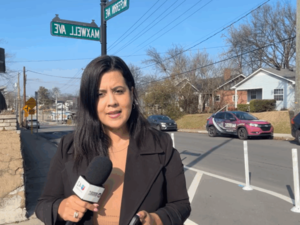
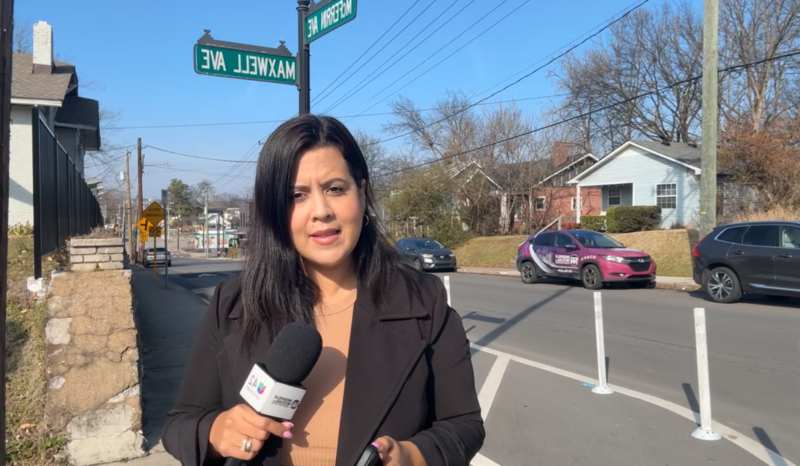
Photo: The arrest of Nashville Noticias reporter Estefany Maria Rodríguez Florez on March 4 by ICE agents has sparked national attention. (Photo: courtesy of Nashville Noticias)
Stories From The States is a production of States Newsroom, the nation’s largest state-focused nonprofit news organization, with reporting from every capital. At this pivotal moment in American democracy, our veteran journalists from all 50 states are reporting the consequences of government decision making. By zooming into one story each week, Stories From the States contextualizes and gives a human voice to what is happening now.
Transcript was created using an automated software.
Chris Fitzsimon
This is Stories From The States. I'm Chris Fitzsimon. Here at States Newsroom, we know there's a lot going on around the country, in every state capital. Thanks for being here today. We're talking about threats to the press' first amendment rights. From the Department of Justice issuing subpoenas for journalist records to federal...
Transcript was created using an automated software.
Chris Fitzsimon
This is Stories From The States. I'm Chris Fitzsimon. Here at States Newsroom, we know there's a lot going on around the country, in every state capital. Thanks for being here today. We're talking about threats to the press' first amendment rights. From the Department of Justice issuing subpoenas for journalist records to federal agencies like ICE failing to comply with Freedom of Information Act requests. News outlets across the country are trying to figure out how to report during Trump's second term.
Lisa Zycherman
Reporters play a really important role in our civil society, and it's reason why a free press is specifically named in the First Amendment.
Chris Fitzsimon
Over in Tennessee, the media community is keeping a close eye on a legal challenge between the federal government and reporter Estefany Rodriguez, the Nashville Noticias reporter, was arrested and held in ICE custody for 15 days. She's since been released. Her lawyers argued it was retaliation for covering ICE we'll chat with a reporter from the Tennessee Lookout about this case.
Chris Fitzsimon
Journalists are being questioned or even arrested after their coverage of ICE calling into question our First Amendment rights. Some include independent journalists like Don Lemon and Georgia Fort, who were arrested in January for filming a protest inside a Minnesota church. They faced charges of conspiracy and interfering with worshipers rights, but were both released for Salvadoran journalist Mario Guevara, he faced a different outcome. He was known for live streaming law enforcement activity, including ICE raids in the Atlanta area in October '25 after covering a No King's protest in Atlanta, he was arrested. Charges were dropped, but he was taken into ICE custody and was eventually deported. Guevara, had been working as a reporter in Atlanta for almost 18 years now. Nashville based reporter Estefany Rodriguez was recently arrested and detained by ICE agents for 15 days after reporting on immigration raids, her lawyers argued it was retaliation for covering ICE to help us figure out what's going on in Nashville is Anita Wadhwani. She's a senior reporter at the Tennessee Lookout who's been following this case. The Lookout is an outlet with States Newsroom. Anita, thank you for being here.
Anita Wadhwani
Thanks for having me.
Chris Fitzsimon
Well, let's talk about Estefany Rodriguez, what led to her being arrested and detained?
Anita Wadhwani
So what the federal government says, what immigration officials say, is that Estefany overstayed her visa. She arrived here about five years ago from Columbia on a tourist visa. Before that visa expired, according to her attorney, she applied for asylum. So US officials have discounted her asylum application. They say that she is unlawfully present in the United States and she is deportable.
Chris Fitzsimon
So just to be clear, the asylum claim from her was still pending at the time of her detention?
Anita Wadhwani
Her attorney say that is still a live and pending claim, and that claim, according to her attorneys, is based on threats she received as a journalist in Columbia, which is her native country.
Chris Fitzsimon
What was the reaction there in Tennessee after the arrest?
Anita Wadhwani
You know, I think this has been a pretty significant story, both locally and it's got some national attention to, you know, this was a working journalist. Estefany works for Nashville Noticias, which is a very reputable Spanish language publication. She had been reporting on ICE activity since November, she had reported on ICE detentions as late as the day before her own arrest by ICE. And I think it was, you know, a fairly shocking event that occurred.
Chris Fitzsimon
She's been released, right? How is she now, do we know?
Anita Wadhwani
She's done a interview with her publication that says that you know she's trying to get a lot of sleep, she wants to go back to work, that she would say more later about the conditions she faced during detention, but her attorneys did file a declaration from her shortly after her release that gave some more details about what she said she went through and also kind of furthered their case. They filed the case in federal court against her detention that also claims that she was arrested by ICE in direct retaliation for her reporting on ICE.
Chris Fitzsimon
What... can you share any details of the things that she went through to give folks an understanding of what that was like?
Anita Wadhwani
Sure. So. One of the the claims is that she was deprived of an opportunity to speak with her attorney for over a week. And in that nearly two week period, she only spoke with her attorney briefly on two occasions. She also says she describes this scenario where she is detained in Nashville. She's taken to a jail in Alabama they want to take her to a Louisiana Detention Center on her way or at the airport, they check the detainees scalps, and there's a suspicion that she has lice. So she is returned back to this Alabama jail she has put in isolation for, she says, five or six days. She's removed from her cell, taken to a shower, told to strip naked by, you know, the person escorting her, and her head is doused in a caustic solution that she says the bottle said floor cleaner on it in English and Spanish, she describes it as completely humiliating and and painful. She also said that she feels like she was singled out all the way through this, you know, this detention process that in both Louisiana and in Alabama, she was called out for being a reporter, or she was just acknowledged for being a reporter, and she included that in her court filing to kind of buttress the claim that ice knew she was a journalist. They detained her, she says, because she was a journalist, and they singled her out in detention all along the way for this mistreatment.
Chris Fitzsimon
And just to be clear, and I know you've said this, and I ask you already, but this is a person who her and her attorney believe they have a legitimate claim, pending claim to asylum, being treated this way.
Anita Wadhwani
Yes. And I would add also, she has a separate claim that she filed in January for a petition for a permanent legal status based on her marriage to an American citizen.
Chris Fitzsimon
So what? What happens to her? Now, for folks who aren't familiar with this process, I think we've all been reading about what appears to be these bizarre detentions or mistreatments. What's the status of her case, is she... What is she awaiting?
Anita Wadhwani
So on the day of her detention, her attorneys filed a habeas corpus case in federal court seeking her immediate release. That case is still ongoing. They quickly added First Amendment violations to that federal petition and the status of that case now is that the federal government has asked the judge to dismiss the case. They're making a couple of different legal arguments. One of them is she's been released from ICE custody, so there is no case. Her attorneys are pursuing the claim saying that she may have been released from ICE physical custody, but she is still under their supervision. They've taken all of her documents. She is at risk for re-detention at any moment. But they've also said And hey, we've also got these first amendment claims. And one of their asks, and they put this in their petition early on, was for the judge to restrain ICE from retaliating against her for her First Amendment activities as a journalist going forward.
Chris Fitzsimon
So just to be clear there, obviously that all this is pending, but there's nothing to prevent ICE from detaining her again or arresting her again?
Anita Wadhwani
Not at the moment.
Chris Fitzsimon
What was the ask you about the reaction, sort of just in general, in Nashville, you've been a reporter there for quite a while, and I wondered what the... that the perception is in the media community.
Anita Wadhwani
You know, I think it's a little bit alarming, because Estefany's claims is she was retaliated against on the pretext of an immigration problem, but really, because she was a journalist, she was trying to shed light on what ICE was doing. And that's, you know, our role as journalists is to shed light on, in our case, government activity. And it's a little bit alarming, because you don't want to have that threat of some sort of retaliation for doing your job as a journalist. And I feel like that that is a little bit out there right now. And you know, just to share one small anecdote on on something that I've encountered, I was reporting on ICE detaining people who had showed up to pay their traffic fines in traffic court in Robertson County, which is just north of Nashville, and a group of masked individuals was escorting these people out in handcuffs and chains and. I approached them and asked them, like, Hey, who do you work for? And they didn't respond. But one of them turned around and took out his phone and took my picture. And you know, the questions I have is, you know, why would they do that? What are they doing with these photographs? And so I think it is something that I'm aware of as a journalist, this sort of unknown about how the people that we are trying to watch and report on are watching us.
Chris Fitzsimon
Right. And just to be clear, those are government agents who are taking a picture of a journalist who's just simply doing her job, asking them questions.
Anita Wadhwani
Presumably, again, I would go back to they would they refuse to identify themselves to me. But yes.
Chris Fitzsimon
What about the is this a climate the general under the statehouse there has been trying to limit residents' ability, or folks who live in Tennessee to challenge policies or believe are unconstitutional, or are you worried about local officials or any other movements that would restrict freedom of the press there?
Anita Wadhwani
We've already seen it in Tennessee so particularly around immigration enforcement, and I'll just give you a couple of examples. So last year, the Tennessee legislature created a new state department. It's called the centralized Immigration Enforcement Bureau, and it was created to foster cooperation between the state and ICE and do some other things that maybe haven't even been specified yet, but it was created with a built in lack of transparency, preventing reporters or the public from accessing public records associated with this department or learning more about its activity. We also had a measure passed last year that allows any law enforcement agency to order journalists or a member of the public to stand back 25 feet during a law enforcement operation, and that that directly hinders the ability of journalists to be able to be within eyeline of what law enforcement is doing, and that was passed in the context of our the Tennessee Highway Patrol and other law enforcement agencies entering into agreements to work with ICE on immigration detention. That particular law our organization and other media organizations are currently challenging in court. So and I see those two examples as ways that Tennessee is trying to limit our ability and the public's ability to understand how they are working on immigration enforcement.
Chris Fitzsimon
Yeah. And lastly, before I'll let you go, sometimes I think the public, folks who aren't in journalism, don't realize, and maybe don't keep up as much with legislation or federal regulations or behavior of federal officials, how it actually affects reporters. That do you think the public has an understanding of what what is happening in these areas that seem to restrict First Amendment rights?
Anita Wadhwani
I think some do. And I think also with the creation of media outlets like ours, there's a lot of nonprofit media organizations that are springing up, and I think I've been really embraced by people who are hungry for local news that a lot of sort of diminished legacy organizations aren't able to provide as well as they were before, and so I think in some cases, I don't want to over exaggerate this, but in some cases, I see people championing local journalism in ways that I've never seen before. So I do think that there is among people who are interested and hungry for local news there, there is that awareness of how how journalists are experiencing the challenges we're experiencing, and getting it to them.
Chris Fitzsimon
Well, thank you for all you're doing at The Lookout, and we ever appreciate you being with us.
Anita Wadhwani
Thanks for having me, Chris,
Chris Fitzsimon
To stay up to date on a Estefany Rodriguez's case in Nashville. You can always visit the Tennessee Lookout website. You can read their stories on tennesseelookout.com. News outlets and organizations across the country are again trying to navigate how to report in these unusual times and coming up, we'll chat with a lawyer supporting journalists in protecting their First Amendment freedoms. We'll be right back.
Moses Esheit
At a time when so many communities are losing their local news outlets. States Newsroom is filling a gap. We are now the nation's largest state focused nonprofit news organization with reporters based in every state capital and Washington DC. But we can't do it without your support. Your contributions allow us to produce award winning journalism and deliver it to you for free. No pop ups, no pay walls. This is a crucial time to support local journalism, and every bit helps to give. Go to statesnewsroom.com/donate.
Chris Fitzsimon
President Donald Trump's second term in office has raised some First Amendment issues for the press, from the Department of Justice issuing subpoenas for journalist records and the targeting of reporters homes that happened with a Washington Post reporter to federal agencies like ICE failing to comply with freedom of information requests. News outlets and organizations across the country are trying to navigate how to report in these troubled times. Lisa Zycherman is the vice president of legal programs of the Reporters Committee for Freedom of the Press. That's an organization that provides legal services to journalists and resources to protect First Amendment freedoms and the news gathering rights of reporters. Lisa, thank you very much for being here.
Lisa Zycherman
Thank you for having me.
Chris Fitzsimon
Well, first, can you give us some perspective on there's a lot of things to talk about, specifics, but this seems like an unusual time to be in the media business.
Lisa Zycherman
It might be an unusual time to be in the media business. I myself am a lawyer, and I'm not a journalist, but I work very closely with journalists across the country who cover stories for their local communities and cover national stories, and we provide legal resources, as you said. So I have some perspective of what it's like for the media right now, but from my own vantage point as a lawyer to help serve the interests of news organizations and journalists.
Chris Fitzsimon
I want to ask you about a couple of things that maybe people who don't pay that much attention still might have heard of that the Trump administration has done or tried to do, and then maybe ask you about some things on the state level. But one is just denying access, or suspending press passes, or sort of just making it much more difficult for reporters to do their jobs. The Pentagon sort of maybe most notably, kicked out or revoked the press passes of a lot of traditional reporters. The New York Times challenged that a federal judge said that that was unconstitutional. Was that a surprising action? And what was your reaction to the ruling of the court.?
Lisa Zycherman
Well, the action of instituting a new policy that was implemented last fall that gave the government, gave the department standard list discretion to deny or suspend or revoke a journalist's press pass for just engaging in lawful news gathering activity was really surprising. It was a total deviation from all past practices. The Pentagon press corps, particular, have had access, both physically to the Pentagon for decades, and through that access, they've been able to be able to ask questions, important questions, to learn what this massive department is up to for decades, through times of war, through times of peace, and for that to be revoked at this at this time, was really surprising. We filed a brief in support of the New York Times lawsuit that challenged that policy in December in the in the court, Judge Friedman's ruling a couple weeks ago found that the policy violated the First Amendment. It was unreasonable, and it would allow the department, as it did, to discriminate against news organizations based upon their viewpoint and the stories that they wanted to tell about this important agency.
Chris Fitzsimon
Yeah, in some ways, I guess it was an even more troubling follow up to when the Associated Press was banned for refusing to call the Gulf of Mexico the Gulf of America.
Lisa Zycherman
Yeah, you know, the White House press pool has had, you know, control and opportunity to determine which of its members follow the president and get to have access to spaces like Air Force One and the Oval Office when called in for press opportunities with the President, and when, in the early part of 2025 the White House and President Trump in particular, said, We don't want The AP in those pools because we don't like their reporting. Likewise, it was very concerning, because what was the White House doing? It was denying access based on viewpoint, on the kinds of reporting and the very words that the AP was using, and that kind of retaliation poses a threat to any news organization, and news organizations across, I guess you could say political spectrums and points of view spoke out in protest.
Chris Fitzsimon
Moving away now from the national viewpoint, on a statewide level, there are laws called anti-SLAPP laws. Can you explain to folks about slap laws and anti slapp laws? I think a lot of people hear those terms and don't really understand what states are either trying to do or trying to prevent in those cases.
Lisa Zycherman
An anti-SLAPP Law is an acronym, right? So SLAPP stands for strategic lawsuits against public participation. And this was a term of art that was sort of came together decades ago, and it called into question circumstances where very well financed companies or powerful people, including public officials, bring frivolous lawsuits against citizens or other speakers on just to essentially to silence them from saying things that those plaintiffs don't like this and this can be particularly problematic for the press, because the press is often speaking out or covering issues that powerful interests don't want you to be covering or otherwise illuminating. Anti-SLAPP laws are statutes that now more than 40 states, the United States, have adopted that give defendants, give people who are sued for speaking out an opportunity to try to get those cases dismissed early on before they have to spend huge fortunes, as it turns out to be, to defend themselves in court.
Chris Fitzsimon
Yeah, I guess that's really the issue. I guess is that the shorthand, the way I've tried to explain it to people, is it's at least one aspect of it is the harassment and the and the cost, especially well, I work for States Newsroom. It's a nonprofit news outlet, as many are these days, but even for profit, news outlets have limited and strained budgets, so very wealthy interest can harass folks simply by filing a suit without these laws.
Lisa Zycherman
That's right, and state anti SLAPP statutes are very helpful in this regard. What we need is a federal anti slapp statute, because not all of those statutes reached to federal claims, claims that are filed against news organizations or other speakers in federal court. There is a federal anti SLAPP bill that's come up before Congress for a number of years now, and this is, I will say, state to state is a very bipartisan supported measure. Anti SLAPP laws are good toward reform, and a lot of legislators around the country, regardless of party affiliation and political point of view, can see a lot of benefit in an anti SLAPP statute. And we're hopeful that Congress itself will find bipartisan support again for this type of law so that the protections can shield speakers, not just in state courts, but in federal courts too.
Chris Fitzsimon
Yeah, we were just discussing a case in Tennessee where a national based reporter, Estefany Rodriguez, was arrested and detained by ICE. She was ultimately released, but she's sort of, I think, understandably worried and in the legal limbo. And I wondered, what does this say about our the administration detaining journalists.
Lisa Zycherman
The detention of journalists, including non citizen journalists, is of incredible concern. We filed an amicus brief in that proceeding because we wanted to make sure that the court understood First Amendment interests that are still at play, non citizens who are being subject to detention and possible removal from the country, if they have First Amendment arguments to assert they can make them, and in this case, one of the arguments we wanted to make sure the court was aware of is that when reporters are targeted for deportation or for immigration enforcement, it can result in sort of selective removal of reporters who have a very essential role in their communities, of typically of covering immigrant communities, and the more that these reporters are targeted, the fewer stories and important reporting might be told about communities that need access to reporters who understand what their experiences are and is deeply concerning to us.
Chris Fitzsimon
What are there other issues that you're worried about in this unusual era where sometimes journalists have been described as enemies of the people.
Lisa Zycherman
You know you mentioned at the top the search of a Washington Post reporter's home. Hannah Natanson, last fall, Hannah Natanson had been a reporter covering the federal government for The Washington Post. In January, the FBI executed a search warrant at her home as part of an investigation into different individual, a government contractor, who has since been charged with illegally retaining classified materials that search the government seized her laptops, her phone, a voice recorder, other electronic devices. That kind of material is her entire newsroom. Or, you know, for many reporters, that would be the same case, right? It holds vast amounts of her work, other sensitive news gathering information having nothing to do with that investigation, material that could identify even her confidential sources, and this search is the first time that the Justice Department has raided a journalist's home in connection with a national security leak investigation. So that was a huge red flag deep concern for our organization, because we want to make sure that reporters remain safe and and free to continue engaging in their work, and that searches like this don't continue or don't proliferate, because it will chill sources that are really important for the free flow of information in our country, not just about what's going on the federal government, but even at the local level, and when the federal government engages, and that's kind of sort of overreaching, in my view, search, it emboldens other law enforcement agencies, you know, in the states and locally, to do the same thing.
Chris Fitzsimon
Yeah, it's interesting. I guess in some ways, we hear with the rhetoric that we've heard from this administration in particular, has alarmed people. This seems like a real life example of what happens when that rhetoric is translated into threats to reporters just daily work and the First Amendment in general.
Lisa Zycherman
Yeah, I agree with that. You know, reporters play a really important role in our civil society, and reason why a free press is specifically named in the First Amendment right. We have protections for our speech. We also have protections for our press to remain free and to be providing this vital role in a democratic society. And it's troubling when reporters feel like in order for them to do their jobs, they're they're taking personal risks, or that they're going to be excluded from accessing places that they've always been able to access to tell stories to Americans like the Pentagon or like the White House. And you know, it's it's something that we call out in our work, and it's something that we specifically now have to train journalists to be more self protective and make sure that they're able to continue to safely do their jobs.
Chris Fitzsimon
Well, we appreciate your efforts to protect journalists and the First Amendment and our democracy. So thank you very much, and thanks for being here. We appreciate your time.
Lisa Zycherman
Thank you.
Chris Fitzsimon
To find out if your state has an anti SLAPP law, you can always go to newsfromthestates.com. Coming up shortly, we'll chat with Evening Wrap newsletter writer Danielle Gaines on the top stories she's looking out for and one last thing.
Nelle Dunlap
Hi, it's Nelle Dunlap, product and engineering director at States Newsroom. At States Newsroom, we believe journalism should be fair, fearless and free, with reporters working on the ground in all 50 states and Washington DC, we provide non partisan coverage of the state issues that matter most to you. You can subscribe to our work by going to statesnewsroom.com/subscribe.
Chris Fitzsimon
Joining us now is States Newsroom's Evening Wrap newsletter writer Danielle Gaines, Hi Danielle.
Danielle Gaines
Hi Chris.
Chris Fitzsimon
All right, quite a week. I know you had a lot to work with, so let's talk about something that caught your eye.
Danielle Gaines
Yeah, it's always so hard to narrow it down, but our DC bureau had a story this week that really kind of drove home the impact of the One Big, Beautiful Bill Act, which, you know, we've been seeing in a lot of different ways. But in this case, there was a new report issued this week by the Center on Budget and Policy Priorities, and that used USDA data to show that at least 2.5 million people have lost food assistance benefits. That means that about 6% of the 41 million people in the program lost benefits between the bill signing on July 4 and the end of last year. And that report was brought together with USDA data, but then also made more recent by layering on top more up to date state data.
Chris Fitzsimon
Right. That's a lot of people.
Danielle Gaines
It's a lot of people, you know, if you go for the whole calendar year, it's actually a loss of 3.4 million people, or roughly 8% of the program total. The Trump administration, you know, lauded the drop and said that they'll continue to help people who need the help the most. But it's a big drop. It's a big change in monthly household expenditures for obviously, a huge number of people at the same time that we have a lot of economic uncertainty right now. And one thing that struck me was that Arizona was a big outlier in this about 47% of the people in the program, 424,000 people had lost benefits in 2025.
Chris Fitzsimon
Wow.
Danielle Gaines
Yeah. And our team did a state by state map. So if you want to go onto our website, you could see very specifically about your own state.
Chris Fitzsimon
And you can find that map at newsfromthestates.com. All right, what about something coming up?
Danielle Gaines
Yeah, well, something that I'm watching is something that we're seeing kind of all across the country, but it is this kind of issue with states attempting to regulate artificial intelligence. So in the Missouri Senate last week, lawmakers were in the middle of debating a bill it would have created a state liability law for any harm caused by artificial intelligence, and it was a very wide ranging and interesting debate, but in the middle of it, they got very hung up on and never came off of this idea that passing the bill would jeopardize federal funding for broadband expansion in rural parts of the state, so President Trump issued an executive order in December. Of course, this was the order to try to limit state artificial intelligence. Legislation is saying that there should be a national federal framework. Like, of course, Congress has not done anything about that, and so states are attempting to move, but they're really worried about the loss of this money. You know, in Missouri, I think it was $900 million there are other states where this is becoming the chief concern along these lines as well, the Louisiana Illuminator reported that at least a third of the 20 bills, and that legislature focused on regulating aI had been pulled. A bipartisan group of lawmakers were going to press ahead with a half dozen or so bills, but they were really pessimistic about the fact that that could possibly happen.
Chris Fitzsimon
That's amazing, the role that AI is. It's everywhere.
Danielle Gaines
Well, and it's ever expanding, and now ever expanding, kind of, in the absence of law and regulation.
Chris Fitzsimon
Right. Absolutely. Okay. What about one last thing?
Danielle Gaines
Yeah, so South Carolina has a new bill that requires all schools and government agencies to buy US flags that were made in the United States. So there's an interesting beginning to this law. The head of a South Carolina based flag and Sign Company. Was visiting the governor's mansion in 2024 and noticed basically immediately that the quality of the flag flying over the governor's mansion indicated that it was made in China. So he contacted his state representative. There was a bill. It became law, and it is, it is now taking effect. This is actually kind of a broader issue as well as are so many things. But you know, the flag Manufacturers Association of America has been advocating for laws and policies to this effect throughout the country. They sent a letter to Amazon flag flagging, the number of non US made flags that were up for sale on the platform, and noted that it's a violation of federal textile law.
Chris Fitzsimon
So interesting, if there's one thing I think people expect to be made in America, it would be America's flag.
Danielle Gaines
Yeah, I don't think this was a hard one to get people to rally around.
Chris Fitzsimon
No. Well, Danielle, thanks, as always, we appreciate it.
Danielle Gaines
Thank you.
Chris Fitzsimon
Thanks for listening to stories from the States. I'm Chris Fitzsimon Mallory Cheng produced and edited the podcast. David Singer produced our theme music. If you liked what you heard today, please leave a rating and review. It means a lot to know what you think about the podcast. To stay up to date on all the latest episodes, subscribe now to Stories From The States, a podcast from States Newsroom. Available wherever you listen to podcast. We'll talk to you soon.