Maine jails could soon be able to refuse federal immigration detainees
Apr 07, 2026 | 4:49 am ET
Description
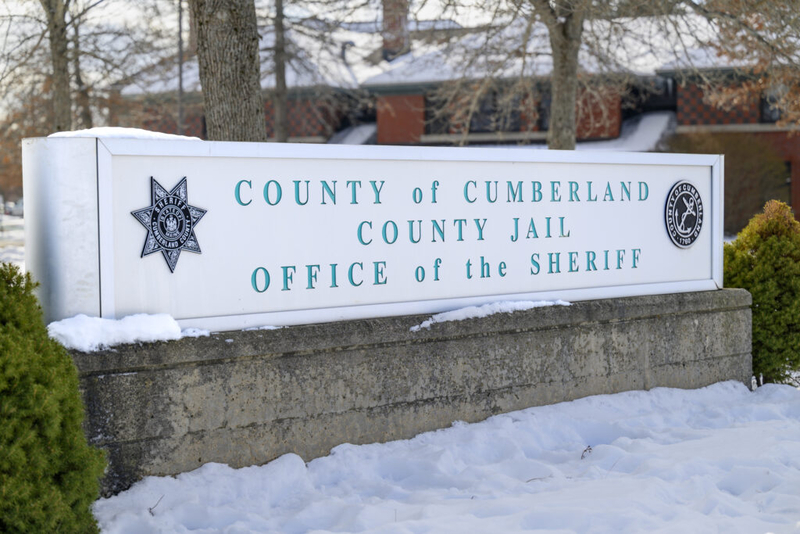
Sign outside the Cumberland County Jail in Portland. Jan. 23, 2026. (Photo by Jim Neuger/ Maine Morning Star)
Maine is poised to allow jails to refuse to hold immigration detainees.
A bill passed by the Maine Legislature aims to settle the legal question at the heart of the dispute over a federal contract with Maine’s largest jail.
Since President Donald Trump began ramping up immigration detentions, Cumberland County Jail has faced mounting pressure from community members to end its longstanding contract under which the federal government pays the facility to house its detainees. But the board of commissioners pushed off its decision, citing ambiguity as to whether they could refuse to hold federal detainees because of a decades-old state law.
That’s the law that this bill, LD 2058, seeks to clarify.
Maine law currently stipulates that municipal and county jails “shall at all times be available for detention of persons arrested by state or any other law enforcement officers.” The bill would add the stipulation, “unless a person is being detained solely for a civil immigration violation,” which supporters say more accurately reflects the original intention behind the statute that was established in 1964.
Lawmakers pave way for Maine jails to have discretion over holding immigration detainees
The bill passed the Maine House of Representatives 75-70 and the Senate 20-12, and secured its final enactment vote in the upper chamber on Monday. It now heads to the desk of Gov. Janet Mills, who has declined to say whether she supports the measure.
The legislation would clarify who jails are mandated to hold, not who they can hold.
“This bill is simply permissive on the local level,” Rep. Tavis Rock Hasenfus (D-Readfield) said during the House vote last week.
The bill is one of several ways the Legislature has tried to push back on Trump’s mass deportation agenda.
Another that restricts local law enforcement involvement with immigration enforcement is set to take effect this summer. Mills allowed that measure to become law after initially showing reluctance.
“This is just putting a wedge in with the federal government,” Sen. Scott Cyrway (R-Kennebec) said during last week’s Senate debate on LD 2058. He raised concern about the possible loss of federal funding if counties refuse civil immigration detainees or from Trump administration retaliation.
That’s already happened to Maine’s largest jail. After the Cumberland County Jail had a spike in immigration detentions toward the start of Trump’s second term, the federal government pulled all of its immigration detainees from the facility in January after Sheriff Kevin Joyce publicly rebuked the detention of one of his corrections officer recruits, who he said had a “squeaky clean record.”
Supporters of LD 2058 said jails are already open to risk, given the current lack of clarity in state law.
“If a local jail assumes custody of a person the federal government illegally detained, that jail could face significant liability,” said Sen. Rachel Talbot Ross (D-Cumberland), the bill sponsor.
Joyce told Maine Morning Star he wasn’t interested in holding detainees on civil charges, and told U.S. Immigration and Customs Enforcement as much, too. “I’ve been trying to stay away from that and only hold the criminals, the worst of the worst,” Joyce said.
That’s the terminology ICE used when launching its large-scale operation in Maine in January, during which agents detained many asylum seekers and others pursuing lawful immigration processes. According to data released by the Deportation Data Project last week, the vast majority of the nearly 200 people ICE arrested during that operation had no criminal convictions, or pending criminal charges.
Immigration detention is an administrative, or civil, form of confinement. But the line between the two has been further blurred as the Trump administration has used both policies and rhetoric to try to characterize all undocumented immigrants as criminals.
Augusta, ME