Lawmakers in driest state weigh excessive water and energy needs of data centers they court
Mar 26, 2026 | 8:38 am ET
Description
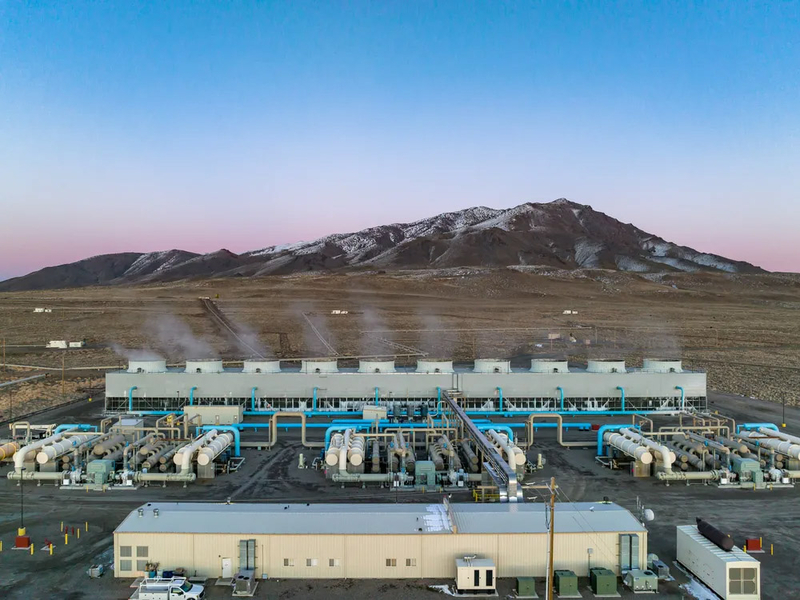
The Blue Mountain geothermal power plant. (Google Data Centers press photo)
NV Energy believes it will need 50% more energy than it projected needing just two years ago, and that energy demand could double by 2030.
The skyrocketing demand is overwhelmingly driven by the boom in artificial intelligence and large scale data centers. And state lawmakers, who for a decade have courted data centers with millions of dollars in tax abatements, are taking notice.
“I think it should make all of us pause for a moment,” said Stacy Tellinghuisen from Western Resource Advocates, “because it is truly staggering.”
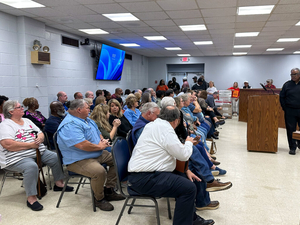
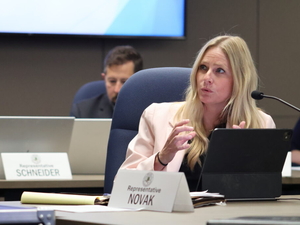
Western Resource Advocates was one of more than a dozen groups that gathered Wednesday for a joint meeting of the interim committees on natural resources and infrastructure. The meeting focused solely on data centers and their water and energy needs. Other participating groups included industry lobbying group Data Center Coalition, environmental advocacy group Sierra Club Toiyabe, researchers from the Desert Research Institute, and representatives from regional water authorities and energy utilities.
NV Energy has acknowledged that the surge in demand will likely derail its ability to meet the state’s clean energy goals, which were placed in statute by lawmakers and then in the state constitution by voters.
Tellinghuisen in her presentation noted that some of the expected demand for energy may not materialize, which could bring its own problems.
“We know that a hefty portion are probably speculative, because these data centers put their names into the queues in multiple different utility systems at once as they’re working to figure out where the most economic location is, where they can line up the other pieces of the puzzle that they need to actually come to fruition,” she said.
If utilities build additional generation and transmission capacity only for the data centers to change course or scale back, Tellinghuisen worries it is residential and non-data center businesses who could be caught with the bill.
NV Energy testified that load growth must be “managed responsibly” and cannot come at the expense of individual households, small business, and industrial users.
But doubts abound.
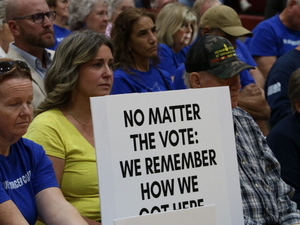
“We have NV Energy saying that they’re going to do a good job, when for the last two decades they overcharged consumers regularly,” one Reno resident quipped during public comment, referring to an estimated $65.4 million in overcharges revealed last year.
“We currently don’t have any rules or regulations on the books that explicitly prohibit cost shifting in the state,” said Olivia Tanager, executive director of the Sierra Club Toiyabe Chapter.
Tanager referenced a Harvard Law School report titled “Extracting Profits from the Public” that found utility rate structures can shift the cost of serving data centers onto the general public.
The report noted that, while Nevada has a Clean Transition Tariff that “claims to insulate other ratepayers” from data centers’ energy generation costs, “public utility staff and other intervenors concluded that the new tariff would not actually firewall data centers’ generation costs from other ratepayers.”
Several states are considering specific tariffs or rate schedules for large loads like data centers. Those states include California, Utah and Virginia, according to the National Conference of State Legislatures.
“I think it is critical that these data centers are powered with clean energy,” said Tellinghuisen.
Tellinghuisen said Western Resource Advocates sees the potential of the Clean Transition Tariff. Under it, Google, NV Energy and Fervo partnered on an enhanced geothermal project to support a data center’s needs.
“What we’ve heard from utilities is that these data centers companies that have pretty big pocketbooks also have an appetite for risk that utilities don’t,” she added. “They may be willing to invest in clean energy technologies, like enhanced geothermal, that really help us advance the ball on clean energy. I think that’s an opportunity we can look towards.”
Tanager shared a similar sentiment, calling the clean transition tariff promising but “not a silver bullet” for the state’s energy problems.
Water
Representatives of the data center industry suggested existing estimates related to water use are inflated because they are based on outdated technology. Major data centers now use closed-loop cooling systems that involve very little water evaporation.
Bob D. Sweetin, partner at the energy boutique firm Davison Van Cleve, told lawmakers a medium sized data center that once would have used 300 million gallons of water a year on cooling can now use 1 to 3 million gallons a year with a closed-loop system.
Data center water/power needs, regulatory challenges strain rural communities
That’s “roughly the equivalent of 10 to 20 households in the State of Nevada, or one automated car wash,” he said.
Groups more critical of data centers emphasized a need for more transparency and reporting on actual water usage, pointing out there’s no guarantee every new company is using a closed-loop system.
“The fear is that if we continue to allow these things, we’re going to attract what we’re referring to as Dollar Store data centers, the lowest quality data centers who are poor actors in communities,” said Tanager.
Some other states are now requiring data centers to report on their energy and water usage, according to NCSL.
Beyond the water used on site for cooling, there remains the fact that producing electricity also requires a lot of water. That indirect water usage must be accounted for, water advocates believe.
Sierra Club is also advocating Nevada adopt higher standards on the types of backup generators data centers are allowed to use in the event of brownouts or blackouts. One data center can have hundreds of diesel-powered backup generators on site, which could create air quality issues for communities.
Republican Assemblymember Rich DeLong of Reno questioned Tanager about why data centers should be held to a different standard than the resort industry, which might have an equal number of backup generators.
“I would love to see every backup diesel generator in the state be the highest quality backup diesel generator, regardless of the industry it’s being used for,” replied Tanager. “It’s just that we’re seeing more and more air quality permits coming through for data centers in particular.”
Wednesday’s discussions did not delve into the subject of Nevada’s tax abatement program for data centers.
Democratic Assemblymember Natha Anderson, who chairs the natural resources committee, announced early in the meeting that exclusion was intentional because the lawmakers wanted to focus strictly on water and energy, which clearly fall under the scope of the two committees holding the hearing.
Other states — including Arizona, Illinois and Georgia – are actively considering eliminating or scaling back such incentives.
Tanager briefly broached the topic, noting that strong tax incentives, along with relatively cheap energy costs, proximity to large markets like Silicon Valley, and land availability, make Nevada an attractive place for new data centers.
“Regulating data centers appropriately is not necessarily going to stall economic development or growth,” she said. “Corporations want to come here, and so we need to make sure that the costs and issues associated with data centers are not unduly passed onto the public.”
[Editor’s Note: This article has been updated to correct the name of the organization Western Resource Advocates. The photo caption was also corrected.]
Las Vegas, NV