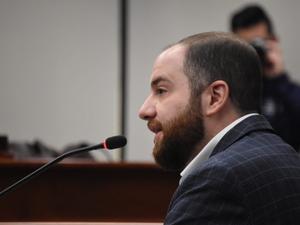
‘It’s dire’: A closer look at the new anti-trans law in Kansas
States legislators have advanced a record number of bills attacking LGBTQ rights over the past few years. Many bills include, but aren’t limited to, restrictions on access to health care, forced outings in schools or barriers to accurate IDs.
In February, the Kansas legislature passed a new law that invalidated driver’s licenses and criminalizes bathroom use for transgender residents. Trans people in Kansas are worried about living in the state.


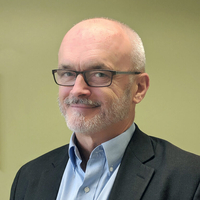

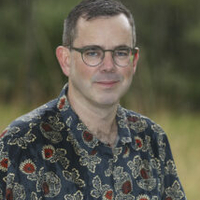

In Episode 20, we’ll hear from Kansas Reflector editor-in-chief, Sherman Smith. He and his team have been covering the controversial legislation, which was fast-tracked by the legislature’s GOP majority.
We’ll also look at how the American Civil Liberties Union is responding. The ACLU is tracking almost 500 anti-LBGTQ bills across the country. The Trans Legislation Tracker also notes that over 20 anti-trans bills have been passed in state legislatures.
We’ll hear from Harper Seldin, a senior staff attorney for the ACLU's LGBTQ & HIV Rights Project who has been on the ground fighting these bills, including in Kansas.
Finally, Evening Wrap newsletter author Danielle Gaines shares the top stories she’s watching.
Episode produced and edited by Mallory Cheng. Music for Stories From The States composed by David Singer.
Got questions? An episode idea? Email us at [email protected].
Subscribe to Stories From the States on Apple Podcasts, Spotify and Youtube.
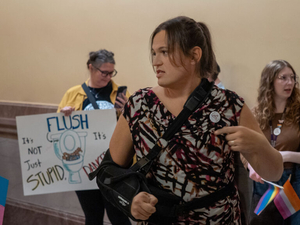
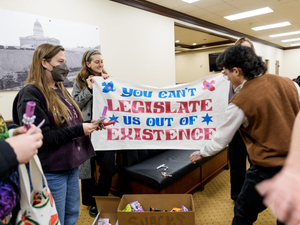
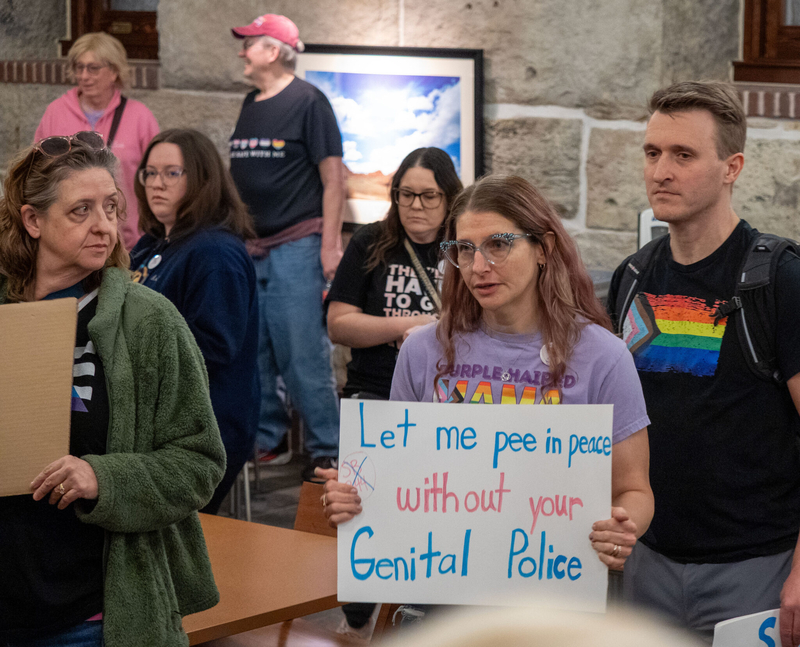
Photo: A group of trans activists pose for pictures on Feb. 6, 2026, at the Kansas Statehouse, advocating against a bathroom bill that eventually passed. A similar law went into effect in Texas Dec. 4 and has caused universities, city and other government entities to make changes. (Photo by Sherman Smith/Kansas Reflector)
Stories From The States is a production of States Newsroom, the nation’s largest state-focused nonprofit news organization, with reporting from every capital. At this pivotal moment in American democracy, our veteran journalists from all 50 states are reporting the consequences of government decision making. By zooming into one story each week, Stories From the States contextualizes and gives a human voice to what is happening now.
Transcript was created using an automated software.
Chris Fitzsimon
This is Stories From The States. I'm Chris Fitzsimon. Here at States Newsroom, we know there's a lot going on around the country, in every state capital, and thank you for being here. Today we're talking about state legislation that strips away the civil rights of trans people. Across the country, states have advanced a record num...
Transcript was created using an automated software.
Chris Fitzsimon
This is Stories From The States. I'm Chris Fitzsimon. Here at States Newsroom, we know there's a lot going on around the country, in every state capital, and thank you for being here. Today we're talking about state legislation that strips away the civil rights of trans people. Across the country, states have advanced a record number of bills that attack LGBTQ rights. The ACLU has been tracking almost 500 anti LGBTQ bills.
Harper Seldin
A lot of these bills are very focused on transgender people and specifically pushing trans people out of civic life.
Chris Fitzsimon
We'll hear from an ACLU lawyer who is part of the team monitoring all these bills and fighting back on them. And over in Kansas, state lawmakers passed a bill that invalidated driver's licenses and criminalizes bathroom use for transgender residents.
Sherman Smith
There's no evidence that anybody can find really where somebody was really bothered by who was in the bathroom with them.
Chris Fitzsimon
The Editor in Chief of the Kansas reflector will join us to explain more on what's going on.
Jaelynn Abegg
Yeah, it's, it's dire, you know, it's a situation where I think, I think the the the reality of what it is that the Kansas government is doing to the trans community is finally starting to settle in on a lot of on a lot of trans people for whom this might have been more of an abstract thing previously. This is, this is certainly a situation where, you know, as if it's not enough that they are going to make us revert our driver's licenses. The audacity to invalidate our licenses with no notice, with no recourse to have a grace period to get our licenses replaced, without even so much as offering to replace our licenses at no cost. It's absolutely bonkers, and I think that transgender Kansans rightly feel like they've been done a huge injustice. When things like this happen, I honestly get a little bit of a demon of rebellion in me, and I'm not sure exactly how I'm going to manifest that, if at all right now, but I can tell you that I'm I'm very angry, I'm heartbroken. This is my home state. I've lived here all but two years of my life and and, and yet, every every year since I've been living as a woman and and having come out as transgender, the state has done nothing but break my heart. If this state was a romantic partner, I would definitely call this an abusive relationship at this point.
Chris Fitzsimon
That is Jaelynn Abegg talking about the recently passed Kansas bill, 244, a new state law that invalidated driver's licenses and criminalizes bathroom use for transgender residents. The bill was rushed through a hearing, and at the last minute, Republicans added that language that would make it illegal for someone to use a public building bathroom or similar space, like a locker room that conflicts with their sex at birth. Sherman Smith is the editor in chief of the Kansas Reflector. He and his team have been covering this and will join us now to help explain more. Sherman, thanks for being here.
Sherman Smith
Hey, Chris, thanks for having me.Her
Chris Fitzsimon
In Jaelynn's comment, she talked about the driver's license provision, and I wanted to make sure that folks who are listening understand what actually happened, and people in Kansas actually received a notice from the state that their driver's license was no longer valid?
Sherman Smith
Yeah. You know the state's the Kansas Department of Revenue put out letters to 275 residents telling them this law just is going to take effect in a couple of days, and when it does, your driver's license will no longer be valid. You have to come down to the DMV and replace it at your own cost.
Chris Fitzsimon
And what was — that must have prompted a lot of confusion.
Sherman Smith
Oh yeah, there's, I think, a lot of people who maybe didn't understand that the law had already been put in place, or that there was no grace period for this, as we heard Jaelynn talking about. And I think it just also solidified for everybody the that this is actually going to have an impact in their their day to day lives. They have to go figure this out, and have to do it right now.
Chris Fitzsimon
When were these bills introduced? How did we get to this point?
Sherman Smith
Yeah, it's a little bit of an unusual process. The bill initially just dealt with driver's licenses, and that was introduced on the opening day of the session this year, in January. The hearing was held less than 24 hours later the next day, so there's little time for anybody in the public to really weigh in and say, 'this is a problem'. And yet, hundreds of people still submitted testimony in advance of that hearing. Then it just kind of sat there for a week, and when it came back again, this house committee didn't tell anybody that they were going to take action on the bill. They didn't put it in the calendar like they're supposed to. They just brought it up in the committee and added this whole second piece of legislation to it that deals with the bathroom provision, and then they took this sort of Frankenstein's monster of a bill and shoved it into an unrelated Senate Bill, which was just kind of a procedural move, so the next day, the House could pass it out, and the Senate could say, 'we don't have to have a hearing on this, because it's our bill. We've already had a hearing on it, and just rubber stamp what the House did'. And so it all happened very quickly, early this session.
Chris Fitzsimon
And I imagine that the both the substance and the process prompted some outrage.
Sherman Smith
Oh, yeah. I mean, I think everybody realized from the start what what they were trying to do, how they were trying to fast track this and keep the public out of it. And it continued through the end, you know, the governor vetoed it, and when it came back and they went to override the veto, the House used a procedural move to shut off all debate. So instead of, you know, people usually will go down to the floor and say, what, why they think this is a good bill or a bad bill. They had no chance to do that. It was simply, we're going to vote right now.
Chris Fitzsimon
On the veto override?
Sherman Smith
On the override, yeah.
Chris Fitzsimon
So is that? How often does that happen in the Kansas legislature that there's no debate about a veto override?
Sherman Smith
Yeah, this is very rare. I think we've, we've done some looking back, or, you know, story that will come out here soon. How often they they use this ploy. It's called calling the question, and it's been just a handful of times in either chamber over the past five or six years, and most of those came up during the pandemic in 2020 when they were just trying to rush to get out of the building before the virus swept through.
Chris Fitzsimon
I know you can't speak to the motivation in people's minds, but do you have a sense of where this sort of not only the initial bill, but the sort of ramped up version came from or who was really pushing and who was behind this?
Sherman Smith
You know, it's, it's hard to say, as you, as you point out, to read people's minds. I know historically, this has been driven by a lot of faith based ideology. A lot of these anti trans bills have come from faith based groups, and I think it's probably no coincidence that the House overrode the veto on Ash Wednesday. I think that's a big part of it. I think part of it is about Republicans ginning up interest in their base on these culture war issues. Part of it may be about driving donations to leadership PACs and other other campaigns, where they can funnel money into State House races.
Chris Fitzsimon
You also spoke to Rhashanna Grant, a trans woman from Kansas who has been outspoken to let's hear, let's hear from Rhashanna.
Rhashanna Grant
Now, well, I'm going to continue to use the bathroom that I feel comfortable in, I'm not going to turn in my license. So if, if my idea is correct, and their whole idea of the license was just to procure a more socially acceptable way of keeping people like me out of the restrooms they think we shouldn't go in, then it just feels daunting. And it's not just Kansas. There's there's a whole slew of anti trans legislation across this nation. And how is invalidating licenses of people who have been legally driving in a state.... I'm 55, years old. I've been driving since I was 16, how is invalidating our licenses because of your religious founded ideologies and fear because you don't understand what we are and who we are?
Chris Fitzsimon
Again, that was Rhashanna Grant, a trans woman from Kansas, reacting to this legislation. You mentioned the governor, Laura Kelly, vetoed this bill. What was her objection when she vetoed it?
Sherman Smith
You know, the governor pointed out that the legislation that the bathroom provision especially, is so kind of vague and unclear about how it's supposed to be enforced and what it would apply to. We talk about it being applied to bathrooms, but it's really any place where you're in a state of undress. And so she pointed out that theoretically, this could be applied to nursing homes or other other places where you wouldn't think that this would be applied. And say, you know, under a strict reading of this, you may not be able to go see grandpa in the nursing home, or you could be in hospital settings or or other places. I think she just cautioned that we haven't really thought through all of the implications of what we're doing here.
Chris Fitzsimon
Two trans men from Lawrence, Kansas had filed a lawsuit, arguing it violates their constitutional rights to due process, privacy, equality and expression. Their lawyers asked the court to issue a temporary restraining order, which would have paused enforcement of the law for 14 days, with a possible 14 day extension, but a Kansas judge declined to pause that enforcement, Kris Kobach, the Kansas Attorney General, also was in support of the pause. Kobach is a prominent Republican with strict stances on immigration and his efforts to promote strict voter ID laws that led him to work under Trump during his first term in office to investigate claims of widespread voter fraud in the 2016 election, which they did not find. It's interesting that I don't think people around the country who know his name probably would think of him as a as an ally to the trans community, and I'm not suggesting that he is, but at least it seems like he recognized maybe the unreasonableness of the timing.
Sherman Smith
You know, he really surprised everybody, including the the ACLU, with this, when he announced just in the middle of a court hearing that, by the way, I'm not going to bother to enforce this until one month after the law took effect. You know, I I have to wonder if this was just a way to try to give the judge an out so they wouldn't have to rule on some of the constitutional issues. You know, we kind of wondered if the judge would seize on this and say, if it's not going to be enforced for a month, anyway, I don't have to rule on a restraining order that would only last 14 days.
Chris Fitzsimon
Going back to the bathroom issue. I'm always struck in states that do this. I was gonna ask you in a second about what you think the national implications are. Has there been a giant outcry in Kansas of people offended that some somebody's in the bathroom? I never hear the stories that allegedly prompt the legislation.
Sherman Smith
Yeah, there's, there's no evidence that anybody can find really, where somebody was really bothered by who was in the bathroom with them. And you know, one of the things that I've I pressed Kobach on is this idea that they, he says they we needed this bill to allow women to feel safe, to use the women's restroom. But I don't understand how this law actually changes that. You know, the law is now requiring people who look and sound like men to go to the women's room. The people who felt unsafe or uneasy about this before are still going to feel uneasy. The issue is that trans people use the restroom. And you know, this law doesn't change that.
Chris Fitzsimon
Trans Liberty, a PAC that fights for trans rights, actually issued its first ever statewide evacuation order. Is that. I mean, obviously that's never been done before. It sort of puts Kansas, I guess, back in the in the national spotlight in terms of this sort of culture or war legislation.
Sherman Smith
Yeah, you know, it is these cultural war issues that tend to put Kansas in the spotlight. I remember years ago, and we decided that we weren't to teach evolution in schools, for instance. So the evacuation order, I think, really underscores the severity of the Kansas law, that it's more more strict, more onerous than any other law that's been passed anywhere in the country. And you know, part of that deals has this bounty provision that's attached to it, right? If an individual in Kansas feels aggrieved that somebody used the wrong bathroom, they can take them to court and sue them for $1,000. You know, this is kind of borrowed from some of the anti abortion legislation we've seen around the country, but it's the first time it's been applied in a setting like this with an anti trans law.
Chris Fitzsimon
And do we, you may not know, I wondered if we're going to expect this sort of severe or strict law to pop up in other places now.
Sherman Smith
Yeah, I mean, you have to wonder, I think it's one of the reasons why the ACLU is so adamant about challenging this. They brought in at least a dozen out of state attorneys for both the ACLU and a Philadelphia law firm to fight this. And I think they realize that it's, you know, if you can't draw a line here and push back and say you can't do this. You know, the concern is that this would be applied to any number of other, you know, cultural war issues.
Chris Fitzsimon
And finally, what happens now? Where is the lawsuit? What do we have a timetable? What? What do? What are folks looking for next?
Sherman Smith
Yeah, so, you know, the the judge, in his ruling, he rejected the the temporary restraining order, and he had a couple of components to that. One is the legal basis saying, I just don't have evidence before me yet. We haven't had a chance to bring in witnesses or look at evidence to make a determination on some of these constitutional issues. He also kind of inserted a surprising essay in the middle of his ruling about how the concerns aren't really valid because Kansans are too nice, which got us a little bit by surprise. He said it, you know, you're complaining about the lesser angels among us, but Kansans are actually very, very tolerant, which isn't, has not been the experience of a lot of LGBTQ people in Kansas. So it leaves us in a situation now where the ACLU is going to have to, you know, go produce the evidence that they would need to try to satisfy the court's concerns about whether these really are constitutional violations, and that could take weeks or months to play out before a judge would make a ruling on an injunction that would have a more lasting effect of striking down the law, or he could reject it, and then that could be appealed.
Chris Fitzsimon
And meanwhile, the the rights of trans Kansans are greatly diminished as the law stands.
Sherman Smith
That's right. I you know they're living in fear of which bathroom they go to. You know, defiant individuals like Rhashanna refusing to give up their driver's license, but understanding that there are consequences to that. A lot of people. I want to leave the states like like Jaelynn and some people have left the state
Chris Fitzsimon
Well, Sherman, thank you so much for covering this and helping us understand it. Thanks for being here.
Sherman Smith
Yeah, thanks for having me.
Chris Fitzsimon
To stay up to date on what's happening in Kansas. You can always visit newsfromthestates.com or listen to their weekly podcast. It's called the Kansas Reflector Podcast. You can listen wherever you get your podcasts. The number of anti LGBTQ bills being passed in state legislatures has been on the rise. Coming up, we'll chat with one ACLU lawyer about what he's seen.
Moses Esheit
At a time when so many communities are losing their local news outlets, States Newsroom is filling a gap. We are now the nation's largest state focused nonprofit news organization with reporters based in every state capital and Washington DC, but we can't do it without your support. Your contributions allow us to produce award winning journalism and deliver it to you for free, no pop ups, no pay walls. This is a crucial time to support local journalism, and every bit helps to give go to statesnewsroom.com/donate.
Chris Fitzsimon
In the last few years, states have advanced a record number of bills that attack LGBTQ rights, especially transgender youth, while more states every year are working to pass laws to protect LGBTQ people, state lawmakers are also advancing bills that target transgender people, limit local protections and allow the use of religion to discriminate. Many bills include, but aren't limited to restrictions on access to health care, forced outings in schools, or barriers to accurate IDs like what we're seeing now in Kansas. The ACLU is working to prevent these attacks. They're also monitoring state legislatures and overall, working to prevent the rights of LGBTQ+ people from being taken away. One of the people doing that is Harper Seldin. He's a senior staff attorney for the ACLU's LGBTQ and HIV Rights Project. Harper, thanks for being here.
Harper Seldin
Thank you so much for having me.
Chris Fitzsimon
So as we're talking, it looks like as of this recording, which is on Monday, March 16, the ACLU is tracking almost 500 anti LGBTQ bills in the United States. First of all, did you ever think that after some decades of some significant progress that you and I would be talking about tracking almost 500 bills to roll back rights for people.
Harper Seldin
Well, I guess what's old is new again is where we find ourselves today. No, look, this is, this is a scary time in our country, not the first time that we've seen a concerted effort to push LGBTQ people out of society. But this one certainly is, is is intense.
Chris Fitzsimon
What are the major themes that you're seeing? I want to talk specifics in a moment. But overall, is there a way you could sort of put these in some sort of perspective for folks.
Harper Seldin
Sure, a lot of these bills are very focused on transgender people and specifically pushing trans people out of civic life. So you know, if you can't have a driver's license that shows who you are, you can't use the restroom in a public building that matches your gender. You know, you can't go to work or school without being misgendered or told that your identity is fake or somehow you're not. You know, the same as everybody else in terms of the respect that you're due, it makes it pretty hard to go about your life. And so I think these spills are all structured around making life more difficult for trans people in the hopes that we stop being trans or disappear from society.
Chris Fitzsimon
Looking at a map, which we'll be linking in the description of this podcast, you're tracking anti LGBTQ bills in conservative states, Florida, Oklahoma and Missouri, but there's legislation making its way through other states, Illinois, Minnesota and New York. There seems to be sort of a national push.
Harper Seldin
I think that's right. I think, you know, state legislatures borrow from each other, sometimes for good and sometimes for ill. And so we'll see one bill and one state crop up, and maybe it gets traction, maybe it doesn't, but then similar version of that bill will pop up somewhere else. And again, in some states, these bills are dead on arrival. They're not going to go anywhere. But other places, they do get traction, and they do pass and they cause material harm on the ground.
Chris Fitzsimon
Yeah. And I guess you mentioned that they borrow from each other. They're also groups on the right that are pushing these in all the states. Right? It's not a coincidence, especially in the conservative states, that the bills that are moving are moving.
Harper Seldin
No, there's nothing organic about this. This is a concerted national strategy.
Chris Fitzsimon
Yeah and who's behind that? Do we know? Or is it a variety of groups. How would you describe the folks who were pushing to, as you mentioned, sort of push LGBTQ folks out of civic life?
Harper Seldin
You know, I think it's the same groups that were behind opposition to marriage equality, right? It's the same groups that are behind making sure that public accommodations are not open to everyone, but only open to some kinds of people, you know, I think, you know, this is the latest iteration of an attempt to make everyone in society look this, look with single way, pray a single way, marry, a single way. So, you know, I think, I think this backlash against trans people is best understood as a continuation of the fights you know that we were having about marriage equality.
Chris Fitzsimon
For folks who don't follow this closely, is it? Fair to say that a significant, or a large part of this push is the religious right, what we used to call the religious right, which is evangelical right, or however you would describe that.
Harper Seldin
You know, I think, I think it's a lot of different groups, but I think what unites all those groups is a desire to control people, whether that's controlling their reproductive choices, controlling how they marry, controlling what they're able to have their kids learn in school, right? I think that that's what unites that effort.
Chris Fitzsimon
You were in Kansas recently, where the state there passed a new law that invalidates driver's licenses, restricts bathroom use based on sex assigned at birth, citing numerous constitutional rights and fear violence. I guess that was a bizarre case where they were actually sending people notices saying that that their that their identifications were invalid.
Harper Seldin
Yeah, no, this SB, 244, is really terrible. So in Kansas, you know, the rule was you could update your driver's license to have your gender that you lived as right, which makes sense. The sex on your birth certificate is from a long time ago. If you live your life as a man, easiest way to be identified is if your driver's license says you're a man. So folks, because of this law, got letters from basically the DMV that said, you know, because of this law, license is invalid, meaning you can't use it to drive you can't use it to buy age restricted products. You need to come and turn it in and get a new license. And, oh, by the way, there's no grace period. So it was, it was both cruel and also just completely impossible to comply with.
Chris Fitzsimon
Right. And what would happen getting a new license? How would that work?
Harper Seldin
So our understanding from folks in Kansas is that, you know, you go in with one of these letters and they print you a new license, and if you'd updated it to say 'M", they give you one that says 'F' and vice versa.
Chris Fitzsimon
So they're literally changing your identity, your self identity, at a bureaucratic office like the DMV?
Harper Seldin
Right, right. And, you know, I think it's, it's, you know, in addition to that harm of having to go to the DMV clerks and explain to them, Hey, you know, I'm, I'm the kind of person that the Kansas legislature thinks, you know, doesn't deserve to have a valid ID, and so now I need to change it also means that when those folks go out in the world and need to go use their ID at the bank or on election day, you need photo ID to vote in Kansas, all of a sudden, everyone who sees that ID now knows that they're trans, and you know whether they experience harm or violence. If that happens, there's still, you know, a real harm in being forced to tell people when you're just trying to go about your life, 'Hey, I'm trans'.
Chris Fitzsimon
The ACLU and a Philadelphia law firm have filed a lawsuit on behalf of two transgender men from Lawrence. Tell us about that lawsuit, and what's the what's the goal?
Harper Seldin
Sure. So, so yes, our plaintiffs are two, two men proceeding under pseudonym Daniel and Matthew. And you know, they came to Kansas for school and for work. They've built lives in the state, and they just want to continue to live their lives and be left alone. And SB, 244, stops them from doing that. You know, their choices are to restrict eating and drinking so they don't need to use the restroom or try to find single user restrooms if they're available. And then now they have to think twice every time they use their IDs, because it could out them. And so what this case is about is the Kansas Constitution. And does the Kansas Constitution let the Kansas legislature treat people worse and differently because they're trans? Does the Kansas Constitution give the legislature the power to tell people in Kansas we think you're a man or we think you're a woman, and so this is how you have to live your life, and this is how you have to present yourself. And we think under the Kansas Constitution that that's not permitted, that Kansans have much more freedom than that.
Chris Fitzsimon
It's interesting that even that this debate has become such a I don't even know. I don't know if I want to characterize it, but I noticed in President Trump keeps pushing the SAVE act about voting, which is a whole other topic. But even when he pushes that part of what he wants, there is more restrictions on transgender people as part of some thing about voting, transgender girls in sports or whatever it just it feels like there's a segment of society that believes dividing that I guess the majority of people want to divide us, and that somehow dividing us is good politics.
Harper Seldin
Yeah, and I would push back against that. You know, I think, I think we are a better, stronger country and community, and every state is stronger when everybody has a voice. And so I think, you know, what we're seeing is both an effort to control what individual people do in their lives, and also to artificially restrict who gets to say and how we run our country.
Chris Fitzsimon
What's your sense of what the country thinks? I mean, I feel like we hear sensational cases many times misrepresented. One case out of however many, you know, transgender girls are participating in sports, a tiny fraction. The harm is, feels like it's been dramatically overstated, but the politicians keep using it. You know, marriage equality, I thought, everybody thought was a giant step forward, and just the way we treat people. So it's, it's hard to imagine this working, and yet they keep trying it.
Harper Seldin
Yeah, I mean, I in my experience, when people get to know, you know, their transgender neighbors, their you know, teachers who are trans, their kids who are trans, teller at the bank who's trans, right? Think they learn that we're just ordinary people like them trying to live our lives in quiet dignity. And, you know, be left alone. And so I think in that sense, when people get to know trans people, they realize that there's no there, there. This is, this isn't some big scary thing, you know, these are just people who want to live our lives. So, you know, my hope is that people, over time, come to realize that. But I certainly think there are powerful forces from governments and other parts of our of our country and media that are trying to turn trans people to some big threat, and I just don't think it's there.
Chris Fitzsimon
Do you think we'll see more bills?
Harper Seldin
Unfortunately, yes, I think it's kind of a race to the bottom. You know, we have a couple years now of data on our legislative tracker, and you can see, you know, every year it's, it's the same or worse. And so I do think not only are we going to see more bills, but we're going to see more extreme bills, because there have already been successes in about half the states and banning gender affirming health care for young people. And so at some point in these states, there's not much left to do, and yet they find more extreme and cruel ways to try to push people out of society. And I think that's what we're seeing in Kansas and elsewhere.
Chris Fitzsimon
Well, thank you very much for helping us understand it, keeping track of it, and fighting to keep people for allowing people to live their lives. Really appreciate you being with us.
Harper Seldin
No thanks so much for having me on.
Chris Fitzsimon
Coming up shortly Evening Wrap newsletter writer Danielle Gaines will join us with the top stories she's watching out for, and of course, with one last thing.
Speaker 1
Hi, it's Nelle Dunlap, product and engineering director at States Newsroom. At States Newsroom, we believe journalism should be fair, fearless and free, with reporters working on the ground in all 50 states and Washington DC, we provide non partisan coverage of the state issues that matter most to you. You can subscribe to our work by going to statesnewsroom.com/subscribe.
Chris Fitzsimon
And now the favorite part of the week talking to Evening Wrap newsletter writer, Danielle Gaines. Danielle, how are you?
Danielle Gaines
Hi, Chris, I'm good.
Chris Fitzsimon
All right, let's get to it. It was quite a busy week. What's something that caught your eye?
Danielle Gaines
Yeah, well, in Florida, we've got a little bit of a disagreement among Republicans over immigration, and it's might not be what you would initially think. So there was a group of law enforcement officers on the Florida Immigration Enforcement Council, and they started having a conversation about drafting a letter to President Trump and to congressional leaders urging them to reserve deportation for the most violent criminals. So as we know, you know, Florida has really been on the forefront. The governor has really supported this mass deportation effort at the federal level. And so this was kind of an interesting conversation for them to embark upon, and they're all Republican elected officials.
Chris Fitzsimon
Yeah, it was interesting. I think one of the sheriffs even said something about, just talked about the value of immigrants in the community, which is something I don't think a lot of folks expected to hear.
Danielle Gaines
Yeah, so he was talking about people who who add to society, who are taking jobs, who are working in the community. And, you know, he didn't have a sanctuary type mindset or anything like that. And he thinks that if people do come, they should be required to pay fines and learn English and do these other things. But he did think that it was a waste of law enforcement resources to to arrest people who aren't violent. And then he said he gave Congress and F minus, I believe, for dealing with immigration policies, which was really interesting.
Chris Fitzsimon
That's really interesting. Okay, what about something coming up?
Danielle Gaines
Yeah, well, we're coming up on March Madness. So I thought we would visit an issue that is increasingly popping up, and that is prediction markets. So prediction markets have soared in popularity since 2024 some of the most popular ones are Kalshi and Polymarket, and for now, they get around state gambling restrictions by selling bets as financial contracts, and they compare this to the commodities markets that we have still Kalshi, for example, has an ad that calls itself the first legal betting app in all 50 states. And of course, gambling is illegal in 11 states. So there were a couple of pieces of news this week on this front. In an unprecedented move, Arizona Attorney General Kris Mayes filed criminal charges against Kalshi basically accusing it of operating an illegal gambling business, and specifically to the state, she said it violates a law barring wagering on elections, and so that case is the first time a state has pursued criminal charges against one of these companies.
Chris Fitzsimon
Wow, it's really interesting how and how prevalent it just feels like it is now in culture. You see it everywhere.
Danielle Gaines
Yeah, well, we had a story in Minnesota too, a group of bipartisan lawmakers came together on a bill to ban prediction markets. And our Reformer team there, they did a quick check of some of the items that you can currently place an event contract for. They have an entire section on Polymarket called Minnesota Unrest. And so at the time that they had published the story, more than $2 million had been wagered on whether Tim Walz or Ilhan Omar would resign. $1.2 million had been bet on whether the immigration agents who shot and killed US citizens would be charged. They really have opened up betting to everything.
Chris Fitzsimon
Wow, wow. That's insane. Well, what about one last thing for the week?
Danielle Gaines
Yeah, we had a great story. It was just a very joy filled story out of Indiana about this effort to get people back out into state parks, and so they're doing that through this technology called track chairs. So these are all terrain battery powered vehicles that people with disabilities can use to traverse trails to get back out on hiking and scenic routes. And so our reporters followed two people who really enjoyed the outdoors before they found themselves without the ability to use their legs. And Indiana has bought 45 of these vehicles, and they're putting them at every single state park, and you really just have to call ahead and make sure it's available and they'll have them out. And it was really great just seeing pictures of people out and about.
Chris Fitzsimon
What a nice note to end on in a crazy weekend, crazy world. Danielle, thank you. As always.
Danielle Gaines
Thank you.
Chris Fitzsimon
Thanks for listening to stories from the States. I'm Chris Fitzsimon. Mallory Cheng produced and edited the podcast. David Singer produced our theme music. If you liked what you've heard today, please leave us a rating and review. It means a lot to know what you think about the podcast. To stay up to date on all the latest episodes. Subscribe now to Stories From The States, a podcast from States Newsroom available wherever you listen to podcasts. Thanks for joining us, and we'll talk to you soon.=