Arizona border fund debate reignites fight over state role in immigration enforcement
Mar 17, 2026 | 11:54 am ET
Description
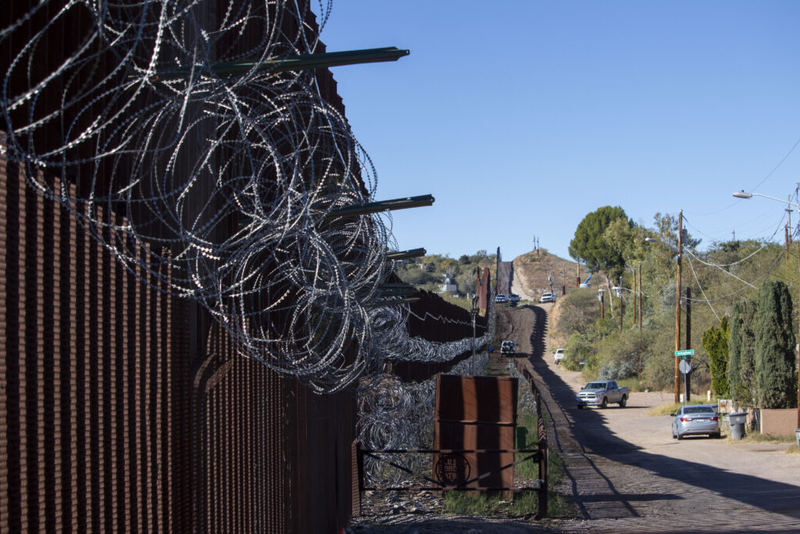
The border wall between the United States and Mexico in Nogales, Ariz. (Photo by Jerod MacDonald-Evoy/Arizona Mirror)
Last year, after a brief political tussle over whether the money could be spent on immigration enforcement, Gov. Katie Hobbs and lawmakers set aside $18 million for law enforcement agencies to carry out drug interdiction.
This year, Hobbs and Republican legislators want to increase that funding, but Democrats remain wary about whether it will amount to the state helping aid President Donald Trump’s mass deportation campaign.
At issue is the state law that governs the grant program known as the “local border support” fund. It earmarks money every fiscal year for law enforcement agencies to pay for officer positions that are focused on stopping drug trafficking, human smuggling and “illegal immigration or other border-related crimes.” Similarly, city, town or county leaders can apply to recoup the costs that come from prosecuting and arresting people accused of drug trafficking, human smuggling or “illegal immigration.”
The language was a source of friction for Democratic lawmakers last year, who balked at the risk of underwriting local efforts to detain unauthorized immigrants. But the fund was ultimately wrapped into budget negotiations and marginally increased from $17 million approved in 2024 to $18 million. That slight increase was a sharp departure, however, from the $50 million sought by Republicans and the $23 million Hobbs, a Democrat, had initially proposed.
Hobbs, unlike Democratic legislators, has no qualms with the language in state law and is once again pushing for $23 million.
The governor’s proposal actually calls for more than the $20 million that Republican lawmakers are seeking. During a debate about the fund in the Senate Military Affairs and Border Security Committee on Monday, a representative for Arizona Sheriffs’ Association, which is in support of the increase, assured lawmakers that the money isn’t used to target immigrants.
“Every single penny that is allocated for local border support every year is spent every year,” said Jen Marson, a lobbyist for the association. “And, also, if you talk to DPS, almost all of the dollars is used for drug interdiction, because, unfortunately, all of our counties in Arizona are border counties when it comes to drugs.”
The Arizona Department of Public Safety is charged with distributing the money in the fund to agencies or local governments to pay for eligible initiatives. Marson noted that a large portion of the grants help subsidize K9 units or law enforcement task forces aimed at stopping the flow of drugs in their communities.
Democrats on the legislative panel were skeptical that the money hasn’t in some way advanced anti-immigrant goals. Sen. Catherine Miranda, D-Phoenix, requested a breakdown of how each grant over the past two years has been used. She pressed Marson on her claims that no money has been spent on enforcing federal immigration laws.
Marson replied that wading into immigration enforcement isn’t something sheriffs have wanted to use the money for.
“The goal of the sheriffs is to use these funds to enforce state laws,” she said.
Arizona doesn’t have the power to enforce federal immigration laws. In 2012, the U.S. Supreme Court said as much when it struck down much of SB1070, the state’s “show me your papers” law that allowed police officers to pull people over to investigate their immigration status.
But two years ago, Republican lawmakers put the question to voters in Proposition 314, which would let police officers arrest migrants they suspect crossed the border without authorization anywhere but at a port of entry. More than 60% of voters agreed, though the law won’t go into effect until the U.S. Supreme Court reverses course on its earlier ruling that states don’t have the ability to enforce federal laws.
The passage of Prop. 314, which for some immigrant rights advocates represents a ticking time bomb in the face of a high court dominated by far-right conservatives that has embraced overturning precedent. And with the Trump administration’s aggressive mass deportation campaign having the general support of local law enforcement officials, Democratic lawmakers are largely unwilling to back an increase in funding for the local border support grant program without a change to ensure it won’t be used to target immigrants.
But that’s a nonstarter with Republicans, who control the state legislature and decide which proposals get sent to the governor’s desk. And with Hobbs herself unconcerned about the language, the opposition from Democrats is unlikely to yield any results.
Jo Ann Caruthers urged Republicans to vote against the proposal to increase the local border support fund. She warned that the language creates a loophole that could help pay for law enforcement actions that contribute to the Trump administration’s violent anti-immigrant agenda.
“That money could be going into health care, into funding our schools, in making public spaces safe,” she said. “Arizonans deserve a place where we can afford to live in and thrive, where our tax dollars are invested back into our communities, not against them.”
Sen. Wendy Rogers, R-Flagstaff, angrily rebutted that the money goes towards drug interdiction, which benefits the state’s health care system and public safety. And Sen. Tim Dunn, R-Yuma, pointed out that the language has been in place since at least 2021, and the program has been funded year over year despite that.
“We’re hung up on those two words that are in there, but that’s not the focus,” he said. “That hasn’t been the focus since 2021, since we’ve been using the language.”
But Democrats on the panel remained unconvinced that the potential to bolster immigration enforcement doesn’t exist.
“The reality is that the bill includes language on immigration enforcement,” said Sen. Sally Ann Gonzales, D-Tucson, shortly before voting against the funding increase.
“Thats what it’s all about for us, is those exact two words,” echoed Miranda. “So, you’re going to continue to hear questions on: ‘What does that mean?’”
The proposal moved forward with a 4-3 vote, with every Democrat in opposition. It will next be considered by the full state Senate and, if it wins the approval of the GOP majority, will be sent to the governor.
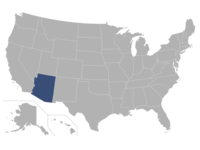
Phoenix, AZ