Arizona Republicans want voters to decide on trans bathroom ban after years of Hobbs vetoes
Feb 23, 2026 | 8:05 pm ET
Description
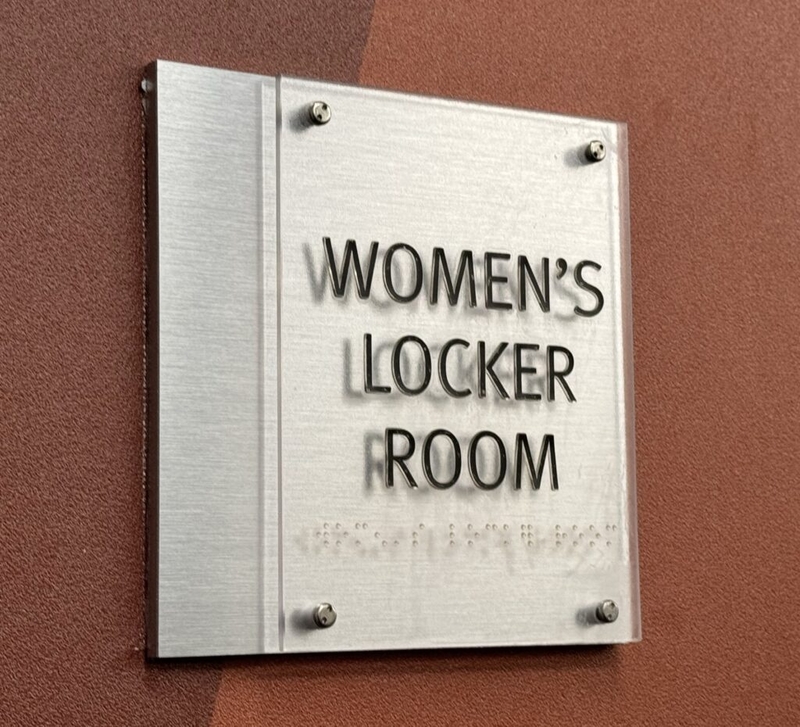
President Donald Trump signed an executive order Feb. 5, 2025, that bars transgender athletes from participating on women's school sports teams consistent with their gender identity. The order extends to what the administration describes as schools' "all-female locker rooms." (Photo by Shauneen Miranda/States Newsroom)
Arizona voters may get to decide this year whether transgender students in public schools are allowed to use the names and bathrooms that reflect who they are.
After years of vetoes from Democratic Gov. Katie Hobbs, Republican lawmakers want to take their anti-trans policies to the ballot box in November, and the state Senate on Monday approved a proposal to do just that.
Senate Concurrent Resolution 1006 would force public schools to police restrooms, locker rooms and hotel accommodations during school trips to avoid lawsuits from students who are uncomfortable sharing the same spaces with their transgender peers.
It would also prohibit teachers from referring to transgender students using names or pronouns that are consistent with their gender identity, unless the school was provided written parental permission first. And even then, school employees with “religious or moral convictions” against doing so would be allowed to ignore that directive from the parents.
Near-identical legislation in the past three years have either met Hobbs’ veto stamp or stalled in the legislature.
And a previous attempt to send the proposal to the ballot in 2024 failed after a lone Republican lawmaker voted it down. That lawmaker later lost his seat, in part due to his opposition to the anti-trans legislation.
If this year’s ballot referral wins the approval of the Arizona House of Representatives — a prospect which is highly, likely because Republicans hold a majority — it will be placed on the November ballot.
The legislation’s sponsor, Sen. John Kavanagh, a Republican who represents Fountain Hills and has pushed some form of bathroom ban since 2013, touted his latest attempt as a defense for children experiencing gender dysphoria.
“This bill simply says you cannot call a minor in a school by a pronoun or a first name different than their biological gender, without parental permission,” Kavanagh said. “A student who wants to do that may, in fact, have gender dysphoria, a condition which is associated with depression and suicidal ideation. The parents need to know — you’re hiding that from the parents, you’re depriving that child of psychological care, you may be killing that child.”
Gender dysphoria is a condition characterized by extreme distress that stems from the incongruence between a person’s gender identity and their sex assigned at birth. The feeling is associated with anxiety and depression, and the treatment for it is gender-affirming care, which includes social acceptance like respecting a person’s preferred pronouns and name or allowing them to use the public facilities that match their gender identity.
Multiple critics of Kavanagh’s legislation over the years have shown up to committee hearings to warn him that his proposal would only serve to exacerbate gender dysphoria because it forces teachers to directly contradict the gender identities of their students.
Kavanagh also justified the referral by saying it is necessary to prevent a “16-year-old female who may have to be standing in an open school shower next to an 18-year-old biological male.” The Republican frequently invokes shocking hypotheticals to justify his legislation, but has never been able to provide a single instance of such a situation occurring, or a single school in Arizona having communal shower facilities, despite years of proposing the same bills.
In the past, opponents have posited that legislation aimed at requiring schools to maintain shower facilities with enclosed stalls would better serve Kavanagh’s purported intent, but he has refused to modify his proposals to reflect that suggestion.
Democratic lawmakers on Monday criticized Republicans for supporting a ballot measure that erases the existence of trans students and requires teachers to interrogate students about their identities.
Sen. Lauren Kuby, D-Tempe, denounced the proposal as “state-sanctioned bullying” for singling out transgender students.
“Every student in Arizona, cisgender (or) transgender, deserves dignity, privacy and respect at school,” she said.
Senate Minority Leader Priya Sundareshan, D-Tucson, warned that it could invite harassment from teachers as schools crack down on the use of their facilities to avoid litigation.
“How are we going to be verifying students’ genitals in locker rooms to enforce this?” she asked. “Are we proposing a government inspection of children’s bodies?”
The measure clarifies that “satisfactory evidence” of a student’s biological sex includes either their original birth certificate on file with the school or their amended certificate coupled with a doctor’s written statement that the student’s biological sex on the document matches their chromosomal count.
The reliance on birth certificates as proof of a student’s identity is likely to present some difficulty for schools after a federal judge last year ordered the state health department to remove barriers for trans people to request updates to the sex markers on their birth certificates. Previously, a court order or proof of a sex change was required to amend the document.
In response to multiple Democrats voicing support for the trans community, Republicans mocked their colleagues and dismissed the experiences of transgender people.
Senate President Warren Petersen sarcastically said that Democrats would believe him if he began dressing up as a cat. The Gilbert Republican has a history of backing anti-trans legislation and has mobilized his position as a legislative leader to defend laws in court that bar trans girls from joining school sports teams consistent with their gender identity and make it harder for trans people to obtain accurate birth certificates.
“Good to know that half of the room will believe me,” Petersen said, before voting to support the referral on Monday. “But half of the room knows the fact: I am a man. A boy that dresses like a girl is a boy. The ultimate gaslight ever is telling someone that a boy is a girl.”
The referral won approval along party lines, with 16 Republicans voting to advance it and the 11 Democrats who were in attendance opposing it.
Republicans try to legislate away trans health care
Also advanced on Monday were bills aimed at barring trans people from receiving critical health care. Senate Bill 1095 would prohibit doctors from providing minors puberty blockers or hormone therapy. Doctors who violate that directive or so much as suggest prescribing the treatment could face a lawsuit from a minor or their parents.
And Senate Bill 1015 would make doctors liable for the costs if their transgender patient later decides to detransition, effectively forcing doctors to avoid providing any gender-affirming care. Both bills are headed straight for Hobbs’ veto pen, but Republican lawmakers still voiced vitriolic criticism of gender transition procedures on Monday to advocate for their passage.
In 2022, Republicans successfully banned minors from receiving gender affirming surgeries. At the time, the legislation, which was sponsored by Petersen, was combined with an attempt to ban the use of puberty blockers and hormone therapy. But hours of testimony from trans children and their parents warning legislators that it could risk increased suicide rates convinced one Republican lawmaker to vote against its initial version. Research shows that puberty blockers, which prevent the onset of puberty, and hormone therapy, which helps trans people align their bodies with their gender identity, significantly reduces depression, anxiety and suicidal ideation.
Sen. Mark Finchem, R-Prescott, who sponsored the legislation that would forbid minors from receiving puberty blockers or hormone therapy, spoke against gender transitioning surgery — which is already banned for minors — calling it “genital mutilation.” He characterized the provision of gender-affirming care as contrary to the “do no harm” code of ethics doctors vow to uphold.
Sen. Analise Ortiz, D-Phoenix, criticized the proposal as discriminatory for targeting people based on their gender identity and not solely addressing the care alone. Puberty blockers and hormone therapy are widely used by people who are not transgender, and the bill includes various exceptions for care that isn’t intended to help a person transition. Ortiz also denounced the bill as an improper governmental incursion into private medical issues.
“Parents, not politicians, should be entrusted to make decisions for their kids,” she said.
Democrats also spoke out against the bill aimed at making doctors liable for any detransition procedures their patients may later choose to undergo. It empowers patients who regret their gender transition to sue doctors who prescribed or provided any kind of transition procedures for monetary compensation, including the cost of any procedures undertaken to detransition and for any psychological or emotional harm.
Kuby warned that the proposal would force doctors to stop offering gender-affirming health care to transgender patients because it would make it impossible for them to obtain malpractice insurance. The bill also forbids doctors from using patient waivers to circumvent its provisions.
Ortiz said it effectively bans all health care for every trans Arizonan, whether they are minors or adults.
“SB1015 is about making it harder for trans individuals to be who they are and to be accepted,” she said.
Republicans have sought to champion detransitioning as a way to outlaw gender-affirming health care, despite the evidence that detransitioning is rare and often influenced by a lack of social acceptance. A 2015 survey from the National Center for Transgender Equality found that only 8% of nearly 28,000 respondents had detransitioned at some point in their lives and most of them reported that their decision was because of external pressures.
Phoenix, AZ