Bill shielding SC college NIL agreements from public records law advances in the Senate
Feb 11, 2026 | 6:54 pm ET
Description
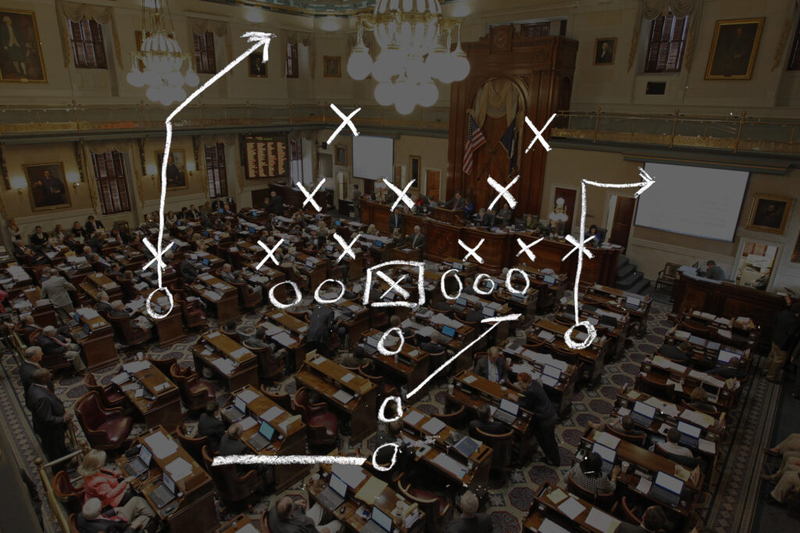
An illustration of the SC. House of Representatives chamber with a football play in the foreground. (Illustration by Travis Bell/STATEHOUSE CREATIVE/Special to the SC Daily Gazette)
COLUMBIA — Public colleges in South Carolina could continue concealing what they pay student athletes under legislation moving quickly through the Statehouse amid a lawsuit.
The Senate Education Committee advanced the bill to the floor Wednesday without a public hearing.
At least two senators — Senate Majority Leader Shane Massey of Edgefield and Sen. Richard Cash of Anderson County — verbally voted against the measure. No roll call was taken.
Only written testimony was taken by the committee after the bill skipped a subcommittee hearing, though that’s more than occurred in the House. That chamber passed the bill 111-2 on Jan. 15, the third day of the legislative session, after bypassing the entire committee process.
The legislation is a response to a public records lawsuit filed against the University of South Carolina by a Mount Pleasant businessman seeking information about so-called Name, Image and Likeness payments made by the school to Gamecock football players.
Frank Heindel sued last September after the college denied his request through the state’s Freedom of Information Act for details about how USC is distributing to athletes its share of profits from media, ticket sales, and sponsorship agreements.
Last June, a federal judge approved a settlement of a long-running lawsuit between players and universities which paved the way for colleges to directly pay athletes. It allowed each college to share up $20.5 million in annual revenue with its students.
After that settlement went through, Heindel sought access to the records, citing state law which makes all NIL deals private except those to which the school is a party.
“Public dollars ought to be scrutinized by the public,” Heindel told the SC Daily Gazette.
But if this latest proposal passes, colleges would have to disclose only their total payout to all athletes schoolwide — not to individual athletes or even by sports team.
But the measure might hit a roadblock after getting on the Senate calendar. Unlike in the House, Senate rules allow a single senator to object to a bill and block debate.
“South Carolina has a chance to be first in the nation in transparency,” said Heindel, who traveled to Columbia for Wednesday’s meeting.
“I hate to see us weaken our FOIA laws” just to accommodate the National Collegiate Athletic Association, added the businessman who’s known for getting answers from the government through public records lawsuits.
A competitive disadvantage
Colleges argue that being forced to disclose this information, either on an individual athlete basis or on a team-by-team basis, puts South Carolina at a competitive disadvantage.
No other state is forcing disclosure of individual contracts or even individual sports.
“It would allow competing institutions to identify, target and attempt to outbid specific student-athletes, undermining fair competition,” wrote USC Director of Athletics Jeremiah Donati in submitted testimony made public after the meeting.
The schools also claimed it would invade student privacy.
“These are students. Individual compensation terms are personal financial information. Student privacy has long been protected across scholarships, stipends and related support and that principle should remain intact,” wrote Chance Miller, Coastal Carolina University’s athletics vice president.
The General Assembly has been reluctant to accept the NIL movement, said Senate Education Chairman Greg Hembree, but ultimately yielded with a law passed in 2021 setting rules for its practice in the Palmetto State. A follow-up law in 2024 allowed for more direct college involvement in the process.
Senators approve lifting NIL restrictions on SC colleges after gun debate puts bill in timeout
“The whole shift is just sort of unsettling,” the Little River Republican said. “The world has changed. And we might not like it, but we have to accept the reality of it, protect those athletes, protect their privacy, and evolve with the rest of the country on this.”
In his ongoing court case, Heindel suggested USC could avoid privacy concerns by redacting the names and identifying information of the athletes before turning over the contracts for review.
It’s not just a matter of the dollar amount, he said. He contends that student athletes and the public would benefit from knowing about any clauses contained in these contracts related to when an athlete is injured.
“Secrecy denies them that information,” Heindel wrote in testimony to the Senate committee. “It protects the institution with superior leverage and leaves young athletes guessing.”
A question of public funds
USC also argued it was exempt from the FOIA law in this case because the agreements aren’t between students and the university itself. Instead, it’s run through a separate organization set up by the university. At USC, student athletes sign contracts with Ascend Carolina LLC, a subsidiary of the school’s main booster organization, the Gamecock Club.
Circuit Court Judge Daniel Coble did not necessarily buy into the school’s argument, instead telling the school in a court order that he needed more information before making a decision.
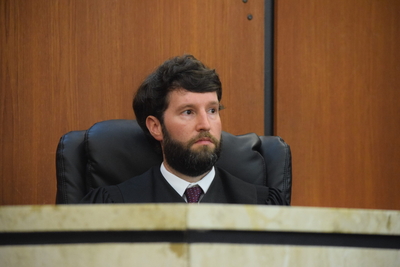
The judge has since put the case on pause amid the legislative debate.
The day after the bill was filed in the House, USC filed a motion asking the judge to delay his ruling.
Coble agreed, writing in a Jan. 16 order: “When, and if, the General Assembly speaks, this Court must listen. This Court will not rush into a decision which could have impacts statewide and nationwide.”
Heindel questioned the timing.
“You wouldn’t change the rules in the middle of a football game,” Heindel told the SC Daily Gazette. “Why would you change the law in the middle of a court case?”
In their own discussion of the legislation Wednesday, senators also wrestled with the question of whether the revenue is taxpayers’ money and therefore must be disclosed.
“This is problematic for me,” said Sen. Everett Stubbs, R-Rock Hill. “And I understand the competitive advantage or disadvantage that we might put ourselves in. Quite frankly, I grew up if it walks like a duck, talks like a duck, usually it’s a duck. And these are compensation packages, essentially.”
Even if the money is coming from a different revenue stream, rather than public tax dollars, once the colleges receive them, they should be classified as state funds, he said.
“I just don’t see how we get around that personally,” he said, though he told the Daily Gazette he ultimately voted to forward the bill.
In his written testimony, Jay Bender, a long-time lawyer for the South Carolina Press Association, reminded senators that, while schools may promise to spend money responsibly and appropriately, that hasn’t always been the case.
“History suggests that promises of fiscal responsibility are not worthy of credibility,” he wrote.
Bender cited a 1991 court case in which the state Supreme Court ruled USC’s outside development foundation was not exempt from public records disclosure.
Similar to the NIL case making its way through the court, USC had argued the foundation was a not-for-profit separate from the school. The court disagreed, saying if a private body received and expended public funds, it is subject to state FOIA law.
“When the Foundation records were finally dug up in a city landfill where the Foundation had tried to dispose of them while the case was under appeal, the records revealed lavish, unreviewed spending by the school’s president and other officials,” Bender wrote.
SC High School League adjusts NIL policy to comply with state budget
‘A betrayal’
Bender went on to call the proposal “a betrayal” of the General Assembly’s half-century commitment to the public when it adopted the public records law in 1972.
Bender and Heindel also blasted the apparent fast-tracking of the bill and lack of public testimony from college athletes.
“Their views are absent from this record,” Heindel wrote.
Heindel referenced a bullet point outline of the contracts USC athletes are asked to sign, which he received as a result of his lawsuit.
“Instead, the NIL contract template includes sweeping confidentiality clause that appears to restrict players from discussing their own agreements — ensuring silence, not protection,” he added.
“This committee should acknowledge that this is special interest legislation,” Bender wrote. “And it seems no interest is more special in South Carolina than football.”
At least one senator also questioned the lack of verbal testimony.
“I don’t know any reason why we wouldn’t want to let the public speak to this and just have a hearing, even if we’re going to do what we feel like we got to do,” said Cash, a Republican from Powdersville.
Another public records advocate, former college athlete and athletics coach, John Crangle, told the SC Daily Gazette that the legislative and legal efforts to shield these records is likely futile and invites more lawsuits related to wage and employment discrimination.
“I think the effort to try to keep this information secret will fail,” he said. “There’s just too many ways that information can get out. Players gossip. It’s not going to be possible to keep the players from talking.”
Disinformation will inevitably fill the void, Crangle said.
“It’s going to be a legal nightmare whether it’s public information or not,” he said. “It’s much better to be truthful about it and upfront.”

Columbia