New Mexico police chief tells lawmakers Flock cameras ‘very valuable’ despite increased criticism
Oct 08, 2026 | 8:00 am ET
Description
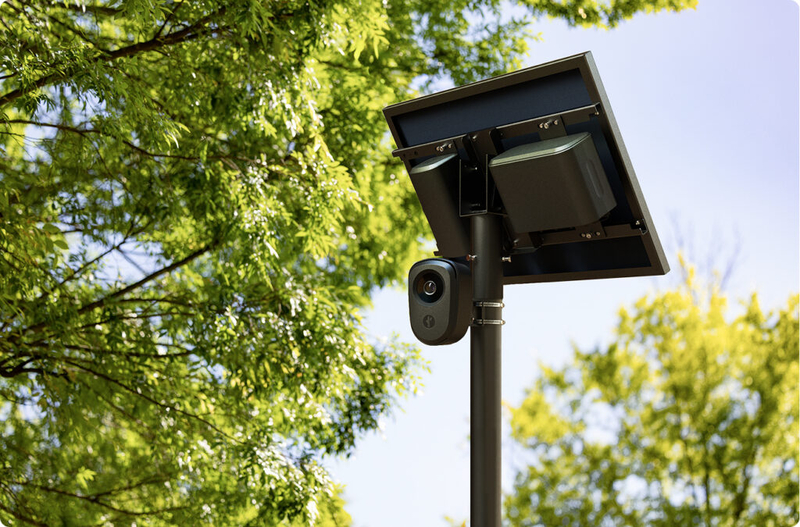
Las Cruces Police Chief Jeremy Story on Oct. 6, 2026, briefed lawmakers on the interim Courts, Corrections and Justice Committee about how his department uses controversial Flock cameras after the Legislature passed a law restricting them. (Photo courtesy of Flock Safety)
The police chief in New Mexico’s second-largest city attempted this week to allay lawmaker fears about one of the most controversial tools in law enforcement: Flock cameras.
But by the end of the presentation, some still had big questions and concerns about the technology Democratic-majority Legislature and governor opted to restrict earlier this year.
Las Cruces Police Chief Jeremy Story told lawmakers on the interim Courts, Corrections and Justice Committee on Tuesday that his department has access to 43 Flock cameras across the city. They’ve helped detectives close several cases, he said, including several homicides and a bank robbery across the state line in El Paso, Texas.
“If we have a missing person, if we have one picture of that car — even if it has nothing to do with when that person went missing — a lot of times that’s very helpful,” Story said. “When we have a crime where we have either a partial plate or a good vehicle description, that’s where this system becomes very valuable for law enforcement.”
Democratic Gov. Michelle Lujan Grisham in March signed Senate Bill 40, known as the Driver Privacy and Security Act, into law. It took effect in July and prohibits law enforcement agencies from using data from automatic license plate readers for investigations into “protected healthcare activities,” such as seeking gender-affirming care or an abortion, as well as for public demonstrations or someone’s immigration status.
Critics point to examples the law attempts to address. In Texas, a sheriff’s deputy who did not have a warrant used Flock’s nationwide network to track a woman suspected of attempting to get an abortion, which is banned in the state with few exceptions. At the federal level, U.S. Immigration and Customs Enforcement has accessed Flock data through local law enforcement agencies to read license plates. Flock has denied having a contract with ICE.
Nationally, politicians and civil rights groups have increasingly questioned whether automatic license plate readers — particularly the tens of thousands of Flock’s — risk violating constitutional privacy protections. In Bernalillo County, Sheriff John Allen recently nixed his department’s contract with Flock over the increasing skepticism.
In Tuesday’s presentation, Story sought to push back on some of that. He gave lawmakers a tour through the software by typing in his own license plate number and showing several photos Flock cameras had taken of his pickup truck that week. He then challenged lawmakers to figure out where he was coming from or going to in each of the photos of his truck.
“Try to tell me…where I came from before those hits, where I went after, who was in the vehicle and who was driving,” he said. “The reality is from most of these hits, we can’t determine any of those things.”
Rep. Andrea Reeb (R-Clovis), a career prosecutor, said she’s seen firsthand how they’ve been beneficial for criminal investigations.
Interim committee Chair Rep. Christine Chandler (D-Los Alamos) was not as convinced, though.
She asked Story how he could have accessed the photos of his truck if they weren’t tied to a specific criminal case number. When he responded that he created a case number specifically for this demonstration, she said she was worried that that process could be abused.
“Who has the authority to create these fake case numbers? Because that’s what you’re telling me,” she said. “I was somewhat optimistic about the fact that many of these methodologies are requiring case numbers, but if we also have the ability to do fake case numbers, I’m a little concerned about that. It’s sort of an illusory check on the system.”
Santa Fe, NM